BY SAL GRECO
A federal judge has allowed a former NYPD officer’s religious-accommodation case stemming from New York City’s COVID-19 vaccine mandate to continue—but anyone portraying the ruling as either a sweeping victory for the so-called “Freedom Movement” or a complete vindication of New York City would be overstating what the court actually decided.
In Grabhorn v. City of New York, U.S. District Judge Jeannette A. Vargas issued a September 14, 2026 decision granting the defendants’ motion to dismiss in almost every respect. Plaintiff Adam Grabhorn had brought 16 causes of action involving federal constitutional rights, the New York State Constitution, the New York State Human Rights Law and the New York City Human Rights Law.
Most of those claims are now gone.
But one central theory remains alive: whether the City and former NYPD Deputy Commissioner Tanya Meisenholder unlawfully failed to reasonably accommodate Grabhorn’s sincerely held religious beliefs.
That distinction is extremely important.
What Happened
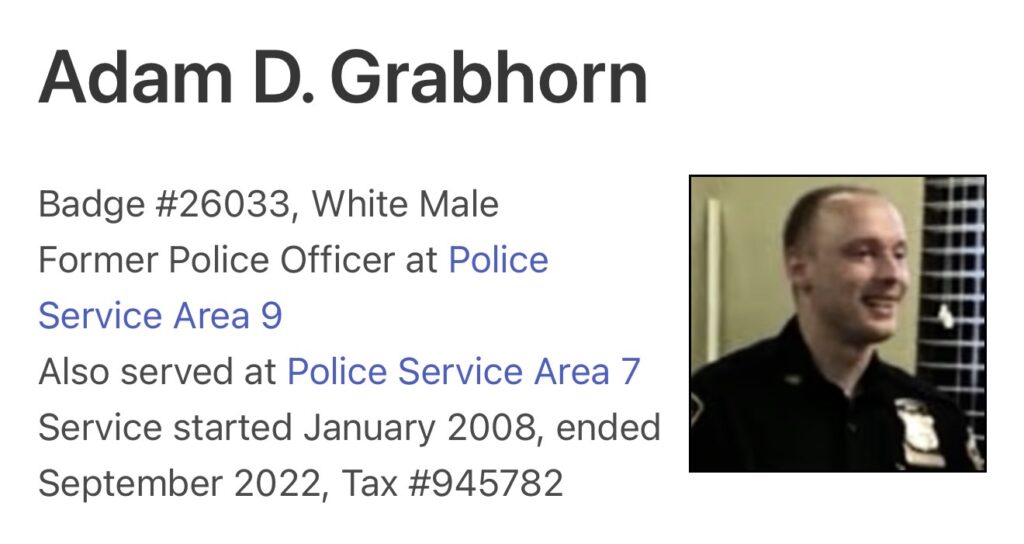
Grabhorn joined the NYPD in January 2008. According to his complaint, he is a Christian whose religious beliefs prohibited him from receiving the COVID-19 vaccine.
After New York City imposed its employee vaccine mandate in October 2021, Grabhorn submitted a request for a religious accommodation. He was permitted to continue working while his application and appeal were pending while complying with masking and testing requirements. His accommodation request was eventually denied.
Grabhorn alleged that he was essentially placed in an impossible position: retire while he could still preserve his accumulated benefits or risk being placed on leave without pay and ultimately terminated for remaining unvaccinated.
He submitted his retirement paperwork on June 3, 2022. His appeal was formally denied the following month, and he was informed that he could face leave without pay followed by termination. His last day with the NYPD was September 15, 2022.
He subsequently sued.
The Bad News for Those Who Opposed the Mandate
If someone is looking at this decision hoping to find a federal court declaring New York City’s COVID vaccine mandate unconstitutional, they will not find it.
The court rejected Grabhorn’s federal Free Exercise Clause claim.
Judge Vargas followed existing Second Circuit precedent holding that the vaccine mandate was neutral and generally applicable because it applied to employees regardless of why they remained unvaccinated and contained a process for seeking religious accommodations.
Because of that, the court applied rational-basis review and concluded that the mandate satisfied that standard as an exercise of the government’s authority to protect public health.
That is significant.
The court also dismissed Grabhorn’s federal Equal Protection claim. He alleged that medical accommodation requests were treated more favorably than religious requests, but the judge found that the complaint did not identify sufficiently specific similarly situated employees who received preferential treatment.
His First Amendment retaliation claim was dismissed.
His New York constitutional claims were dismissed.
His disparate-treatment discrimination claims were dismissed.
His hostile-work-environment claim was dismissed.
His NYCHRL interference claim was dismissed.
His failure-to-engage-in-cooperative-dialogue claim was dismissed.
His state and city retaliation theories were dismissed.
Claims against former Mayors Bill de Blasio and Eric Adams and former City health adviser Jay Varma were also dismissed.
And the NYPD itself was dismissed as a defendant because, under New York law, the department is not independently suable; the proper municipal defendant is the City of New York.
So from the City’s perspective, the ruling eliminated the overwhelming majority of Grabhorn’s legal theories.
But Here Is the Important Part the City Did Not Win
The City tried to dismiss Grabhorn’s religious failure-to-accommodate claims as well.
The judge refused.
Under the New York State Human Rights Law and New York City Human Rights Law, employers have obligations concerning reasonable accommodations for sincerely held religious practices unless providing the accommodation would create the legally recognized level of hardship.
The judge found that Grabhorn alleged enough facts for that issue to proceed.
He alleged a bona fide religious belief conflicting with the vaccination requirement.
He informed his employer of that belief.
And the court found that his allegations concerning retirement could plausibly amount to constructive discharge.
That is potentially the most consequential portion of the entire decision.
The judge pointed to Grabhorn’s allegation that he began exhausting his accrued leave and filed retirement paperwork because he understood the NYPD would not grant his accommodation. Had he not already been running out his accrued time toward separation, he alleged that he would have been placed on leave without pay and then terminated.
Judge Vargas concluded that those allegations were enough, at this stage, to allow his failure-to-accommodate claims to proceed against the City.
The claims also survive against Meisenholder because Grabhorn alleged that, as Deputy Commissioner of Equity and Inclusion, she headed the division responsible for accommodation requests and personally participated in directing the denial of his request.
A related aiding-and-abetting claim against Meisenholder also survived.
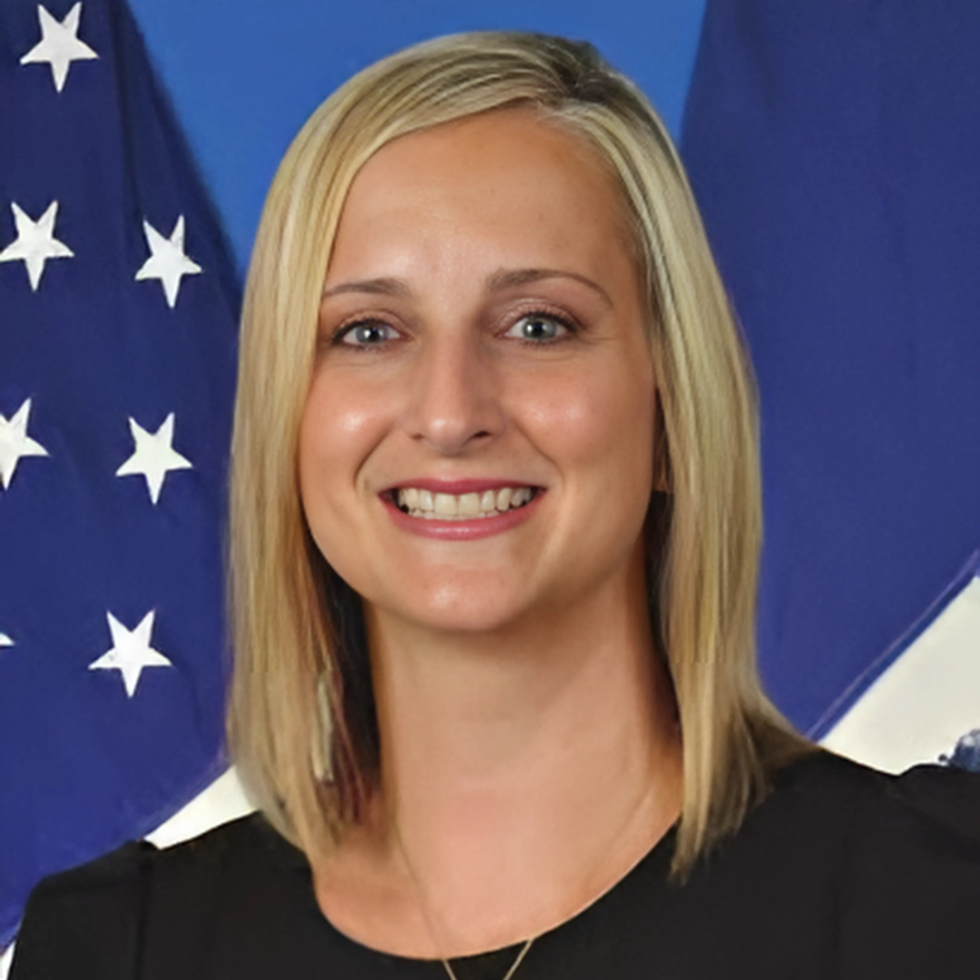
Former Deputy Commissioner of Equity and Inclusion Tanya Meisenholder
Is This a Victory for the “Freedom Movement”?
It depends entirely on what someone means by victory.
If victory means a federal court ruled that the vaccine mandate violated the Constitution, then no.
That did not happen.
If victory means that the court found the City systematically discriminated against Christians or people who opposed vaccination, that also did not happen.
If victory means Grabhorn has won damages, back pay, reinstatement or a final judgment, again, no.
But if victory means a federal judge determined that an individual NYPD employee may have a legally viable claim that the City failed to reasonably accommodate his religious beliefs despite the constitutionality of the underlying mandate, then this ruling unquestionably keeps that issue alive.
That is the important legal distinction.
A vaccine mandate can be constitutional while the manner in which an employer handles an individual employee’s religious-accommodation request can still violate employment-discrimination law.
Those are two different legal questions.
And this ruling illustrates that difference extremely well.
The Second Circuit has already rejected broad facial constitutional attacks on New York City’s vaccine requirements while recognizing that particular employees may potentially pursue individualized challenges concerning how their accommodation applications were handled.
Other NYPD-related cases have similarly allowed failure-to-accommodate claims to survive motions to dismiss. In Chinchilla v. City of New York, for example, a former NYPD officer’s state and city failure-to-accommodate claims against the City survived even though her federal Free Exercise claim was dismissed.
That is becoming an important dividing line in this litigation.
One Important Correction to the Broader Narrative
It would be inaccurate to say that no NYPD officer has ever obtained reinstatement through litigation involving a religious exemption to the vaccine mandate.
In Matter of Moscatelli v. NYPD, a New York Supreme Court judge annulled the denial of Detective Leonard Moscatelli’s religious accommodation, vacated his termination, ordered his reinstatement as a Detective First Grade and awarded back pay and benefits.
However, there is an equally important distinction there: the Moscatelli court did not conclude that his First Amendment rights had been violated. His successful relief arose from the court’s review of the administrative accommodation determination, rather than a finding that the mandate itself constituted unconstitutional religious discrimination.
That distinction should not be lost in the public debate.
The Good and Bad of the Grabhorn Decision
For Grabhorn and others making similar claims, the positive portion of this ruling is clear.
A government employer cannot necessarily defeat every religious-accommodation lawsuit simply by pointing to the legality of the underlying mandate.
The court is allowing an inquiry into what happened to this individual employee, what his religious beliefs were, what accommodation he requested, what the NYPD did with that request, and whether his departure amounted to a constructive discharge after the accommodation was denied.
That gives credence to the narrower argument that individual religious-accommodation rights still mattered even during a lawful vaccine mandate.
The negative side for mandate opponents is equally clear.
The decision provides no judicial support for the broader proposition that the City’s mandate itself violated the First Amendment.
In fact, it does the opposite.
The court expressly relied upon Second Circuit precedent treating the mandate as neutral and generally applicable.
So those attempting to use this decision as proof that the entire mandate was unconstitutional would be misreading it.
Government Employment and the Rights We Believe We Have
There is also a larger lesson buried inside this decision.
Americans unquestionably possess constitutional rights.
Government employees do not check the Constitution at the door when they report to work.
But constitutional rights have never meant that every person can exercise every claimed right, in every circumstance, without limitation—particularly when the government is acting as an employer and imposing generally applicable workplace requirements.
Courts routinely have to balance individual constitutional and statutory protections against legitimate governmental interests.
In this case, the court concluded that New York City’s generally applicable vaccine mandate itself survived the constitutional challenge.
At the same time, New York State and New York City law continued to impose separate obligations on the employer to consider reasonable religious accommodations.
That is why both things can legally be true at the same time:
The City had the authority to impose the mandate, yet the City could still potentially be liable for the way it handled an individual employee’s request for a religious accommodation.
Those concepts are not contradictory.
What Happens Now
Grabhorn has not won his lawsuit.
He has won the right to continue litigating a small but potentially important portion of it.
This decision came at the motion-to-dismiss stage. At that stage, the judge generally assumes properly pleaded factual allegations are true and determines whether those allegations state a legally viable claim. The judge was not weighing all of the evidence and deciding who was ultimately telling the truth.
Discovery can now become enormously important.
What records existed concerning Grabhorn’s accommodation?
Who reviewed them?
Why was his request denied?
Were comparable religious applications handled differently?
What role did Meisenholder personally play?
Could masking and testing have constituted a reasonable accommodation?
Would allowing Grabhorn to remain working without vaccination actually have imposed an undue hardship on the NYPD?
And was his retirement genuinely voluntary, or did the circumstances effectively force him out?
Those questions could determine where this case ultimately goes.
The Bottom Line
The Freedom or medical-freedom movement should be careful about declaring this decision a sweeping victory.
It isn’t.
The City should be equally careful about treating the decision as complete vindication.
It isn’t that either.
The broad constitutional attack on New York City’s vaccine mandate failed.
The individualized religious-accommodation claim survived.
That may ultimately prove to be the most important takeaway from the decision.
Whether someone personally agreed with the mandate, vehemently opposed it, took the vaccine willingly or refused it is largely irrelevant