
BY SAL GRECO
When Jessica Tisch was appointed Police Commissioner of the New York City Police Department, she promised to restore accountability, eliminate corruption, and rebuild public confidence in an agency that had endured one scandal after another. The expectation was that new leadership would usher in a culture of transparency and integrity.
Instead, another sweeping lawsuit has now been filed alleging gender discrimination, retaliation, hostile work environment, selective enforcement, and abuse of authority reaching the highest levels of the NYPD.
Retired NYPD Inspector Danielle E. Raia, the first woman to serve as Commanding Officer of the Technical Assistance and Response Unit (TARU), has filed a 118-page lawsuit against the City of New York, Police Commissioner Jessica Tisch, former Chief of Department Jeffrey Maddrey, former Chief of Department John Chell, Kaz Daughtry, Michael Lipetri, and Joseph Kenny. The lawsuit alleges years of discriminatory treatment, retaliation, denial of resources, hostile work environment, and post-retirement retaliation. These are allegations that remain unproven, and each defendant will have the opportunity to respond through the judicial process.
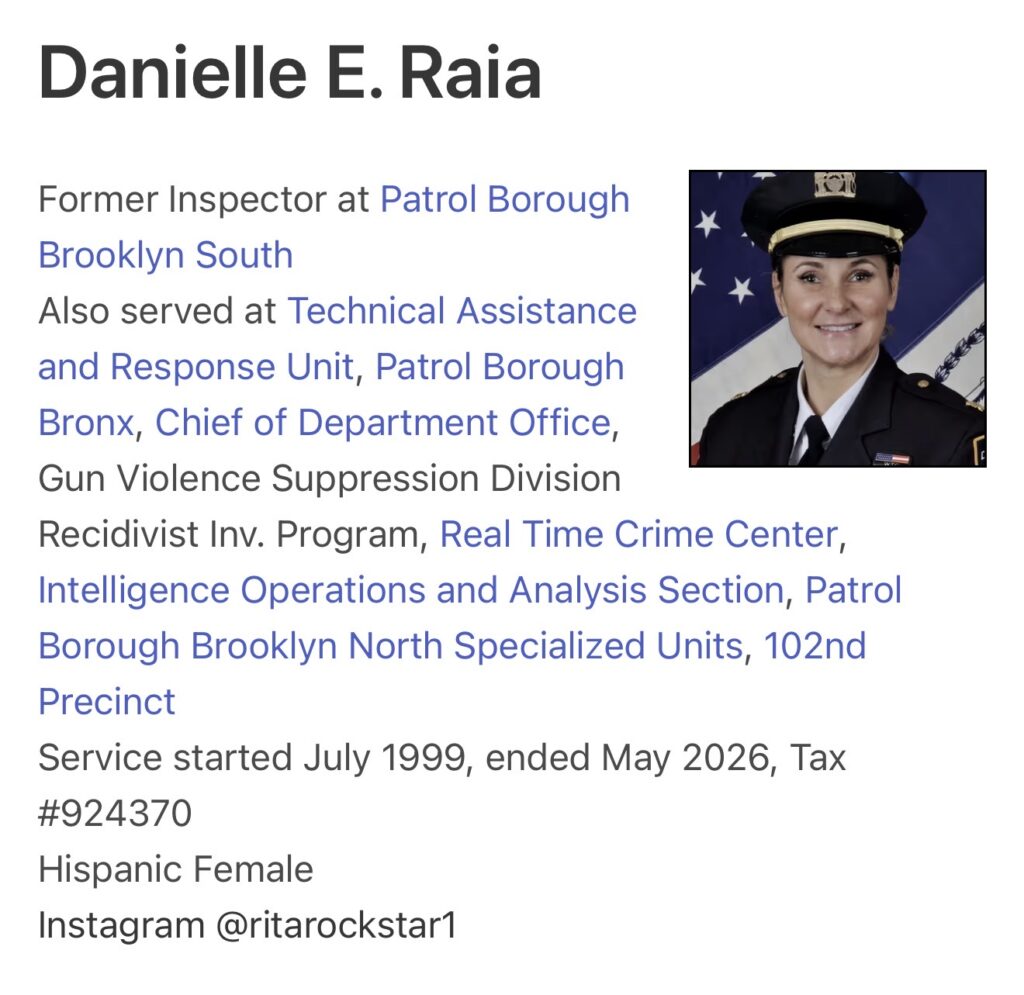
A Distinguished Career Allegedly Derailed
According to the complaint, Inspector Raia served the NYPD for approximately twenty-six years, holding numerous investigative, operational, executive, and command assignments before becoming the first female Commanding Officer of TARU. The lawsuit alleges that despite her experience and qualifications, she was repeatedly denied authority, staffing, operational discretion, and institutional support routinely afforded to male counterparts.
Among the complaint’s allegations are:
- denial of operational authority;
- repeated refusals to provide requested executive staffing;
- discriminatory treatment because of her gender;
- retaliation after raising concerns;
- selective disciplinary treatment; and
- replacement by a lower-ranked male successor who allegedly received the very resources she had repeatedly requested but was denied.
If those allegations are ultimately proven, they would present significant questions regarding how senior NYPD leadership exercised authority over one of its highest-ranking female executives.
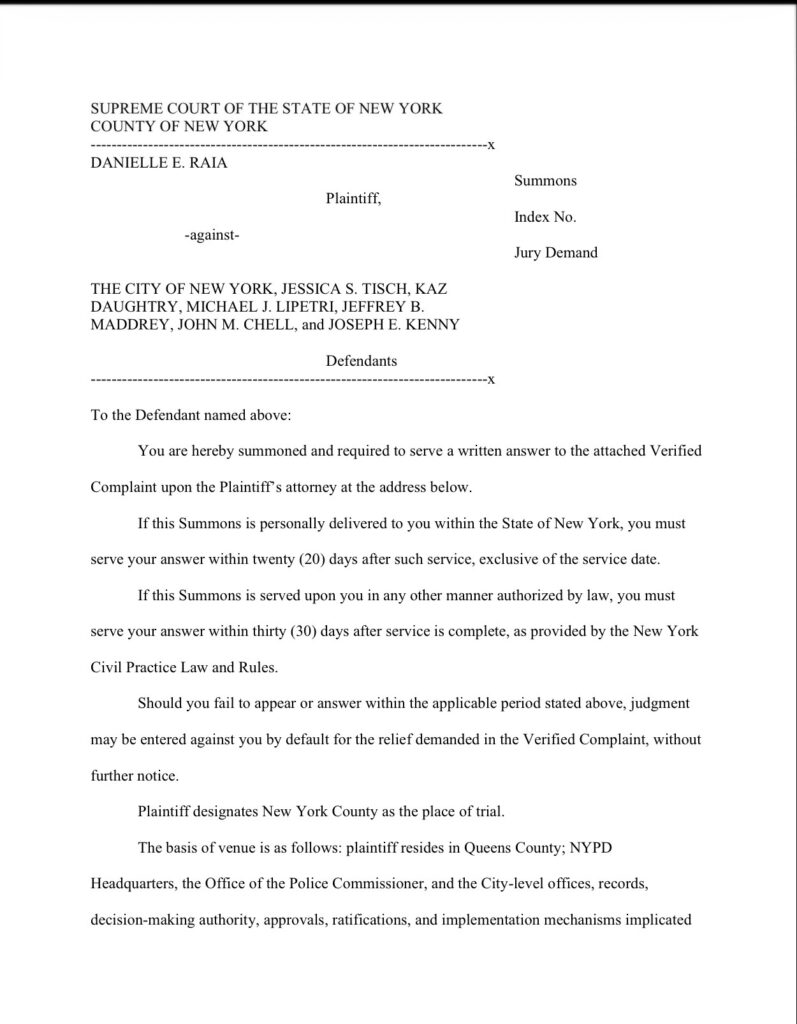
Jessica Tisch’s Leadership Under the Microscope
Perhaps the most significant aspect of the lawsuit is that Commissioner Jessica Tisch herself is named as a defendant.
The complaint alleges that, as Police Commissioner, Tisch possessed final supervisory, disciplinary, personnel, and corrective authority over the NYPD. According to the lawsuit, she failed to correct or prevent discriminatory and retaliatory conduct and permitted unresolved disciplinary allegations to remain against Inspector Raia despite no departmental trial, no plea, and no finding of guilt. The complaint further alleges that these unresolved allegations negatively affected Raia’s professional standing, retirement interests, and post-retirement opportunities.
These allegations stand in stark contrast to the reform agenda that accompanied Tisch’s appointment. Whether those claims ultimately withstand judicial scrutiny remains to be decided by the courts, but they nonetheless raise substantial public-interest questions regarding executive oversight inside the NYPD.
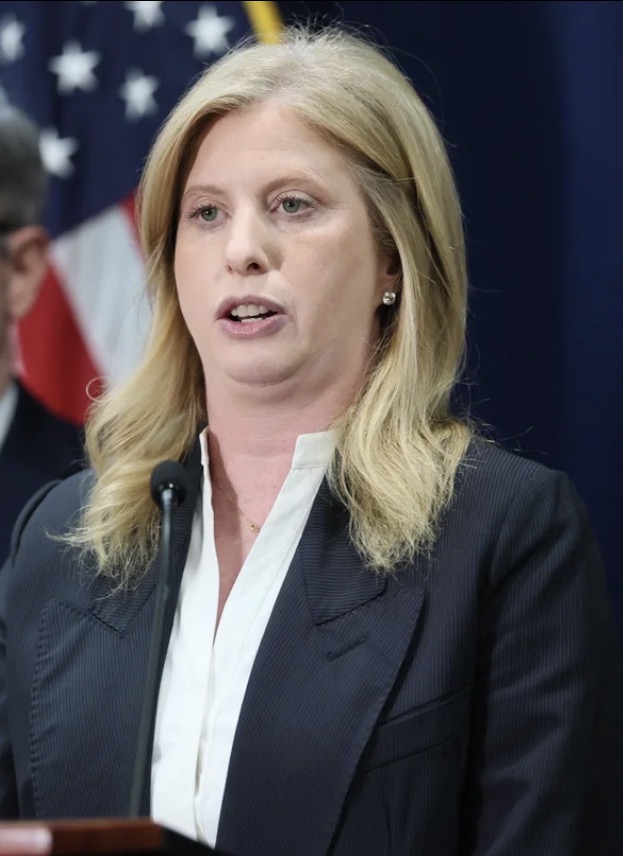
Serious Allegations Concerning Kaz Daughtry
The complaint places former NYPD executive Kaz Daughtry at the center of many of the allegations involving TARU.
According to the lawsuit, Daughtry exercised operational control over TARU, imposed unrealistic operational expectations, failed to provide the executive officer and staffing support Inspector Raia repeatedly requested, and participated in or failed to correct the discriminatory and retaliatory environment she alleges existed within the command. The complaint further alleges that these actions undermined her authority as the first female Commanding Officer of TARU.
If these allegations are ultimately substantiated, they would extend well beyond ordinary management disputes. They would raise serious questions about whether one of the NYPD’s highest-ranking executives helped foster a workplace where discrimination and retaliation were permitted to continue despite repeated complaints.
Yet despite these now-public allegations, Daughtry not only remained one of the department’s most visible executives during the Adams administration but later accepted a position with the U.S. Department of Homeland Security.
Perhaps even more striking, Eric Adams and Commissioner Jessica Tisch appeared sufficiently confident in Daughtry’s leadership that he was permitted to represent the NYPD as one of its public standard-bearers during a meeting with President Donald Trump in New Jersey.
Whether that confidence was justified is a question the public may reasonably ask as this litigation proceeds.
As with all allegations contained in the complaint, no court has determined these claims to be true, and Daughtry is entitled to contest every allegation through the legal process.

John Chell Faces Renewed Questions
Former Chief of Department John Chell is likewise identified throughout the complaint.
According to the lawsuit, Chell participated in command decisions affecting Inspector Raia, including allegations involving denial of resources, unequal treatment, operational control, and disparate treatment compared with her male successor. The complaint further alleges that Chell participated in, approved, ratified, or failed to correct discriminatory and retaliatory conduct occurring during the relevant period.
If those allegations are proven, they would call into question the conduct of the highest-ranking uniformed member of the NYPD during the relevant time period.
Those allegations also arrive against the backdrop of prior public controversies involving Chell. Public records show that, while serving as an NYPD sergeant years earlier, he was involved in an on-duty fatal shooting that later resulted in civil litigation and a significant settlement paid by New York City. While that civil outcome did not establish personal liability against Chell, it remains part of the public record.
Questions have also been raised publicly regarding the circumstances surrounding his retirement on a three-quarter disability pension, although no official finding has concluded that his retirement was improper.
Today, Chell has transitioned into a role as a law enforcement commentator on Newsmax.
Yet despite the controversies surrounding his career and now the allegations contained in Inspector Raia’s lawsuit, Eric Adams and Commissioner Jessica Tisch likewise entrusted Chell to publicly represent the NYPD as one of its standard-bearers during the meeting with President Donald Trump in New Jersey.
That sequence naturally raises further public-interest questions. If City Hall and NYPD leadership maintained complete confidence in Chell despite mounting controversies and now serious allegations contained in this lawsuit, what internal review occurred before elevating him to represent the nation’s largest police department on such a prominent stage?
Again, these allegations remain unproven, and Chell is entitled to respond to them in court.

A Pattern That Continues to Grow
Inspector Raia’s lawsuit does not exist in a vacuum.
In recent months, the NYPD has faced an increasing number of lawsuits alleging discrimination, retaliation, sexual harassment, hostile work environments, selective discipline, and failures of executive oversight.
Separately, Commissioner Jessica Tisch has also faced growing public scrutiny over questions involving potential conflicts of interest.
Recent reporting has examined whether relationships involving the Police Foundation, RaySecur, Tenfore Holdings, and New York City’s official trash-bin contract warrant additional public examination. Those matters are separate from Inspector Raia’s lawsuit, and no governmental authority has concluded that Commissioner Tisch engaged in wrongdoing. Nevertheless, the continued emergence of ethics questions alongside mounting employment litigation contributes to a broader debate over transparency, accountability, and public confidence in City Hall and the NYPD.
Taken together, the volume of lawsuits, allegations, ethics questions, and federal investigations involving former senior officials has created an atmosphere that many observers believe demands greater public explanation than has thus far been provided.
Transparency Is the Only Path Forward
Every lawsuit begins with allegations—not findings.
The courts exist to determine whether claims are supported by admissible evidence and whether legal liability exists.
However, when the nation’s largest police department continues to face lawsuit after lawsuit involving senior leadership, while federal investigations, raids involving former executives, and allegations of misconduct continue to emerge, transparency becomes more than a political talking point—it becomes an obligation.
Jessica Tisch promised to root out corruption within the NYPD.
Instead, her administration now finds itself confronting yet another blockbuster lawsuit naming the Police Commissioner herself alongside many of the department’s highest-ranking officials. Whether these allegations are ultimately proven remains for the courts to decide. But each new filing adds to a growing body of litigation that the public cannot simply dismiss as coincidence.
The people of New York deserve complete transparency.
The men and women of the NYPD deserve complete transparency.
And Inspector Danielle Raia deserves complete transparency as her allegations receive their day in court.