
BY SAL GRECO
When Mayor Eric Adams appointed Jessica Tisch as the New York City Police Commissioner in November 2024, she was presented to the public as the person who would restore confidence in an NYPD battered by scandal. Adams’ administration had already been engulfed in multiple federal investigations, ethics controversies, and corruption allegations involving senior officials. Within the Police Department itself, numerous high-ranking executives had been investigated, disciplined, transferred, or forced into retirement amid allegations involving overtime abuse, misconduct, and other ethical failures.

Commissioner Tisch publicly stated that restoring integrity and rooting out corruption would be among her top priorities. Nearly a year later, however, new questions are emerging—not necessarily about criminal conduct, but about transparency, conflicts of interest, and whether the same ethical standards being demanded of others are being applied at the very top of the NYPD.
At the center of those questions is Tenfore Holdings, a venture capital and technology investment firm founded by Tisch’s husband, Dan Levine. Tenfore Holdings invests in growth-stage technology companies focused on security, software, logistics, and emerging technologies.
One of the companies backed by Tenfore Holdings is RaySecur, a Massachusetts-based security technology company specializing in 3D T-ray imaging systems designed to inspect mail and packages without opening them. RaySecur markets its technology to government agencies, critical infrastructure operators, corporate security departments, hospitals, and law enforcement organizations. Its scanners are intended to identify explosives, narcotics, lithium batteries, hazardous materials, and other concealed threats inside packages.
Publicly available information—including RaySecur’s own promotional materials and documented deployments—shows that RaySecur technology has been utilized alongside the NYPD Bomb Squad during responses involving suspicious packages and mail screening. The company has also promoted its work with New York public safety agencies, making its relationship with the city’s emergency response ecosystem a matter of public record.

None of this, by itself, establishes wrongdoing.
The questions instead concern procurement oversight and conflict–of–interest safeguards.
Did the NYPD purchase or expand its use of RaySecur technology during Commissioner Tisch’s tenure?
If so, was Commissioner Tisch recused from any discussions, evaluations, procurement decisions, demonstrations, or strategic planning involving a company backed by her husband’s investment firm?
Were all applicable New York City Conflicts of Interest Board (COIB) disclosure and recusal requirements followed?
These are questions taxpayers are entitled to ask.
The questions become even more significant when viewed alongside the activities of the New York City Police Foundation, a private nonprofit that raises money to support NYPD programs and equipment beyond the City’s budget.
Earlier this year, Craig Newmark donated $1 million through the Police Foundation specifically to support the NYPD Bomb Squad. According to the Foundation’s own announcement, Police Foundation President and CEO Gregory Floyd stated that the initiative was inspired by Commissioner Tisch’s emphasis on investing in the Bomb Squad’s capabilities and modernizing public safety technology.
Adding another layer to the public-interest questions is the fact that two of Commissioner Tisch’s cousins serve as trustees of the Police Foundation. While there is no evidence that those family relationships influenced any donation or funding decision, they nevertheless create an appearance that many believe warrants transparency—particularly when private funding, technology vendors, and departmental leadership intersect.
Public confidence depends not only on actual integrity, but on avoiding even the appearance of conflicts whenever possible.
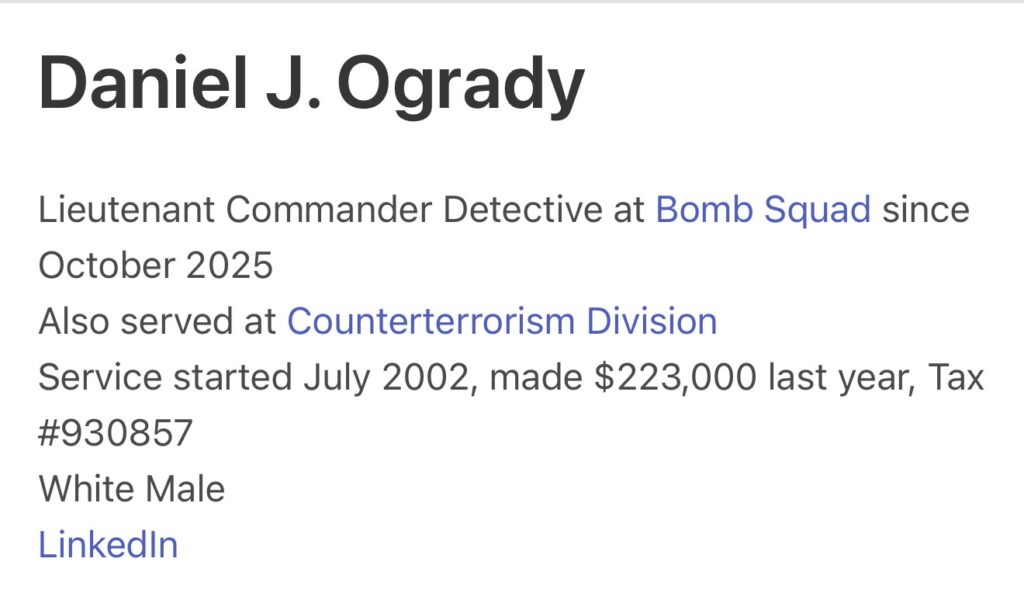
Questions have also been raised regarding Lieutenant Detective Commander Daniel J. O’Grady, who was assigned to command the NYPD Bomb Squad in October 2025 after previously serving within the Counterterrorism Bureau. Commissioner Tisch has reportedly been seen on multiple occasions with O’Grady at Bomb Squad-related events and public appearances. Those observations, combined with his promotion into one of the department’s most visible specialized commands, have prompted some observers to ask how the promotion came about and what role, if any, senior leadership played.
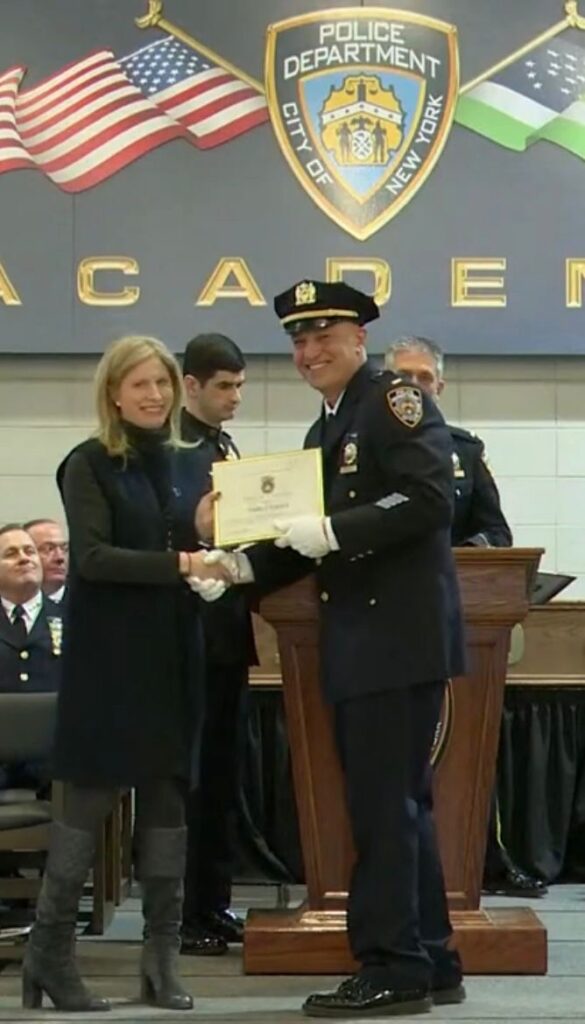
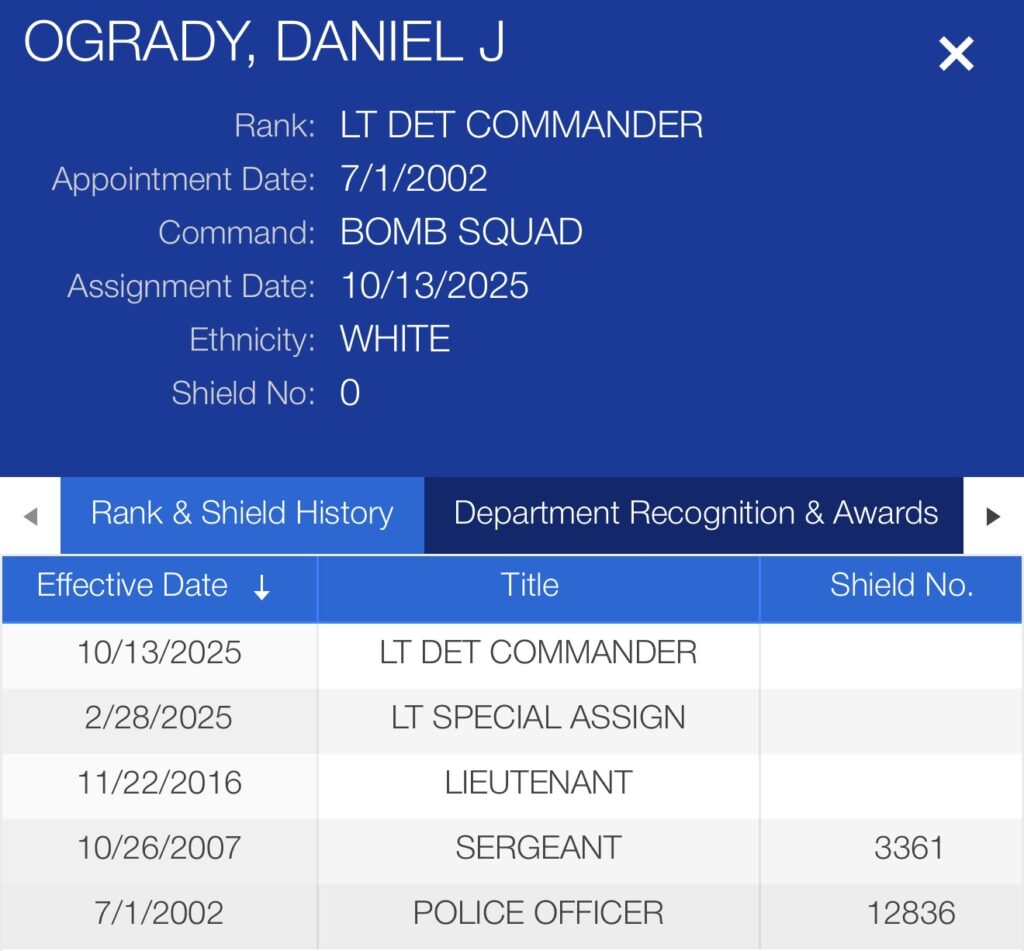
At this time, there is no public evidence establishing favoritism, improper influence, or misconduct regarding O’Grady’s appointment. Nevertheless, given the overlapping relationships involving Bomb Squad leadership, Police Foundation funding, and technology supported by an investment firm founded by the Commissioner’s husband, questions about transparency are understandable.
None of these facts prove corruption.
They do, however, raise legitimate questions that deserve straightforward answers from City Hall and the NYPD.
Commissioner Tisch entered office promising to clean up an agency whose credibility had been damaged by years of scandal under the Adams administration. Ironically, she now finds herself facing questions that mirror the very concerns she pledged to eliminate: transparency, accountability, ethics, and public trust.
Whether every applicable ethics safeguard was followed is ultimately a matter that can be clarified through disclosure. If Commissioner Tisch fully recused herself from any RaySecur-related matters and complied with all COIB requirements, publicly stating so would go a long way toward reinforcing confidence in the integrity of the process.
After years of corruption scandals involving senior officials under the Adams administration, New Yorkers have grown accustomed to asking difficult questions. Jessica Tisch remains the highest-ranking Adams appointee still leading a major city agency. That reality alone makes transparency more important—not less.
In the end, this is not about assuming wrongdoing. It is about ensuring that the ethical standards imposed on every NYPD officer are equally applied to the Commissioner herself. When public officials ask for trust, they should also welcome scrutiny.