
BY SAL GRECO
How much more controversy can come out of one NYPD command?
The 46th Precinct has increasingly become a major leadership problem for Police Commissioner Jessica Tisch, and a newly filed lawsuit adds perhaps one of the most disturbing allegations yet: a veteran police officer claims his own commanding officer, Juan Moran, physically grabbed him and attempted to throw him over a wooden partition inside the precinct.
Attorney John A. Scola, Esq., of The Law Office of John A. Scola, PLLC, filed the lawsuit on behalf of his client, Police Officer Claude Staten, against Moran and the City of New York in Bronx Supreme Court.
The allegations have not been proven in court, and Moran and the City are entitled to respond. But what is alleged in this complaint cannot simply be brushed aside—particularly when viewed alongside the controversies SalGreco.com has already reported surrounding leadership at the 46th Precinct.
Veteran Officer Alleges Harassment Before Physical Confrontation
Staten is 61 years old and joined the NYPD on July 15, 1986, according to the complaint, giving him nearly 40 years of service.
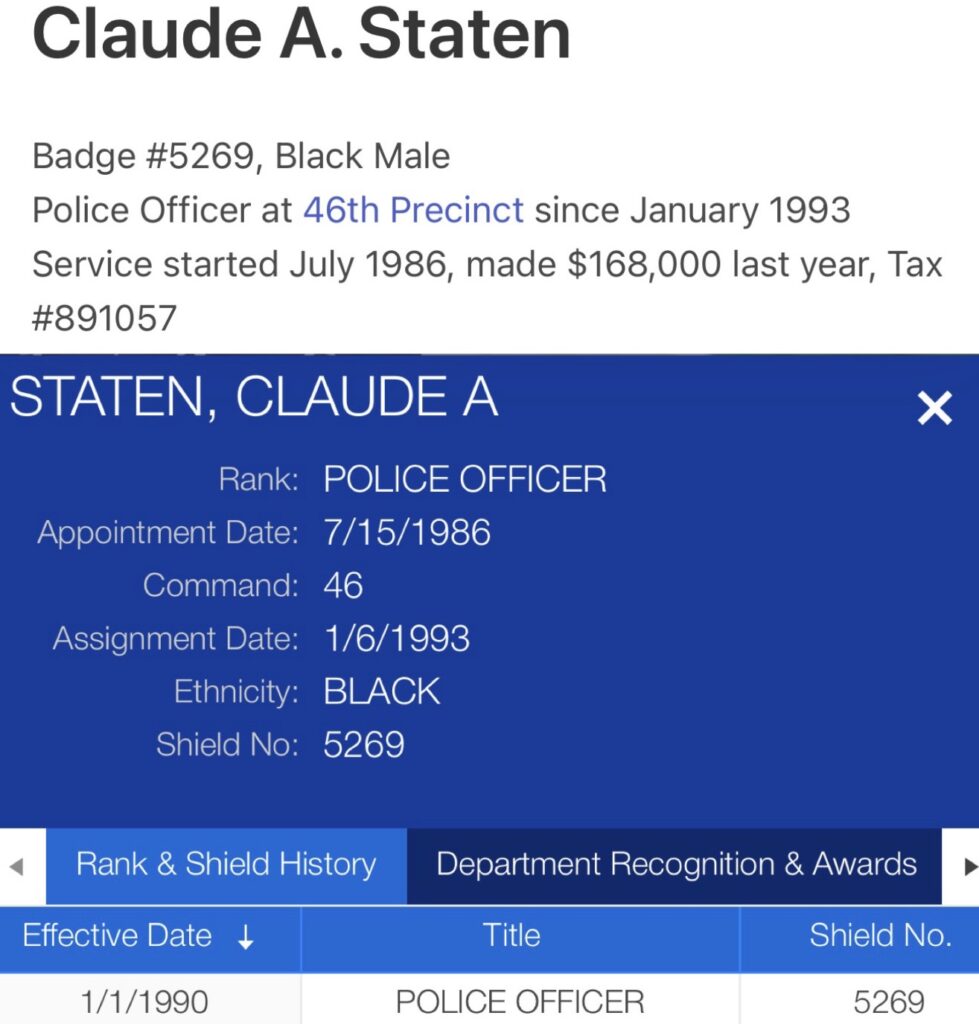
He alleges that after Moran assumed command of the 46th Precinct in January 2026, Moran repeatedly questioned when Staten would retire, mocked his age and physical limitations and assigned him to outdoor Station House Security posts despite knowing that Staten suffered from leg injuries and walked with a visible limp.
The lawsuit alleges that Moran’s conduct eventually escalated from words to physical contact.
On July 1, Staten claims he disagreed with Moran over removing a wooden partition protecting the desk area inside the precinct.
According to the complaint, Moran subsequently approached Staten from behind, grabbed him and attempted to throw him over the partition.
Staten alleges Moran repeatedly attempted to lift him off the ground while Staten desperately held onto the wooden railing to stop himself from going over.
The complaint identifies Lt. Franklin C. Salinas as a witness and alleges Staten suffered additional injuries to his right knee and a new injury to his left ankle.
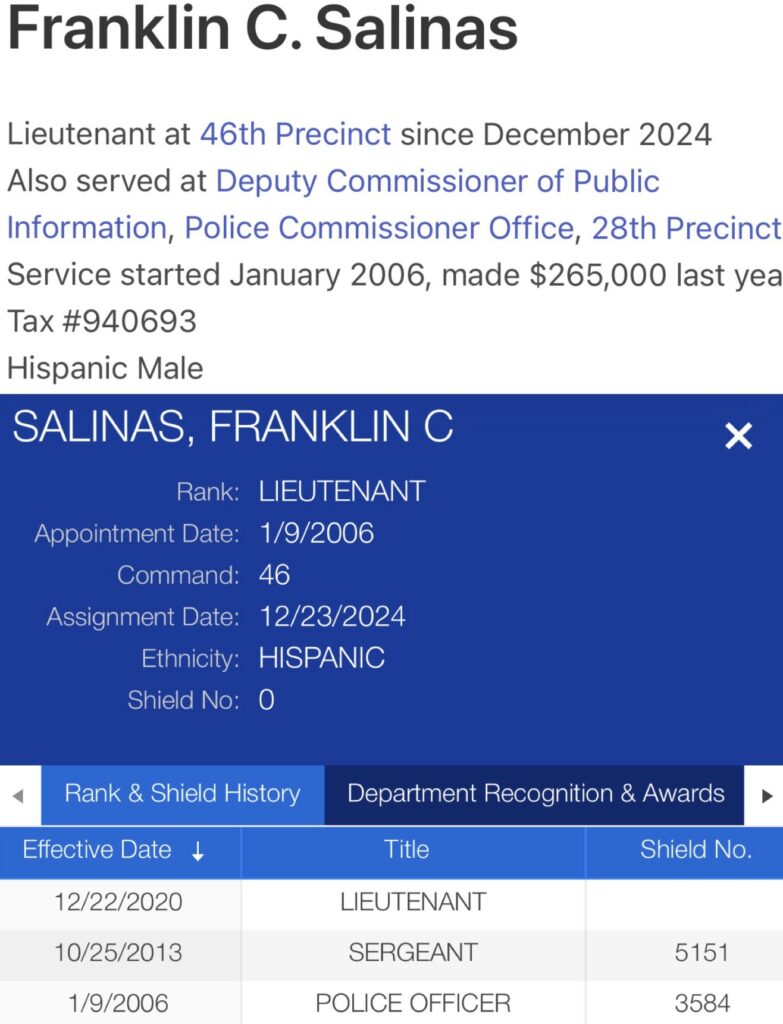
Even more significantly, Staten alleges that the following day, NYPD Internal Affairs investigators arrived at his home with video of the alleged incident and interviewed him.
According to the complaint, Moran was relieved of command approximately nine days after the alleged confrontation and reassigned to the Auto Pound Unit.
These are allegations, but they are exceptionally serious allegations.
And Moran Was Already Surrounded by Controversy
This latest lawsuit becomes even more disturbing when placed in the context of what SalGreco.com has previously reported concerning the 46th Precinct.
Moran’s tenure was already surrounded by allegations and litigation involving inappropriate workplace conduct, including allegations concerning fraternization and relationships within the command.
Now we have an entirely separate plaintiff alleging that Moran’s behavior went beyond words, workplace relationships or inappropriate conduct—and became physical against another police officer.
If Staten’s allegations are ultimately substantiated, the question becomes unavoidable: How was the leadership situation at the 46th Precinct permitted to deteriorate this far?
And Moran isn’t the only leadership issue.
Now Captain Charisse Jenkins Enters the Picture
SalGreco.com recently reported that Captain Charisse Jenkins, now serving as executive officer of the 46th Precinct, is regarded by sources as a competent and highly qualified supervisor.
That point deserves to be emphasized.
This is not a criticism of Jenkins’ ability to perform her job.
The concern is something entirely different.
Multiple sources have alleged to SalGreco.com that Jenkins herself has a history of fraternization involving other members of the NYPD.
Sources allege that while Jenkins was a sergeant assigned to the 113th Precinct, she fraternized with a lieutenant and a captain. Sources further allege that while later assigned as a lieutenant in the 103rd Precinct, Jenkins demanded her own locker room and fraternized with then-Executive Officer Captain Minor. The two later worked together in the Times Square Unit.
Those allegations have not been independently established as findings of misconduct, and Jenkins should be afforded the opportunity to respond to them.
But from a leadership and public-confidence standpoint, the optics are impossible to ignore.
Fraternization Is Already at the Center of the 46th Precinct Story
This is precisely what makes Jenkins’ assignment so puzzling.
The 46th Precinct doesn’t simply need competent executives.
It needs executives who can restore confidence in a command where allegations concerning fraternization, inappropriate relationships, sexual harassment, retaliation and failures of supervision have become central to its recent history.
That makes the decision to place an executive who herself faces allegations of fraternization from multiple sources into the number-two leadership position worthy of scrutiny.
Again, this is not a knock on Jenkins’ work performance.
She may very well be an excellent supervisor.
But when a precinct’s most persistent controversy involves allegations of blurred professional boundaries between supervisors and subordinates, why would Police Commissioner Jessica Tisch place someone facing her own unresolved fraternization allegations into a position helping lead that very command?
There is a difference between questioning someone’s competence and questioning whether an assignment makes sense.
This is the latter.
Commissioner Tisch Has a Leadership Problem
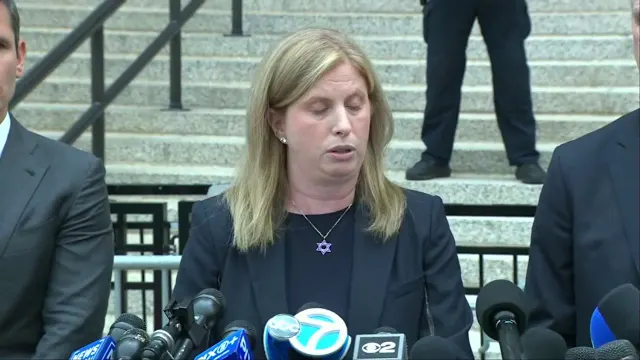
At some point, Police Commissioner Jessica Tisch has to recognize a fundamental principle of police management:
Executives cannot fraternize with subordinates and then expect rank-and-file officers to believe the same standards apply equally to everyone.
The higher the rank, the greater the responsibility to maintain professional boundaries.
That issue becomes even more important in a paramilitary organization where supervisors control assignments, overtime, evaluations, discipline and career opportunities.
The appearance of favoritism alone can destroy morale. Alleged intimate or inappropriate relationships between supervisors and subordinates can create even more serious questions involving preferential treatment, retaliation, conflicts of interest and whether disciplinary rules are being enforced consistently.
That is why the situation at the 46th Precinct has become bigger than any one individual.
It is now a test of Tisch’s leadership.
Successive Controversies, Same Precinct
The 46th Precinct has endured controversy surrounding one commanding officer after another.
Former Commanding Officer Inspector Jeremy Scheublin was ultimately criminally indicted on serious charges. He is presumed innocent unless proven guilty.
Moran later assumed command and subsequently became the subject of separate allegations concerning workplace conduct and fraternization.
Now Officer Claude Staten, represented by attorney John Scola, alleges Moran physically attacked him inside the precinct.
And as the NYPD attempts to rebuild the command, Captain Jenkins is helping lead it while SalGreco.com has received allegations from multiple sources concerning fraternization during her own career.
None of those allegations against Jenkins establish misconduct by themselves.
But Commissioner Tisch cannot simultaneously recognize that the 46th Precinct needs a cultural reset while ignoring legitimate questions about the backgrounds of the executives chosen to provide that reset.
The 46th Precinct Has Become an NYPD Problem
This is no longer merely a story about one precinct commander.
It is about leadership, supervision, judgment and accountability at the highest levels of the NYPD.
The allegations in Staten’s lawsuit are disturbing on their own.
Placed alongside everything else surrounding the 46th Precinct, they are even more troubling.
A veteran officer now says his commanding officer physically attacked him.
Other litigation has raised allegations concerning workplace conduct and inappropriate relationships.
A new executive officer arrives with her own fraternization allegations from multiple sources—even while those same sources describe her as competent and qualified.
At some point, Commissioner Tisch must confront the contradiction.
How do you clean up a command plagued by allegations involving fraternization and inappropriate supervisor-subordinate relationships while placing executives facing similar allegations into its leadership?
Nobody is saying allegations equal guilt.
Nobody is saying Captain Jenkins cannot do her job.
But taxpayers and members of the NYPD have every right to question the judgment behind these assignments.
The 46th Precinct desperately needs stability and leadership beyond reproach.
Instead, the questions keep multiplying.
And with this latest lawsuit alleging that a commanding officer actually put his hands on and attempted to throw one of his own cops over a partition, the problems surrounding the 46th Precinct have reached an entirely different level.
The question for Commissioner Tisch is becoming increasingly simple:
How many more warning signs does the NYPD need before someone finally fixes the 46th Precinct?