
BY SAL GRECO
The New York City Police Department and Police Commissioner Jessica Tisch are once again facing legal scrutiny, this time through a lawsuit filed by NYPD Sergeant Joel Silverman, who alleges that despite being found not guilty of all departmental charges, he was never restored to the promotional path that could have led to his promotion to Lieutenant.
According to the complaint, Silverman alleges that domestic-violence-related accusations made against him in 2016 derailed his career, placed him on modified duty, and prevented his advancement within the department. The lawsuit further alleges that after a lengthy departmental trial, he was found not guilty of all charges in July 2022, yet NYPD officials allegedly failed to restore his promotional status or advance him despite his continued eligibility.
Silverman claims the department continued to treat unproven allegations as a career-ending stigma. The lawsuit alleges discrimination, retaliation, improper reliance on accusations that were never proven, and the maintenance of a promotional blockade even after exoneration. The City and Commissioner Tisch have not yet had an opportunity to respond to these allegations in court, and they remain allegations at this stage of the litigation.
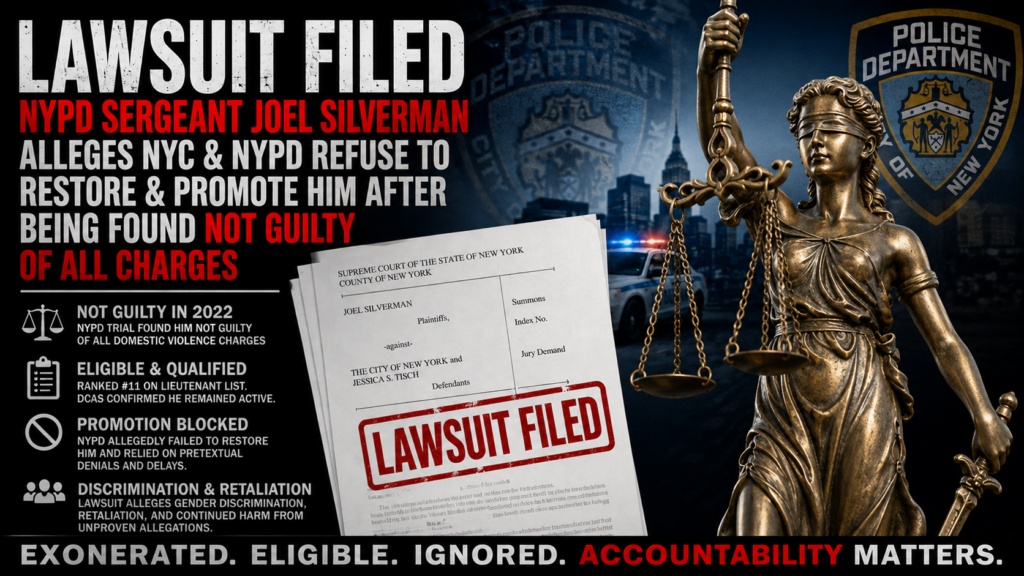
Regardless of the ultimate outcome, the lawsuit raises a question that many current and former NYPD members have been asking for years: What happens when an officer is cleared?
If a member is investigated, prosecuted internally, and ultimately found not guilty, should the department simply move on as if nothing happened? Or should there be a meaningful process to restore that officer’s reputation, promotional opportunities, and career trajectory?
Those questions arrive during what has become another difficult week for NYPD leadership.
The Silverman lawsuit is only the latest controversy to emerge as concerns about accountability continue to swirl around One Police Plaza. Critics argue that while Commissioner Tisch and City Hall frequently emphasize falling crime statistics and positive headlines, they have been far less willing to address allegations involving internal misconduct, favoritism, and selective enforcement of department policies.
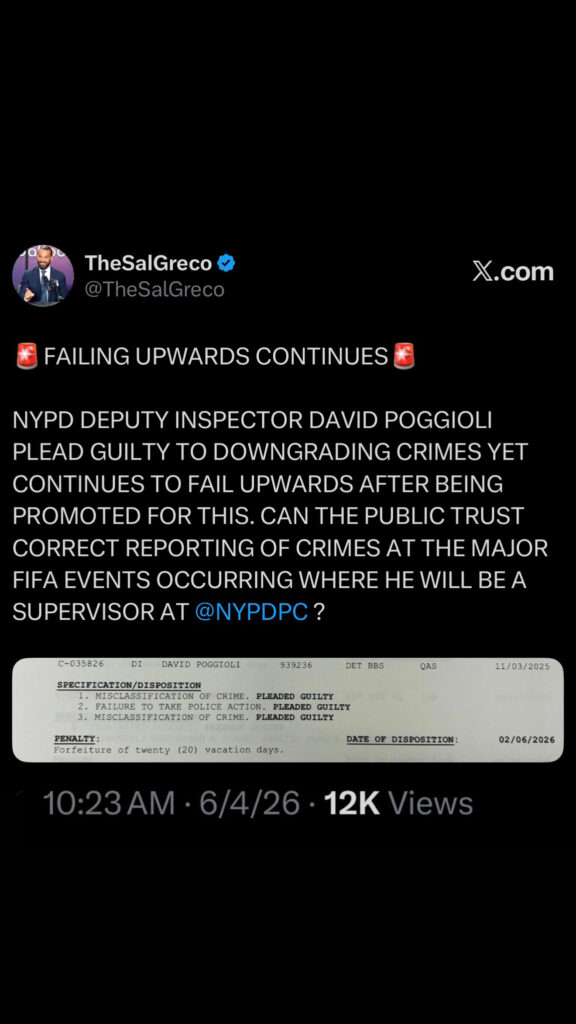
One example repeatedly cited by critics is the case of Inspector David Poggioli. As first reported by The Sal Greco Show, Poggioli allegedly admitted during departmental proceedings to crime classification issues that many observers believe should have resulted in significant professional consequences. Instead, critics note that he has reportedly continued receiving favorable assignments and promotions. According to sources, Poggioli is now expected to play a supervisory role in policing upcoming FIFA-related events in New York City.
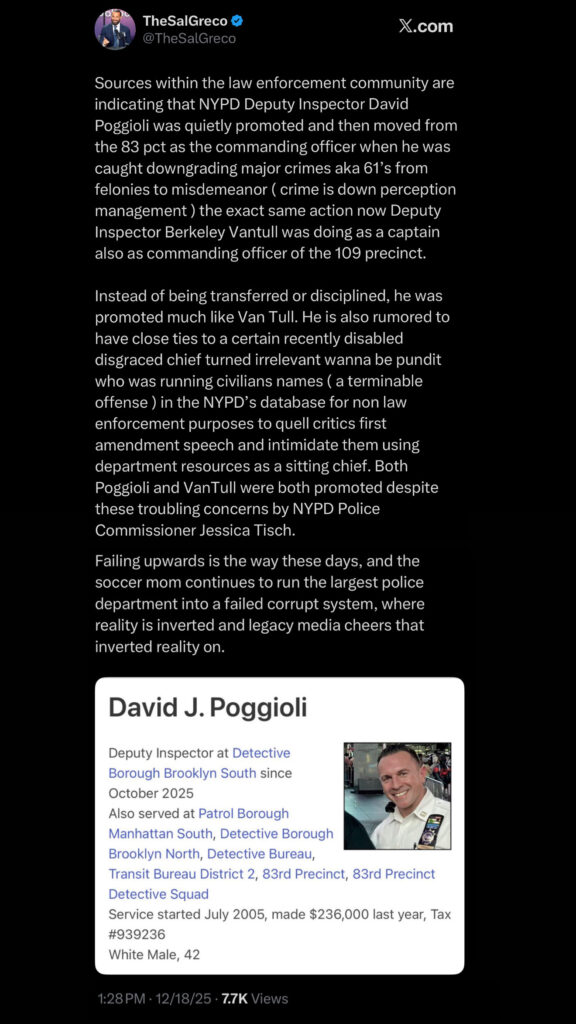
To many officers, that sends a troubling message.
If allegations of misclassifying crimes are serious enough to undermine public confidence in crime statistics, why are executives connected to those allegations seemingly rewarded rather than held accountable? Why do some members find their careers permanently damaged by accusations while others appear insulated from consequences?
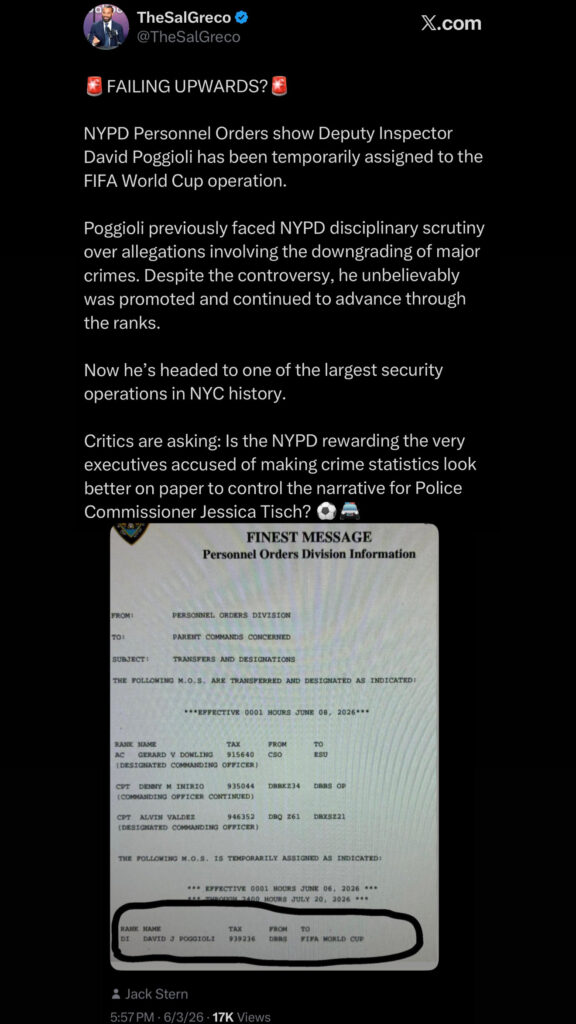
The same concerns are now surfacing regarding overtime and labor relations.
The Sal Greco Show recently reported that officers assigned to major details and special events have accumulated well over twenty tour changes during the first half of the year. According to sources, many members allegedly refrained from submitting overtime claims despite provisions in the Patrolmen’s Benevolent Association contract that critics argue require compensation after certain thresholds are reached.
Those allegations became even more significant when PBA President Patrick Hendry reportedly informed Commissioner Tisch that officers exceeding the contractual thresholds would begin submitting overtime claims.
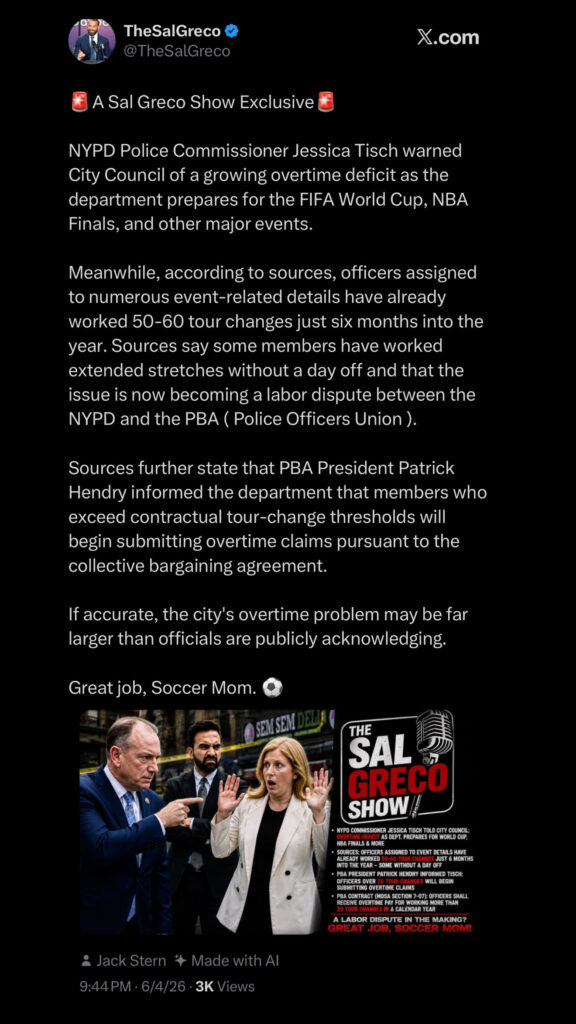
If those reports prove accurate, the implications could extend far beyond payroll disputes.
The question becomes whether City Hall and NYPD leadership knowingly allowed officers to work under conditions that were inconsistent with contractual obligations. If officers genuinely feared retaliation for submitting overtime requests they believed they were entitled to, that would represent a serious breakdown in labor-management relations.
Just as importantly, it would raise questions about the information being presented to the City Council and the public.
Commissioner Tisch has repeatedly highlighted crime reductions and operational successes. Yet critics argue that those accomplishments become more difficult to celebrate if they are accompanied by allegations of manipulated statistics, selective discipline, unequal treatment, and labor concerns that remain hidden from public view.
At its core, the Silverman lawsuit is not merely about one sergeant seeking a promotion. It is about accountability.
Accountability means that officers found guilty face consequences. But accountability also means that officers found not guilty are treated fairly.
Accountability means executives are held to the same standards imposed on rank-and-file officers.
Accountability means accurate crime reporting, transparent personnel decisions, and honest discussions about staffing, overtime, and departmental management.
Most importantly, accountability cannot be selective.
As lawsuits continue to mount and allegations continue to surface, many New Yorkers—and many NYPD officers—are asking a simple question:
Is the department focused on fixing problems, or merely controlling the narrative surrounding them?
That question may ultimately prove far more important than any individual lawsuit.