BY SAL GRECO
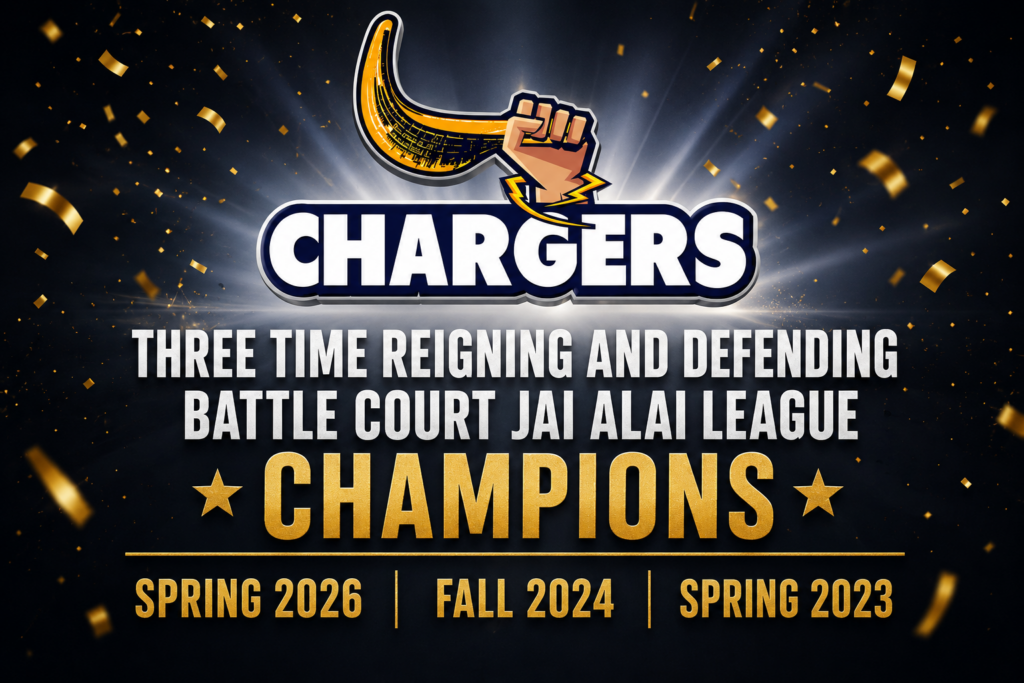
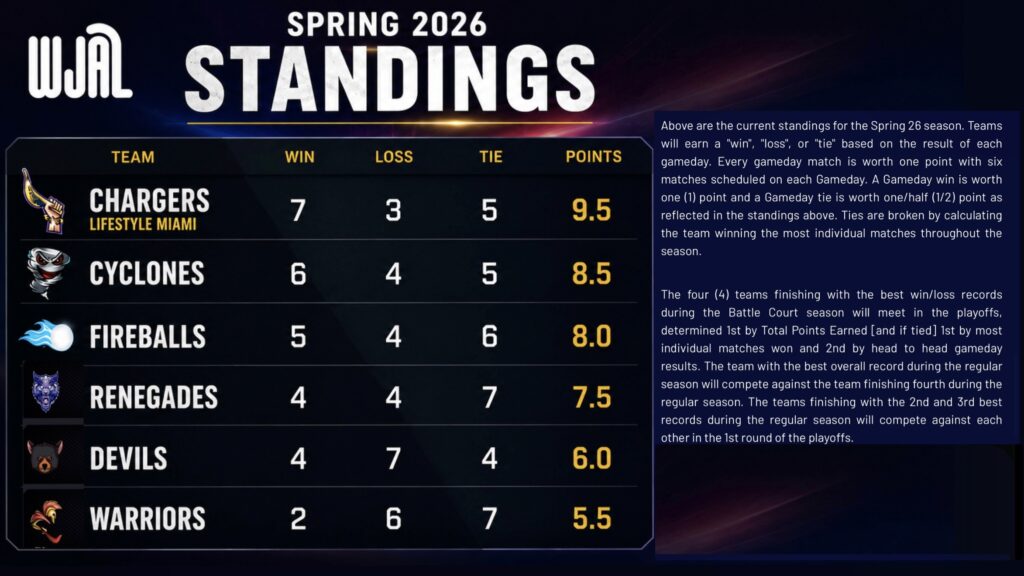
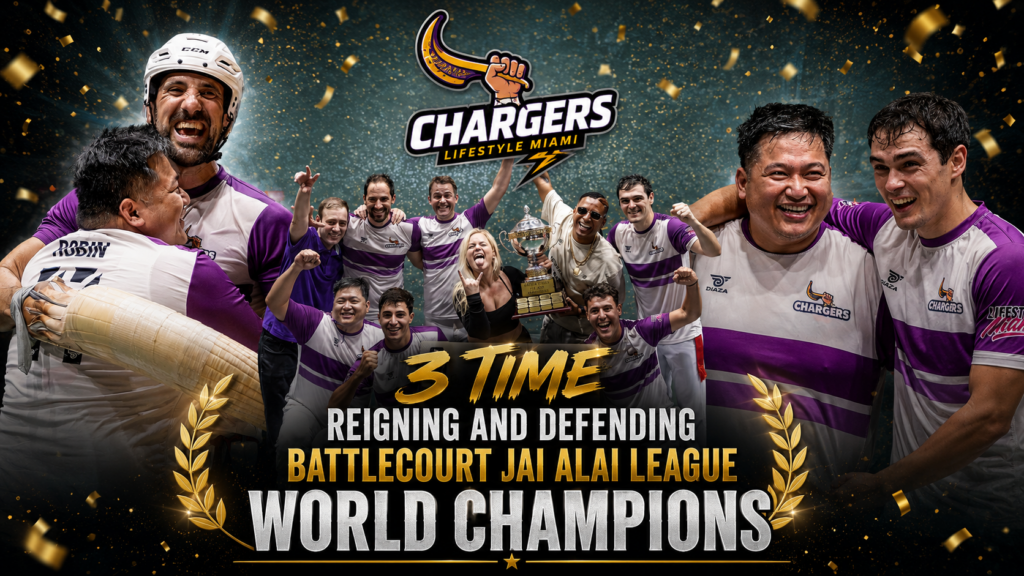
The World Jai-Alai League continues to prove that one of Miami’s oldest and most unique sports traditions is officially back — and thriving. In front of an electric crowd at JAM Arena inside Casino Miami, the Lifestyle Miami Chargers defeated the defending champions Cyclones on May 8, 2026 dethroning them in a dramatic championship finale to capture their third Battle Court Jai-Alai title since 2024 after finishing first in the regular season standings.
For longtime jai alai fans and newer supporters discovering the sport for the first time, the atmosphere inside JAM Arena felt like the beginning of something special. South Florida has always had deep roots in jai alai culture dating back generations, but the World Jai-Alai League has managed to modernize the sport in a way that appeals to both traditional fans and younger audiences.
I was there personally supporting the Chargers alongside one of the owners, Miguel of Lifestyle Miami, and the energy inside the building was incredible from start to finish. Every point carried playoff intensity, the crowd was fully engaged, and the championship atmosphere felt much bigger than many people outside the sport would expect. JAM Arena itself exceeded expectations in its very first season, offering plenty of seating, food options, entertainment, and even comedy nights on Fridays that help turn the venue into more than just a sports arena.
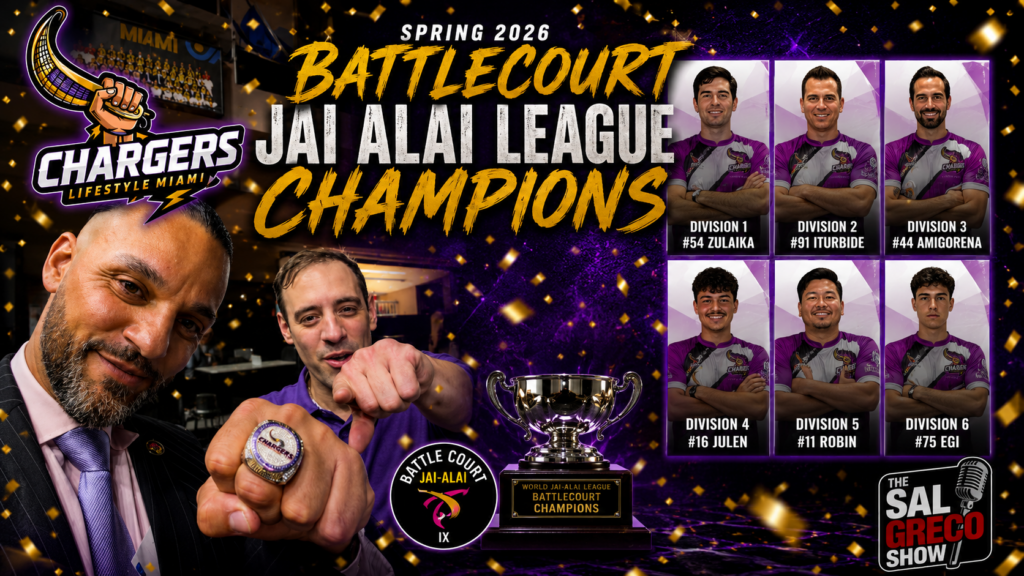
The Finals matchup itself lived up to the hype. The Chargers and Cyclones traded momentum throughout the night before the Chargers ultimately sealed the championship in a deciding seventh-match tiebreaker.
The Chargers roster featured some of the top pelotaris in the league, including:
- Zulaika
- Iturbide
- Amigorena
- Julen
- Robin
- Egi
The Cyclones also brought a stacked lineup into the championship, making the finale one of the most competitive title matches the league has seen so far.
One of the reasons Battle Court Jai-Alai has become easier for new fans to follow is because the World Jai-Alai League modernized the traditional format. Instead of the old-school rotating wagering-only structure many people remember from decades ago, Battle Court operates with team-based competition and playoff formats similar to other professional sports. Teams compete in singles and doubles matches throughout the night, earning points toward an overall victory. Matches move quickly, the ball routinely travels at speeds over 150 miles per hour, and the nonstop pace creates one of the fastest live sports experiences anywhere.
The sport itself has a fascinating history. Jai alai originated from the Basque region of Spain and France centuries ago before exploding in popularity in Florida during the twentieth century. Miami became one of the epicenters of the sport, with the original Miami Jai-Alai Fronton once attracting massive crowds and becoming one of South Florida’s iconic sports venues.
After years of decline, many feared the sport would disappear entirely in America. Instead, the World Jai-Alai League has breathed life back into jai alai through social media, streaming platforms, legalized wagering integration, and a younger, entertainment-focused presentation. CEO and league leadership deserve significant credit for successfully modernizing the game while still respecting its history and traditions.
The move into JAM Arena appears to have been a major turning point. The renovated venue has already become one of the more unique sports and entertainment destinations in Miami. Fans can watch live matches, enjoy food and drinks, attend comedy nights, and experience a revitalized version of a sport that many thought was gone forever.
Fans can watch World Jai-Alai League matches through the league’s official website, ESPN3, YouTube, and other streaming platforms, making the sport more accessible than ever before.
Now, all eyes shift toward next season.
The Chargers will enter the new campaign as defending champions once again, and when they raise their championship banner inside JAM Arena next season, the atmosphere will likely be even bigger than this year’s Finals. If the first season at JAM Arena proved anything, it is that jai alai in Miami is no longer just surviving — it is building momentum again.