
BY SAL GRECO
Every month, New York City officials stand before cameras and present CompStat numbers as evidence that crime is moving in the right direction. Headlines often follow proclaiming that major crime is down, reinforcing the message that the city’s public safety strategy is working.
But does that tell the entire story?
On Episode 216 of The Sal Greco Show, Sal Greco and co-host Jack examined the NYPD’s July 2026 crime statistics alongside publicly released charts and recent reporting. The discussion raised a larger question: Are New Yorkers being shown the full picture, or simply the most politically favorable one?
Looking Beyond the Headlines
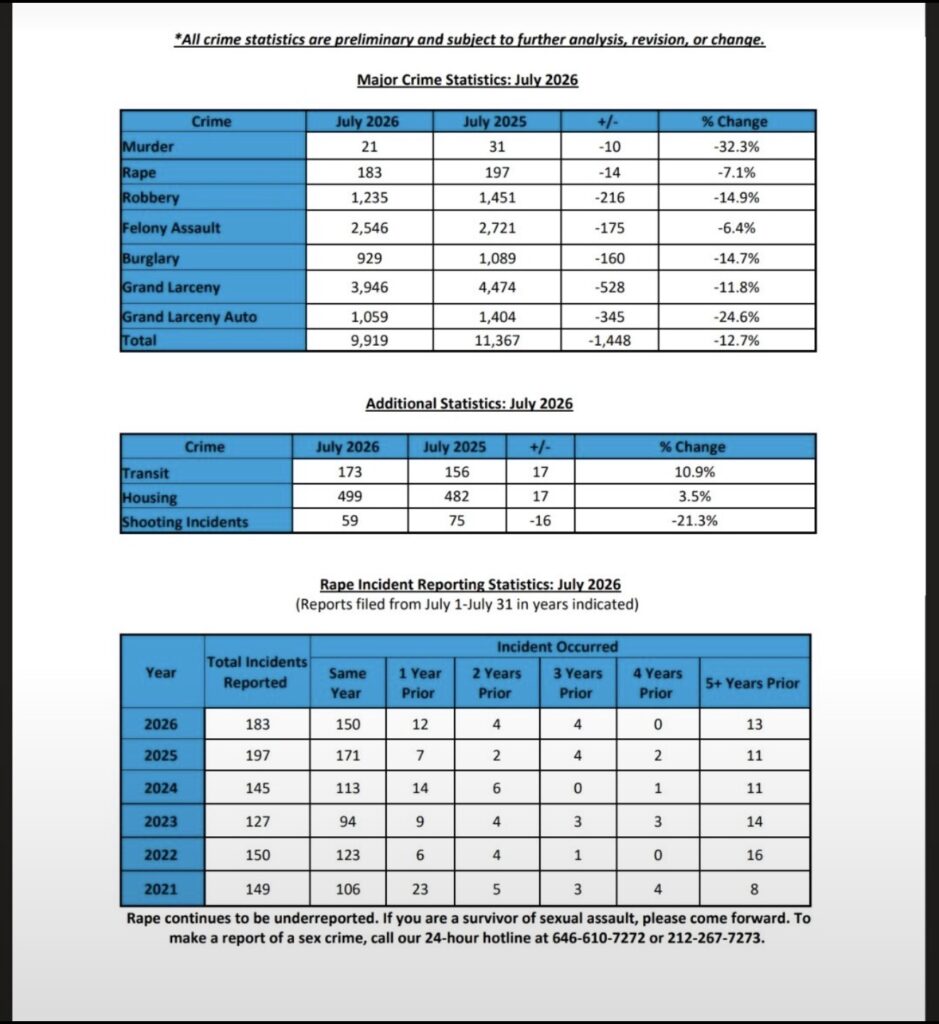
The NYPD’s July 2026 CompStat report showed significant declines across several major felony categories.
According to the Department:
- Murder decreased 32.3%.
- Robbery fell 14.9%.
- Felony assault declined 6.4%.
- Burglary dropped 14.7%.
- Grand larceny decreased 11.8%.
- Grand larceny auto declined 24.6%.
- Overall major crime was reported down 12.7%.
Those statistics understandably generate positive headlines.
However, the same report also reflects:
- Transit crime increasing 10.9%.
- Housing crime increasing 3.5%.
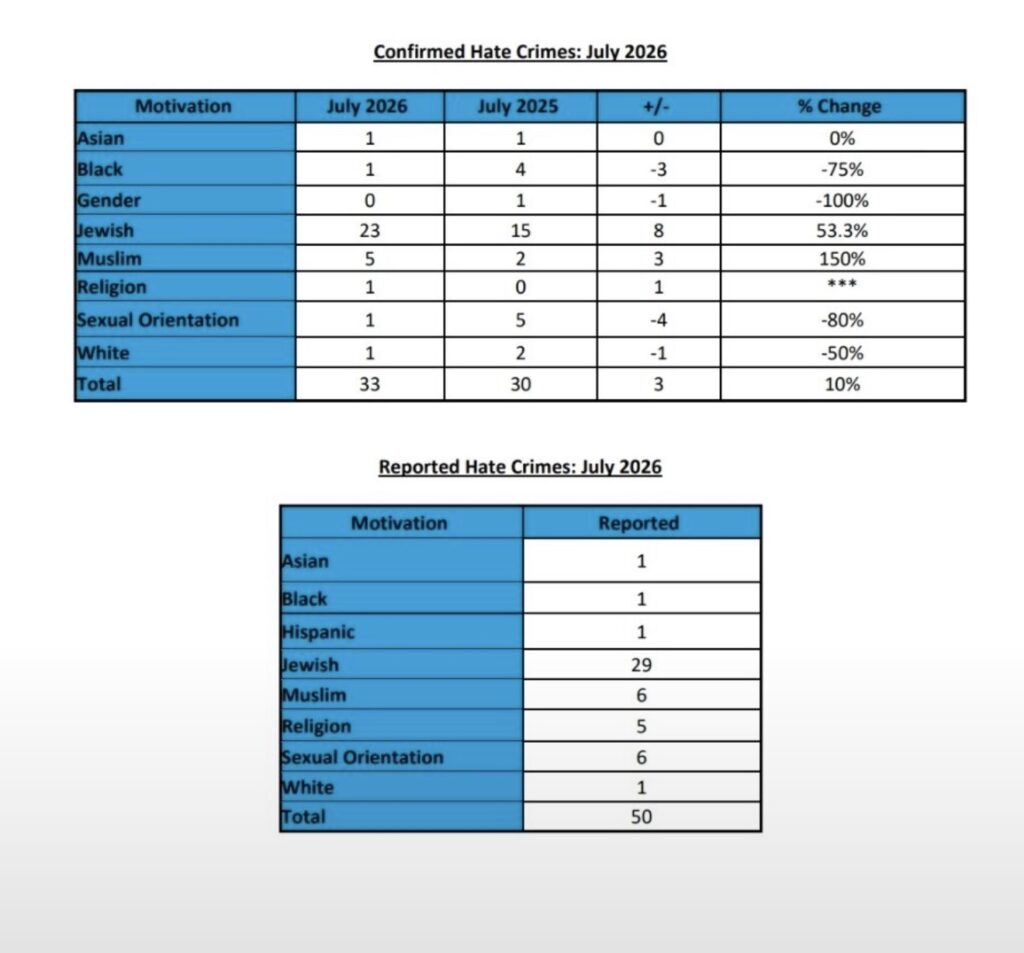
- Confirmed hate crimes increasing 10% during July.
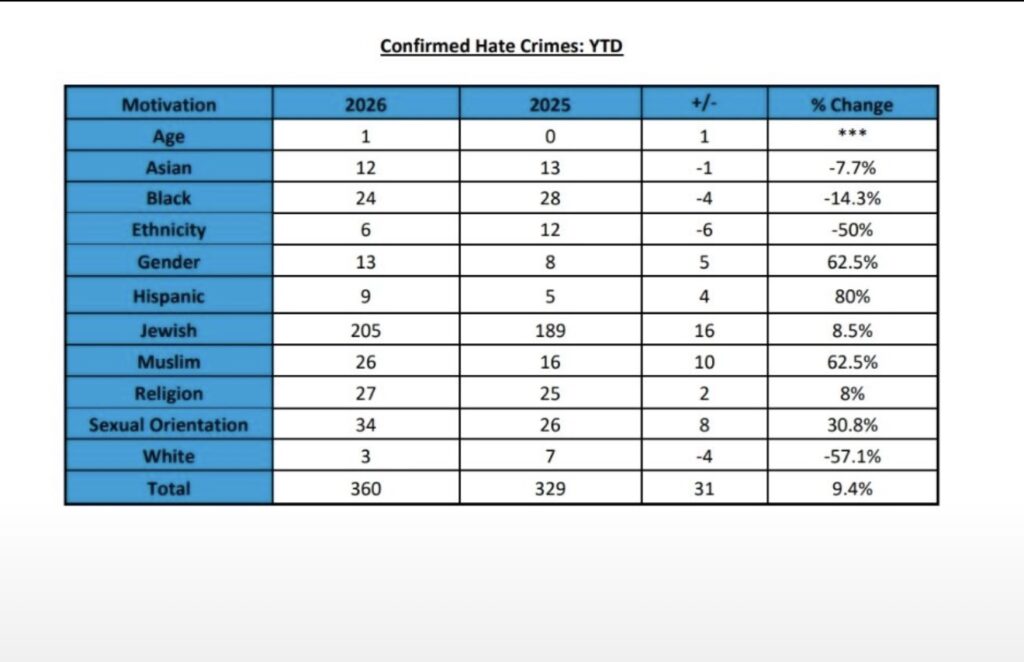
- Confirmed hate crimes increasing 9.4% year-to-date.
During the discussion, Greco argued that focusing exclusively on declining major crime categories without discussing increases elsewhere presents an incomplete picture of public safety.
At first glance, those figures appear encouraging.
Yet buried within the same report are statistics showing:
- Transit crime increased 10.9%
- Housing crime increased 3.5%
Meanwhile, confirmed hate crimes increased:
- 10% during July
- 9.4% year-to-date
The statistics themselves present a more nuanced picture than a simple “crime is down” headline.
Hate Crimes Continue to Rise
One category receiving particular attention during the show was hate crime.
The July report reflects increases in several classifications, including anti-Jewish and anti-Muslim incidents.
Greco and Jack noted that while year-to-date percentages appear smaller than month-over-month comparisons, both sets of statistics remain important when evaluating overall trends. They questioned whether emphasizing one timeframe over another may influence how the public interprets the data.
Transit Crime Tells a Different Story
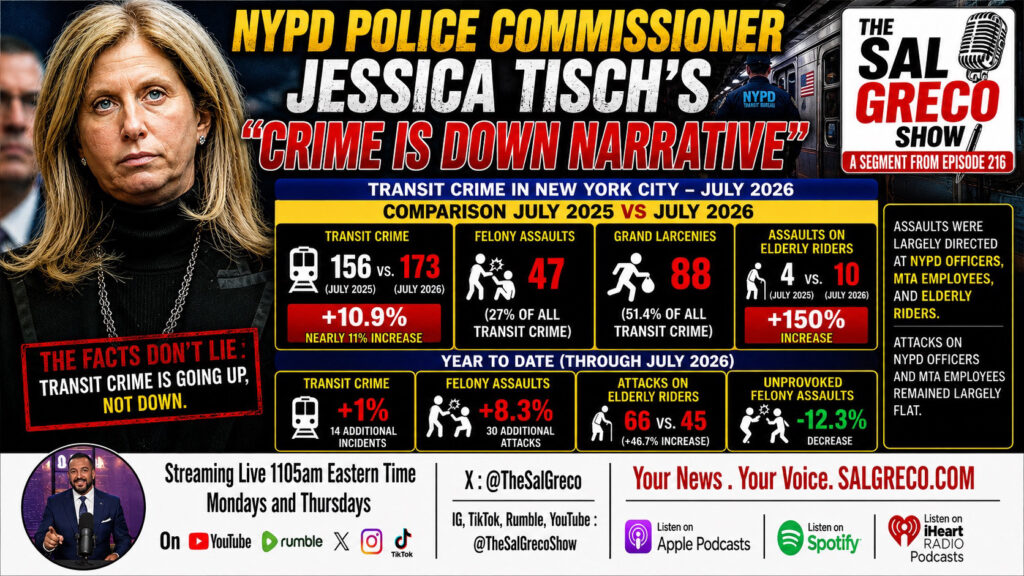
One of the most notable figures in the July report was transit crime.
Despite overall reductions in major crime, offenses in the subway system increased nearly 11%.
The discussion pointed out that many New Yorkers judge public safety less by citywide percentages and more by what they experience during their daily commute.
If transit crime continues increasing while officials emphasize declining citywide totals, residents may understandably view those two messages differently.
As Greco observed during the program, transit remains one of the areas where many riders continue expressing concerns about safety despite increased police deployments.
Can Every Crime Be Measured the Same Way?
One of the central themes of Episode 216 was the distinction between crimes that are difficult to reclassify and those whose legal classifications may change during the investigative process.
During the discussion, Greco argued that offenses such as murder and rape generally cannot be reclassified into lesser crimes in the same manner that some property crimes or assaults potentially can.
The discussion suggested that because certain offenses are reported differently than others, trends involving those categories deserve careful examination when comparing crime statistics over time.
A Debate That Has Existed for Years
Questions surrounding crime statistics are not unique to the current administration.
For decades, the NYPD has faced criticism from former officers, investigators, journalists, and oversight agencies regarding crime classification practices.
Historically, allegations have included:
- Reclassifying offenses into lesser categories.
- Downgrading felony complaints.
- Administrative adjustments following audits.
- Changes made after initial monthly reporting.
The Department has consistently maintained that audits exist to improve accuracy, while critics have argued that revisions can significantly alter public perception after initial announcements.
Greco contended that New Yorkers should pay close attention not only to monthly press conferences but also to subsequent audits, arguing that later revisions may present a different statistical picture than the original release.
What Isn’t Included?
Another point discussed during the program involved quality-of-life complaints.
Jack noted that many neighborhood concerns originate through 311 calls rather than felony arrests.
Those complaints can involve:
- Open drug use.
- Disorderly conduct.
- Chronic nuisance locations.
- Other recurring quality-of-life conditions.
The discussion questioned whether resolving an individual 311 complaint necessarily means the underlying problem has been permanently addressed, arguing that public confidence depends not only on closing calls but on producing lasting improvements.
Public Perception Matters
Crime statistics and public confidence are not always identical.
Residents often evaluate safety based on what they personally witness:
- Disorder on the subway.
- Open drug activity.
- Repeat offenders.
- Retail theft.
- Quality-of-life conditions.
- Videos circulating across social media.
Whether those experiences align with official crime statistics remains part of an ongoing public debate.
If people consistently feel less safe than the numbers suggest, officials should seek to understand why that gap exists rather than dismiss public concerns.
The Legislative Factor
The discussion also emphasized that policing does not occur in isolation.
Police enforce laws.
Legislatures write them.
District attorneys determine charging decisions.
Judges impose sentences.
Mayors establish administrative priorities.
As a result, many public safety outcomes reflect decisions made across multiple levels of government rather than by the NYPD alone.
Jessica Tisch’s Leadership
As Police Commissioner, Jessica Tisch is responsible for overseeing NYPD operations and communicating the Department’s public safety strategy.
Supporters may argue that declining major crime categories demonstrate effective leadership.
Critics—including those on The Sal Greco Show—question whether emphasizing favorable statistics while minimizing increases in transit crime, hate crimes, and quality-of-life concerns creates an overly optimistic narrative.
The broader issue is not whether every statistic is accurate.
Rather, it is whether New Yorkers are receiving the complete context necessary to evaluate public safety for themselves.
Transparency Builds Credibility
Public confidence depends on trust.
If statistics accurately reflect conditions on the streets, transparency strengthens confidence in government.
If residents believe numbers are selectively emphasized while unfavorable trends receive less attention, trust inevitably erodes.
Crime data should never be viewed solely as a political talking point.
It should serve as an honest assessment of public safety.
The Bottom Line
The July 2026 CompStat report presents genuine reductions in several major felony categories while also documenting increases in transit crime, housing crime, and multiple hate crime categories.
Those facts can coexist.
The larger question raised during Episode 216 is whether New Yorkers are being given the complete picture—or simply the portion that best supports a particular narrative.
Ultimately, transparency benefits everyone. If crime trends, audits, complaint data, and quality-of-life issues are presented openly and consistently, voters can make informed decisions about the policies, elected officials, and law enforcement strategies they believe best serve New York City.