
BY SAL GRECO
Another lawsuit has placed the New York City Police Department under scrutiny, this time focusing on Midtown North Precinct and allegations that, if substantiated, could raise serious questions about supervision, workplace conditions and the department’s response to discrimination complaints.
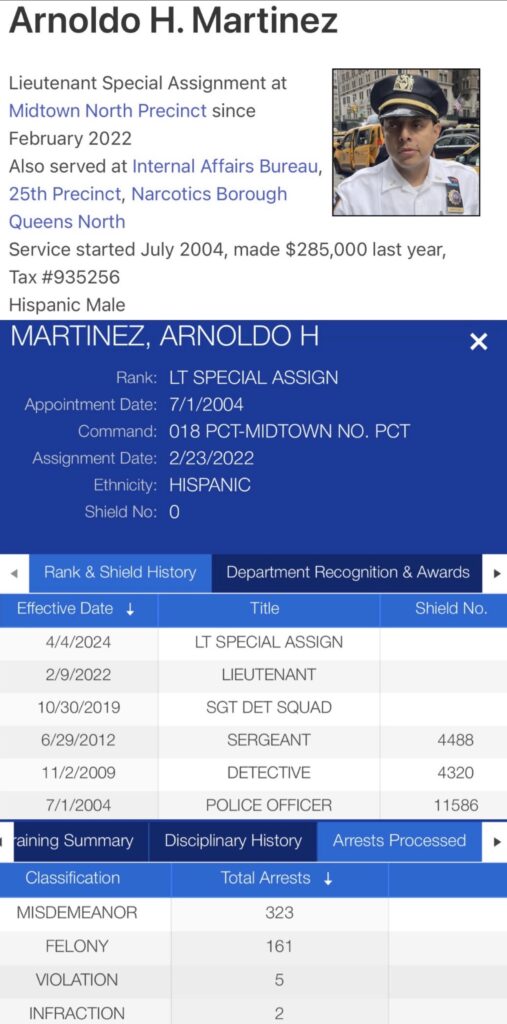
A verified complaint submitted electronically in New York State Supreme Court on September 21, 2026, by attorney John A. Scola on behalf of NYPD Police Officer Shane Worrell-Louis names the City of New York, Inspector Maggie Clamp, Lieutenant Cynthia Rodriguez, Lieutenant Arnoldo H. Martinez and Sergeant Lucas Alves as defendants. At the time the copy reviewed by SalGreco.com was generated, the document carried an unassigned index number and a warning that it had not yet been reviewed and approved by the County Clerk.
The 34-page complaint alleges race discrimination and retaliation under the New York City Human Rights Law. Worrell-Louis, a Black police officer assigned to Midtown North, alleges that what began as a dispute over repeatedly being assigned unsafe patrol vehicles developed into an escalating campaign of retaliation after he complained that the treatment was racially discriminatory.
The allegations remain allegations. No court has determined that Rodriguez or any of the other defendants committed the conduct alleged, and the defendants’ responses are not contained in the material reviewed for this report.
TWO BLACK OFFICERS, AN ALLEGEDLY DEFECTIVE POLICE CAR AND A COMPLAINT THAT CHANGED EVERYTHING
According to the lawsuit, during the week of June 30, Worrell-Louis and his partner, Police Officer Rhomane Ogle, were the two Black officers on their team and were repeatedly assigned RMP 4560.
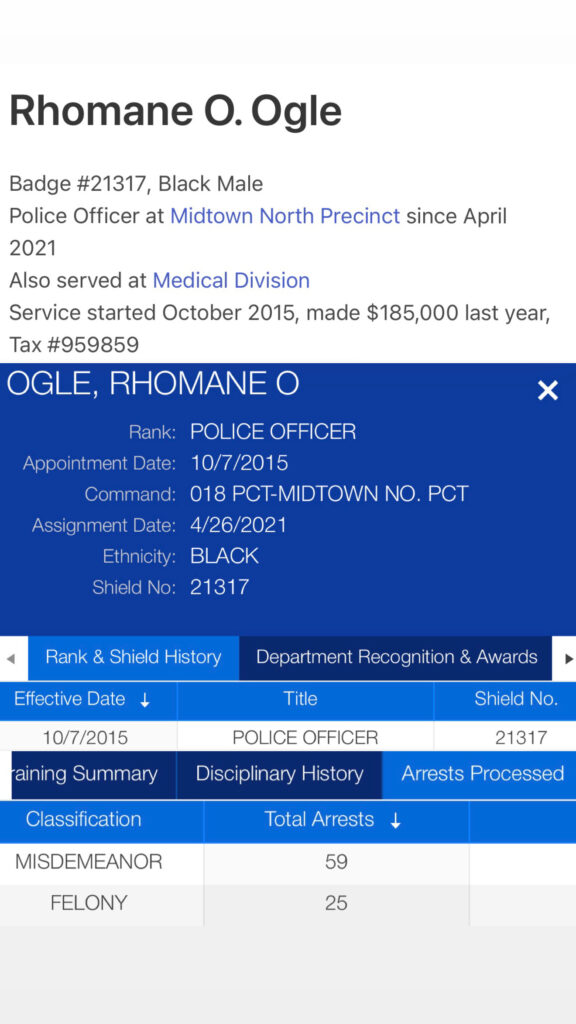
The complaint alleges the vehicle was overheating, lacked functioning air conditioning, blew hot air into the passenger compartment, had a tire-pressure warning, a deflated front passenger tire, a check-engine light and idled roughly. Worrell-Louis says he documented the defects and notified supervisors.
The allegations become particularly significant on July 1.
According to the complaint, Rodriguez encountered Worrell-Louis and Ogle while they were waiting for a roadworthy vehicle. After efforts to reach Martinez were unsuccessful, Rodriguez allegedly told the officers that she did not care and ordered them to leave the command in the vehicle assigned to them despite its reported condition.
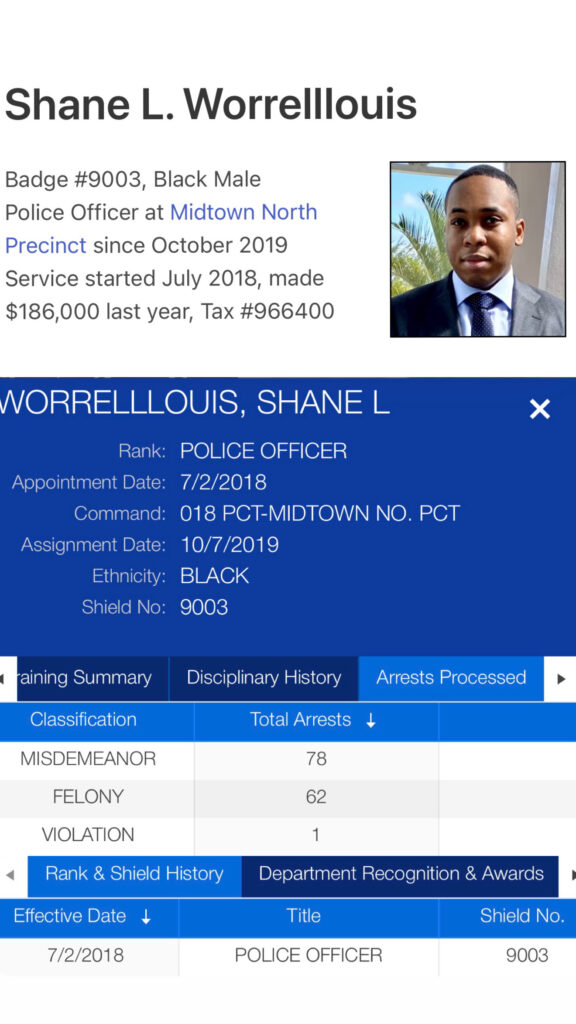
The following day, Worrell-Louis says he and Ogle were again confronted with an RMP without functioning air conditioning. The complaint says the interior temperature was approximately 102 degrees.
Worrell-Louis then put his concerns in writing.
He allegedly told the team’s group chat that he believed the continued treatment might be related to race because the two Black officers with the most time on the job were being subjected to those conditions. He also raised retaliation. Ogle allegedly separately documented similar concerns in his activity log.
That July 2 complaint is central to Scola’s lawsuit because it is alleged to constitute protected activity under the New York City Human Rights Law.
Then came July 3.
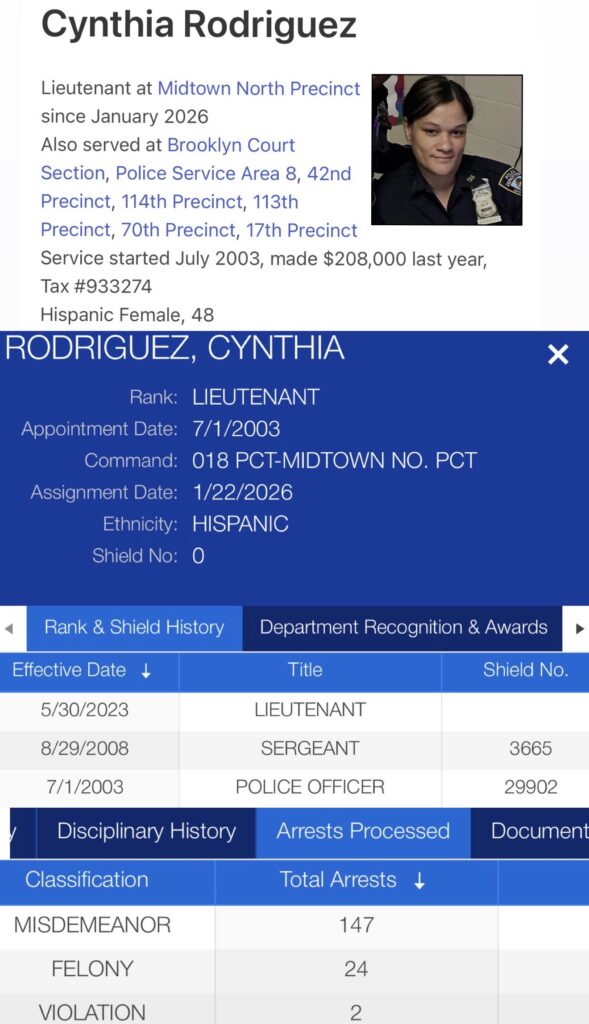
REMOVED FROM TRAFFIC ONE DAY AFTER THE WRITTEN RACE COMPLAINT
Worrell-Louis alleges that only one day after putting his racial-discrimination concerns in writing, he was brought before command personnel and removed from his Traffic assignment.
According to the lawsuit, Clamp, Rodriguez, Martinez and Alves were present along with Worrell-Louis’s PBA delegate. The complaint alleges body-worn cameras were removed and Worrell-Louis was surrounded by supervisors before being informed that he was being returned to patrol and his tour changed.
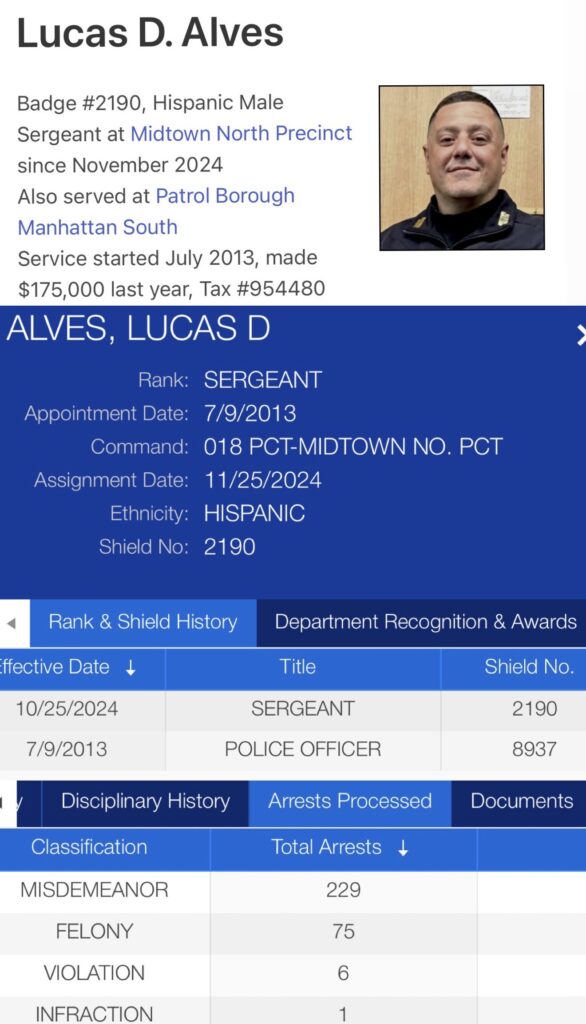
Clamp allegedly attributed the decision to insubordination and said Worrell-Louis would receive a Command Discipline. According to the complaint, however, no such Command Discipline was served during the following two months.
The lawsuit emphasizes the timing: Worrell-Louis’s removal occurred the day after his written race complaint and only hours after another complaint concerning the continued assignment of the same Black officers to the allegedly defective vehicle.
OFFICER ENDS UP IN THE EMERGENCY ROOM
The situation allegedly became a medical emergency on July 4.
Worrell-Louis says he was assigned RMP 4565, another vehicle he claims had no functioning air conditioning and a passenger-side window that would not open.
He alleges he subsequently became dizzy, nauseous, lightheaded and weak, experienced heavy sweating and difficulty maintaining his footing, and was transported to New York-Presbyterian Lower Manhattan Hospital.
Unlike some of the other allegations, the complaint says there is an NYPD record corroborating the basic circumstances surrounding the injury.
According to the pleading, NYPD approved Worrell-Louis’s injury as a line-of-duty injury, LOD No. L2026003923, on July 7. The investigating supervisor reportedly documented that the officer had been operating an RMP without working air conditioning before becoming weak, lightheaded, dizzy and nauseous. The complaint says NYPD found no negligence by Worrell-Louis.
“JUST TAKE YOUR PUNISHMENT ON THE CHIN”
The allegations involving Lt. Cynthia Rodriguez then become considerably more serious.
After Worrell-Louis sought lost time following his emergency-room treatment, the complaint alleges Sgt. John Williams told him he could not approve it because Rodriguez had instructed him not to approve anything for Worrell-Louis.
Worrell-Louis further alleges that Rodriguez subsequently confronted him near the desk and warned him that whoever was advising him was advising him incorrectly and that he was going to “get yourself hurt doing this.”
Rodriguez allegedly continued:
“just take your punishment on the chin and this will go away.”
She allegedly warned him that continuing down the same path could damage his career.
Those words could become important evidence if their occurrence and context are established.
The complaint further alleges that while Worrell-Louis remained out line-of-duty, officers told him Rodriguez had been asking when he would return and allegedly remarked, “Well, he can’t stay out forever. Eventually he must come back.”
OEEO COMPLAINT — AND ALLEGED ESCALATION
Worrell-Louis contacted NYPD’s Office of Equal Employment Opportunity on July 10. According to the lawsuit, his complaint became OEEO Case No. 2026-618, and he appeared before OEEO on August 18 to describe the alleged discrimination and retaliation.
The lawsuit claims Rodriguez’s treatment of Worrell-Louis intensified afterward.
It alleges that Worrell-Louis was repeatedly confined to undesirable sectors and vehicles and that Rodriguez personally instructed supervisors that he was to receive only Sector C or Sector D.
The complaint says Sgt. Patrick Wallace had previously warned Worrell-Louis:
“Don’t be surprised if Lt. Rodriguez puts you on the punishment post.”
ATTORNEY JOHN SCOLA: “THE NYPD DOESN’T GET TO PUNISH OFFICERS FOR REPORTING RACISM”
Another officer allegedly witnessed Rodriguez instructing a supervisor that Worrell-Louis was not to receive assignments other than Sectors C or D—even when the official roll call listed him elsewhere.
On August 26, according to Worrell-Louis, Rodriguez told him she was assigning him to West 54th Street and Eighth Avenue as punishment because she did not like his attitude.
Worrell-Louis says he asked his lieutenant directly whether she was retaliating against him by putting him on a punishment post.
According to the lawsuit, Rodriguez responded:
“Yes, I am.”
Critically, Worrell-Louis doesn’t merely claim the exchange happened.
In an exclusive statement to SalGreco.com, attorney John Scola, who represents Worrell-Louis, said:
“Officer Worrell-Louis and his partner, the only two Black officers on their team, were put in a broken patrol car with no air conditioning in 100-degree heat, and the day after he complained in writing that it was racial, the NYPD stripped him of his assignment. When he later asked Lieutenant Rodriguez whether she was retaliating against him, she told him, ‘Yes, I am.’ The NYPD doesn’t get to punish officers for reporting racism.”
The lawsuit further alleges that Rodriguez subsequently read Worrell-Louis’s memo book further identifing Police Officer Sokhna Sarr and Sgt. James McHugh as being witnesses to this .
If litigation proceeds into discovery, the actual recording and its complete context could become important evidence.
The lawsuit further alleges that Rodriguez subsequently read Worrell-Louis’s memo book, saw that he had documented what happened, returned approximately seven minutes later and entered a violation into it. The complaint says Rodriguez then sought advice from other supervisors about issuing Worrell-Louis a Command Discipline, but those supervisors allegedly told her that he had done nothing wrong and there was no basis for one.
OTHER OFFICERS MENTIONED IN CONNECTION WITH RODRIGUEZ
Worrell-Louis’s lawsuit also seeks to portray his experience as potentially broader than an individual dispute.
The complaint alleges that Police Officer Charles Betancourt, identified as Hispanic, previously worked as a Traffic Officer at the 17th Precinct when Rodriguez was assigned there and experienced similar treatment. Betancourt allegedly warned Worrell-Louis about Rodriguez.
More significantly, the lawsuit alleges “upon information and belief” that Black Police Officer Shredene Stewart also experienced similar treatment and previously filed an OEEO complaint concerning Rodriguez.
Those allegations have not been adjudicated.
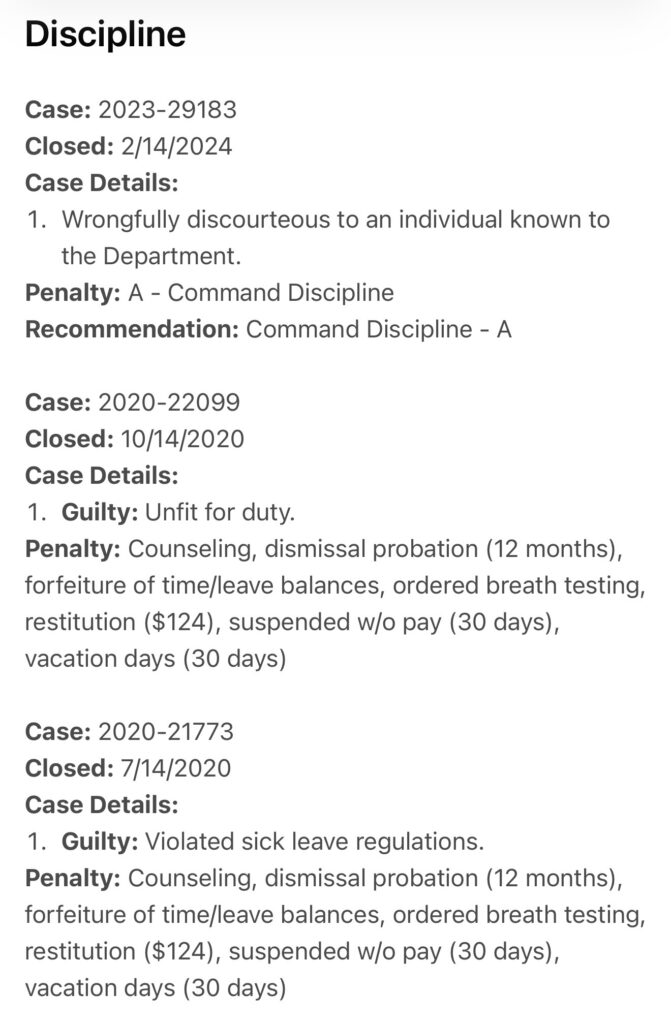
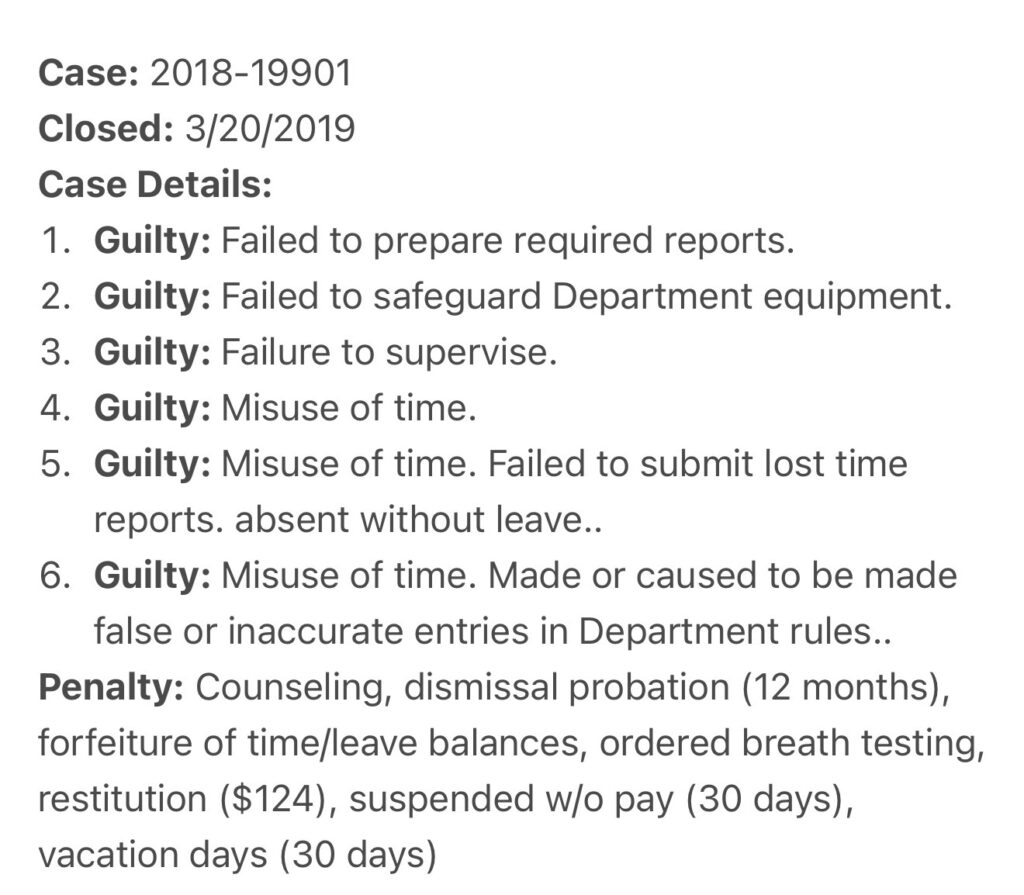
Public CCRB-derived records provide additional historical context, although they should not be conflated with Worrell-Louis’s allegations. A ProPublica NYPD disciplinary-record database lists prior civilian allegations associated with a Cynthia Rodriguez who served as an NYPD sergeant, including allegations whose recorded dispositions included unsubstantiated and exonerated findings. Those records do not establish the discrimination and retaliation alleged in the new lawsuit.
NOW ADD THE RECENT PAID-DETAIL QUESTIONS
The new lawsuit arrives as The Sal Greco Show has separately reported allegations concerning Rodriguez and a recent paid-detail incident.
According to sources cited by The Sal Greco Show—not allegations contained in Worrell-Louis’s lawsuit—Rodriguez was allegedly working a paid detail associated with a Mount Sinai location within Midtown North when an emotionally disturbed individual threw objects or soiled clothing in her vicinity.
The show’s sources allege Rodriguez attempted to arrest and handcuff the individual before the person got away, triggering questions over whether the incident should have been treated as an escaped-prisoner event. The program further reported that Rodriguez was injured during the incident and subsequently went line-of-duty sick.
The show also reported source allegations that Rodriguez had previously been placed on dismissal probation multiple times and questioned whether NYPD paid-detail rules permitted her to work the particular location.
Those assertions are separate from the Worrell-Louis complaint and, based on the material presently available, have not been independently established by a court or official finding. They should therefore remain attributed to sources and The Sal Greco Show’s reporting rather than presented as established fact.
That distinction does not make the questions insignificant.
Taken together, the new litigation and the separately reported paid-detail incident create several factual issues the NYPD could be asked to address: Rodriguez’s current duty status; whether the paid detail complied with applicable NYPD rules; how the alleged prisoner incident was classified; whether any internal review resulted; and how the Department responds to the allegations now contained in Worrell-Louis’s verified complaint.
IS MIDTOWN NORTH A HOSTILE WORKING ENVIRONMENT?
That is now a question likely to follow this lawsuit—but it is not something the filing alone proves.
The complaint describes what Worrell-Louis portrays as an environment involving alleged racial disparities in assignments, unsafe equipment, punishment posts, selective surveillance, humiliation, retaliatory discipline and efforts to discourage complaints.
He also identifies other officers whom he says experienced or witnessed related conduct.
If corroborated, those allegations could support scrutiny of whether problems extended beyond one officer-supervisor dispute. But determining whether Midtown North legally constituted a discriminatory hostile work environment requires evidence beyond the allegations of a newly filed complaint.
ANOTHER MANAGEMENT PROBLEM FOR THE TISCH NYPD
For Police Commissioner Jessica Tisch, the immediate institutional issue is what NYPD does with allegations against supervisors once they are formally raised.
Worrell-Louis alleges he complained internally, went to OEEO, documented events and continued experiencing retaliation afterward. If those allegations are established, the resulting questions would concern not only individual conduct but whether the Department’s internal safeguards worked as intended.
The allegations also come amid other employment litigation involving NYPD personnel represented by John Scola. For context, Scola has represented NYPD-related plaintiffs in other recent litigation, including former Interim Commissioner Thomas Donlon, although those cases involve different facts and legal theories. In February 2026, a federal judge dismissed Donlon’s federal claims; that ruling therefore should not be characterized as validating Donlon’s underlying allegations.
RODRIGUEZ MAY NOW HAVE A LOT TO ANSWER
What can be said at this early stage is that Lt. Cynthia Rodriguez is facing detailed allegations in a sworn civil complaint.
They include allegations that she ordered Worrell-Louis to use an allegedly unsafe vehicle; interfered with his assignments and lost time; warned him to accept his “punishment”; restricted him to undesirable assignments; subjected him to heightened scrutiny after his OEEO complaint; attempted to find a basis for discipline; and, most notably, allegedly admitted she was retaliating against him in an interaction the plaintiff says was recorded.
Separate questions raised by The Sal Greco Show’s reporting about Rodriguez’s recent paid-detail incident remain unresolved and should be investigated and answered independently of this lawsuit.
The larger question for NYPD leadership is straightforward: What did Midtown North management know about these complaints, what was investigated, and what—if anything—was done about them?
Until those responses and supporting records emerge, the allegations remain disputed.
But with a plaintiff alleging an actual recorded admission of retaliation, this is no longer merely an anonymous complaint circulating inside a precinct.
It is now contained in a 34-page verified lawsuit—and the City of New York and the individual defendants may have to answer it in court.