
BY SAL GRECO
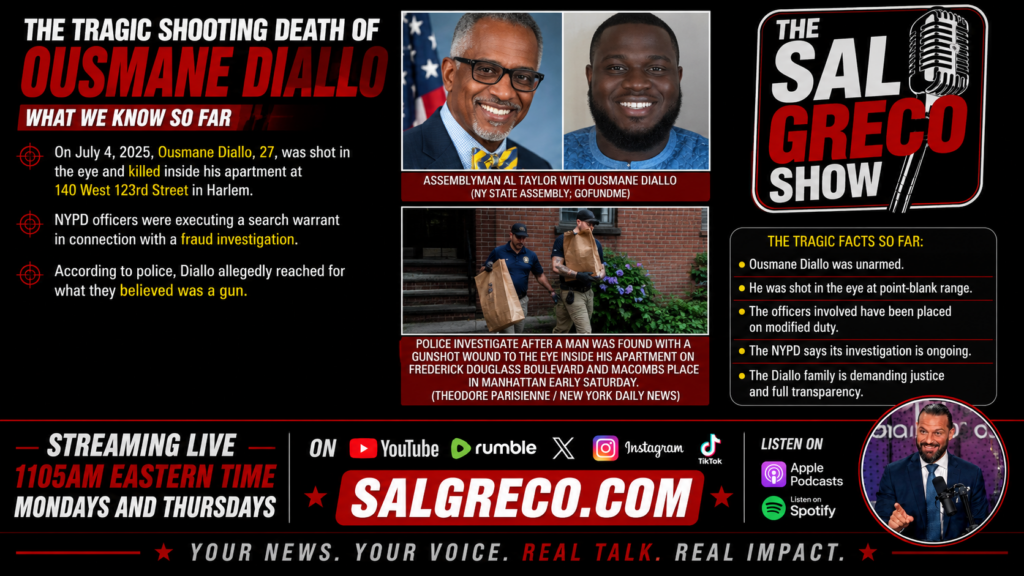
The tragic death of 24-year-old Ousmane Diallo has sparked an investigation that will ultimately determine exactly what happened inside a Bronx apartment. But regardless of where that investigation ultimately leads, one question has already emerged:
How can a tragedy like this be prevented from happening again?
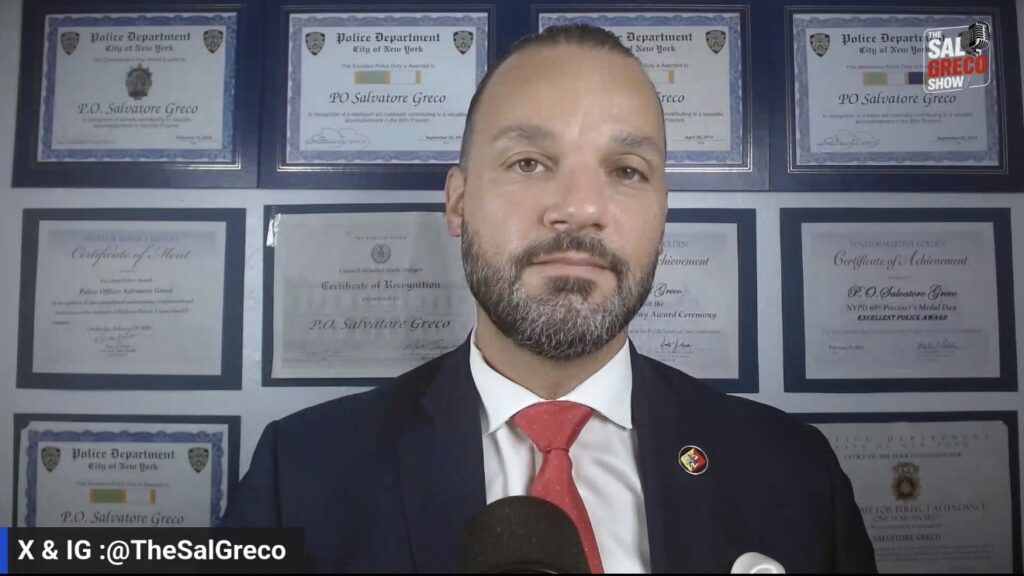
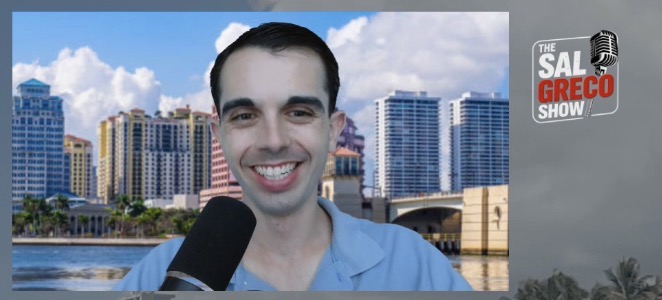
That question became the focus of Episode 213 of The Sal Greco Show, where host Sal Greco, co-host Jack Stern, and retired NYPD Police Officer and military veteran Ilbey Aykac examined the incident through the lens of firearms training, officer responsibility, and department accountability.
Unlike many discussions that immediately focus on assigning blame, the conversation centered on something broader: whether the NYPD has done enough to ensure that every officer—particularly younger officers—develops lifelong firearm safety habits.
A Tragedy That Raises Difficult Questions
According to information discussed during Episode 213, Diallo, an aide to New York State Assemblyman Al Taylor, was fatally shot by an off-duty rookie NYPD officer. The circumstances remain under investigation.
During the episode, Greco emphasized that investigators—not commentators—will ultimately determine exactly what occurred. At the same time, he argued that regardless of the legal outcome, the incident should prompt a serious examination of firearm safety training throughout the department.
“The Gun Doesn’t Magically Go Off”
One point repeatedly emphasized during the discussion was that firearms are mechanical devices designed with multiple safety procedures.
Greco explained that officers are taught from their first days in the Police Academy to remove the magazine, clear the chamber, visually inspect the weapon, and ensure the firearm is pointed in a safe direction before any cleaning begins. He argued those procedures are intentionally repetitive because the consequences of skipping even one step can be catastrophic.
The panel also discussed the distinction between an “accidental discharge” and an “unintentional discharge,” emphasizing that the investigation will determine the facts while noting that established safety procedures exist to prevent either type of event.
Jack Stern: The Investigation Must Answer Critical Questions
Jack Stern said the incident leaves numerous unanswered questions.
Among them:
- Why was the firearm reportedly being handled around 1:30 a.m.?
- Why was another person present?
- Was the firearm actually being cleaned?
- Were all established safety procedures followed?
Stern cautioned against speculation while stressing that those questions highlight why the investigation is so important. He also argued that off-duty firearm handling deserves greater attention, noting that officers spend far more time off duty than on duty throughout their careers.
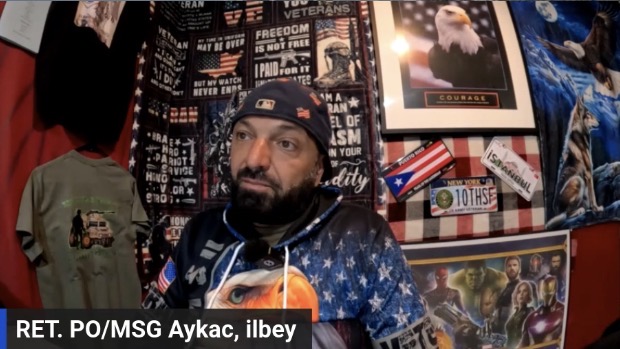
Ilbey Aykac: Common Sense Must Never Leave the Equation
Retired NYPD Police Officer Ilbey Aykac brought both military and police experience to the discussion.
Offering condolences to the victim’s family, Aykac repeatedly returned to one phrase:
“Common sense plays a big role.”
Aykac explained that during more than twenty years in law enforcement he generally cleaned his service weapon after firearms qualifications or personal range sessions—not routinely in everyday settings—and said officers must always treat every firearm as capable of firing until personally verified otherwise.
He also stressed another principle taught to firearm owners everywhere: always point the muzzle in a safe direction in case the unexpected occurs.
Is More Training Needed?
The discussion eventually shifted away from the specific case and toward possible solutions.
Aykac suggested that the Police Academy should repeatedly reinforce firearm safety throughout an officer’s training—not simply during firearms qualification.
Jack Stern agreed, arguing that off-duty weapon handling deserves greater emphasis because many negligent firearm incidents occur away from official police activity.
Greco recalled that instructors repeatedly drilled these concepts into recruits during his academy experience and questioned whether today’s officers receive the same level of reinforcement.
A Pattern Worth Examining
The discussion also pointed to previous negligent discharge incidents that have surfaced within the NYPD over the years, including incidents involving officers accidentally firing weapons inside precinct facilities or unintentionally injuring themselves while handling firearms. Those examples were raised not to equate them with the present case, but to argue that firearms safety remains an issue deserving continual attention.
Every law enforcement agency experiences isolated negligent discharges. The question raised during Episode 213 is whether recurring incidents—regardless of outcome—should prompt additional training, policy reviews, or cultural changes emphasizing responsible firearm handling both on and off duty.
Accountability Means Prevention
One of the recurring themes on The Sal Greco Show has been accountability.
Accountability does not begin only after tragedy strikes. It begins with policies, training, supervision, and leadership that reduce the likelihood of tragedy occurring in the first place.
The investigation into Ousmane Diallo’s death will continue through the legal process. That process should determine responsibility for this specific incident.
But the larger discussion extends beyond one investigation.
If additional firearms training, stronger reinforcement of safety procedures, or renewed emphasis on off-duty weapon handling can prevent even one future tragedy, then those conversations are worth having—not just inside the NYPD, but throughout law enforcement.
Five Fundamental Firearm Safety Rules Every Police Officer Is Taught
While firearms training varies among agencies, several universal safety principles are repeatedly emphasized throughout law enforcement and military instruction. During Episode 213, Sal Greco and retired NYPD Police Officer Ilbey Aykac discussed many of these same concepts while examining the fatal off-duty shooting.
1. Treat Every Firearm as if It Is Loaded
Never assume a firearm is unloaded simply because someone tells you it is. Every officer is trained to personally verify that the weapon is safe before handling or cleaning it.
2. Keep Your Finger Off the Trigger Until You Intend to Fire
This is one of the most basic firearm safety principles. During the discussion, Greco emphasized that firearms do not discharge on their own and that proper trigger discipline is intended to prevent negligent shootings.
3. Always Point the Muzzle in a Safe Direction
Aykac explained that whenever he handles a firearm—even at home—he intentionally points it in a direction where an unintended discharge would be least likely to injure another person or damage property.
4. Remove the Magazine and Clear the Chamber Before Cleaning
Greco recalled that academy instructors repeatedly taught recruits to remove the magazine, rack the slide, inspect the chamber, and confirm the firearm is unloaded before any maintenance begins.
5. Alcohol and Firearms Do Not Mix
During the discussion, Aykac emphasized that officers are taught not to carry or handle firearms while consuming alcohol, describing it as another basic element of responsible gun ownership.
Looking Back: Previous NYPD Negligent Firearm Incidents
Episode 213 also referenced previous negligent firearm incidents within the NYPD, with Greco recalling incidents involving unintended discharges inside department facilities and while officers were handling their weapons.
Public reporting over the years has documented a number of negligent discharges involving NYPD members of service, including incidents:
- Inside precinct station houses.
- During firearm loading or unloading.
- While officers were holstering or unholstering their service weapons.
- During off-duty weapon handling.
- At training facilities and police ranges.
The overwhelming majority of NYPD officers safely handle their firearms every day. However, each negligent discharge—whether it results in injury or not—serves as a reminder that firearm safety requires constant attention and continual reinforcement throughout an officer’s career.
Because policing is an occupation where mistakes can carry life-altering consequences, even isolated incidents provide opportunities for departments to evaluate training, reinforce best practices, and determine whether additional instruction may reduce future risk.
History Shows Why Firearm Safety Training Remains Important
The tragic shooting discussed on Episode 213 is not the first time an unintentional firearm discharge has prompted questions about officer training. For years, the NYPD has documented such incidents in its own Annual Firearms Discharge Reports.
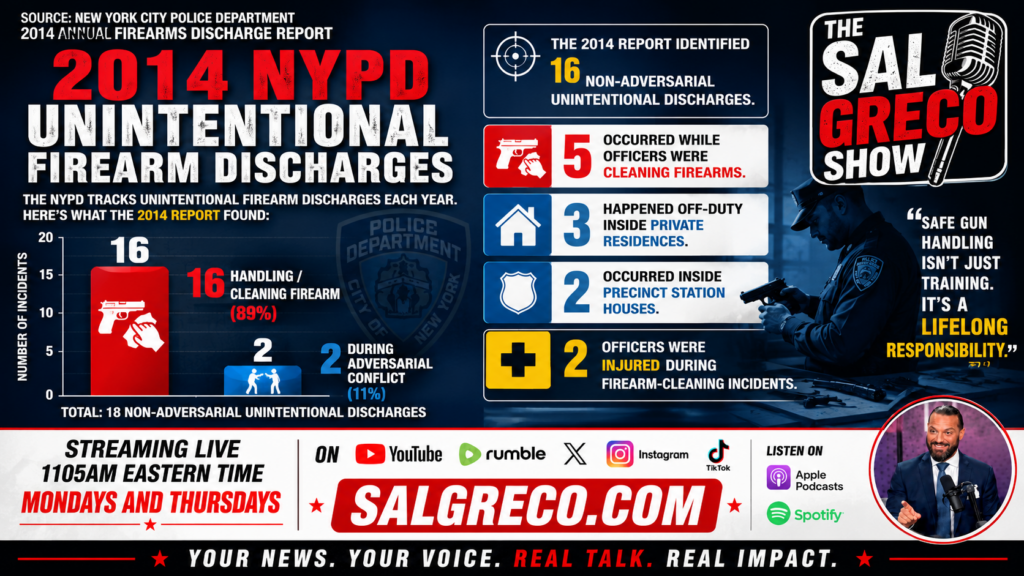
For example, the department’s 2014 report identified 16 non-adversarial unintentional discharges. Five occurred while officers were cleaning firearms, including three off-duty incidents inside private residences and two inside precinct station houses. Two officers were injured during firearm-cleaning incidents.
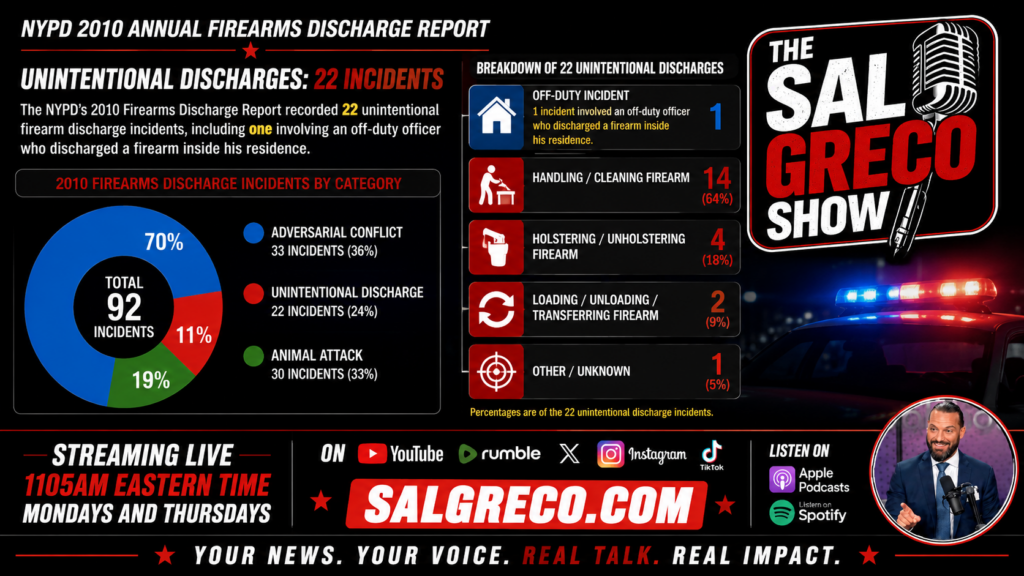
Earlier reports documented similar trends. The NYPD’s 2010 Firearms Discharge Report recorded 22 unintentional firearm discharge incidents, including one involving an off-duty officer who discharged a firearm inside his residence.
More recently, in 2024, an experienced NYPD Emergency Service Unit sergeant unintentionally discharged his firearm while helping clear Hamilton Hall during the Columbia University protest response. No one was injured, and the incident resulted in an internal investigation and retraining.
These documented incidents do not establish that every negligent discharge has the same cause. They do, however, illustrate why firearm safety training, periodic retraining, and strict adherence to handling procedures remain essential throughout an officer’s career.
Could This Incident Lead to Changes?
Whether the NYPD implements additional training as a result of this investigation remains to be seen.
Potential areas that could be examined include:
- More frequent off-duty firearm safety refreshers.
- Mandatory annual classroom instruction in addition to range qualifications.
- Scenario-based negligent discharge prevention training.
- Reinforcement of firearm handling during recruit training.
- Expanded education regarding firearm storage and handling inside the home.
- Refresher instruction after any negligent discharge occurring within the department.
These are policy considerations rather than conclusions. Ultimately, any changes would be decisions for NYPD leadership and policymakers after reviewing the facts of this investigation and broader departmental training practices.
Final Thoughts
Every police officer understands that carrying a firearm is among the greatest responsibilities entrusted to them.
As discussed throughout Episode 213, accountability is not limited to criminal investigations or disciplinary proceedings after tragedy occurs. It also includes continually improving training, reinforcing safe practices, and ensuring that every recruit—and every veteran officer—never becomes complacent with a tool capable of taking a life in a fraction of a second.
The investigation into Ousmane Diallo’s death will determine what happened in this specific case.
The broader conversation raised by Sal Greco, Jack Stern, and retired Officer Ilbey Aykac asks an equally important question:
Can lessons learned today help prevent the next tragedy tomorrow?