
BY SAL GRECO
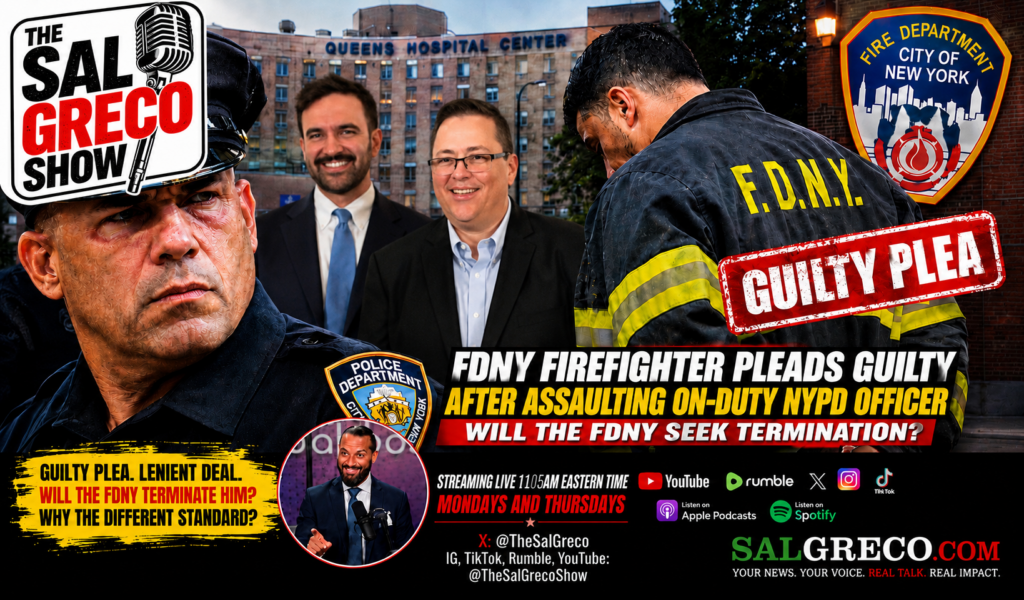
An incident that stunned New York’s first responder community in May has taken another significant turn.
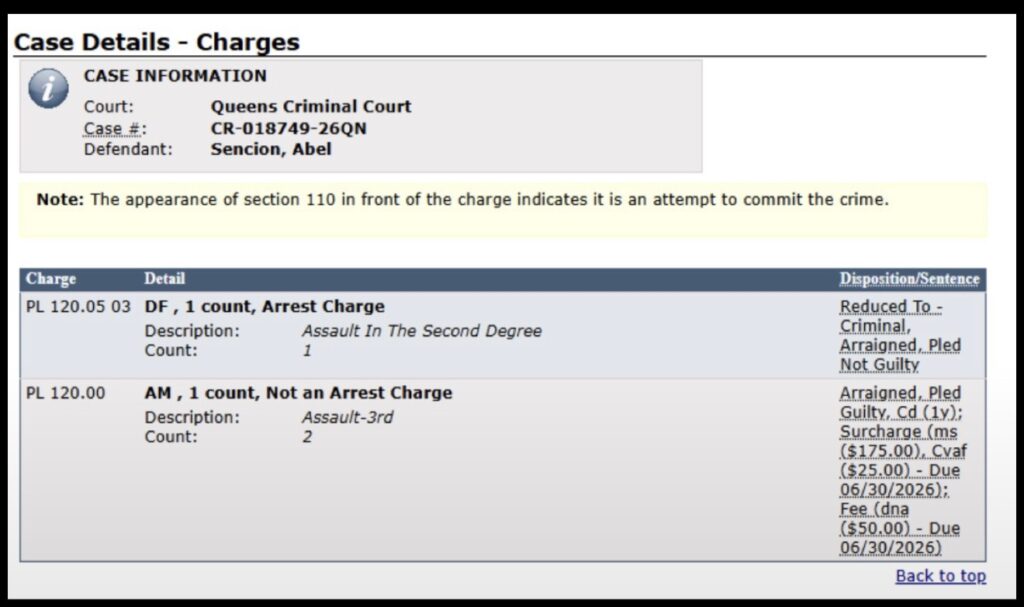
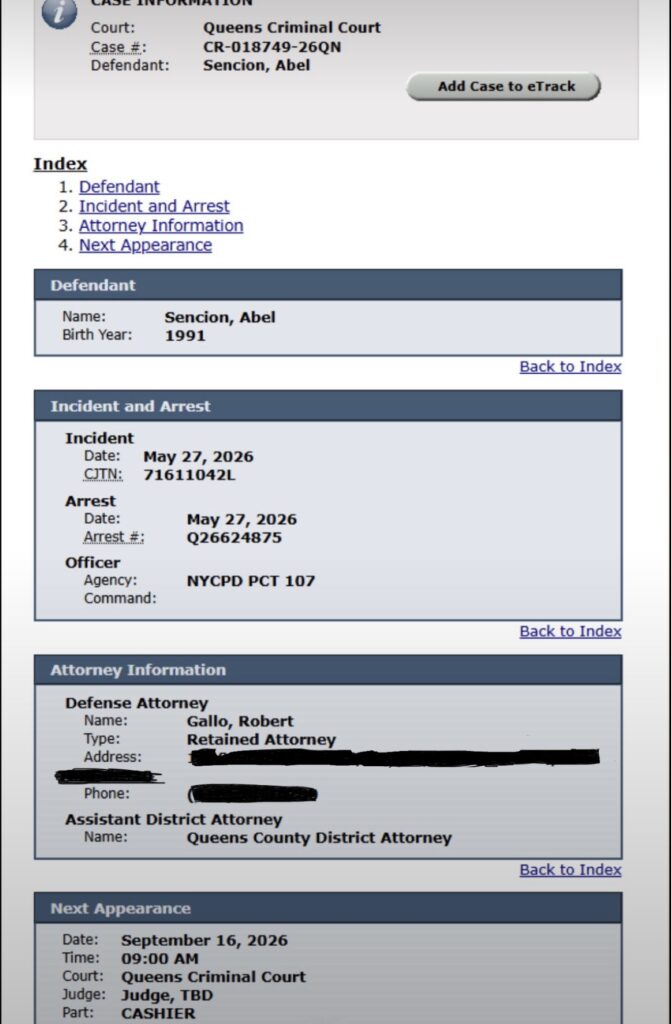
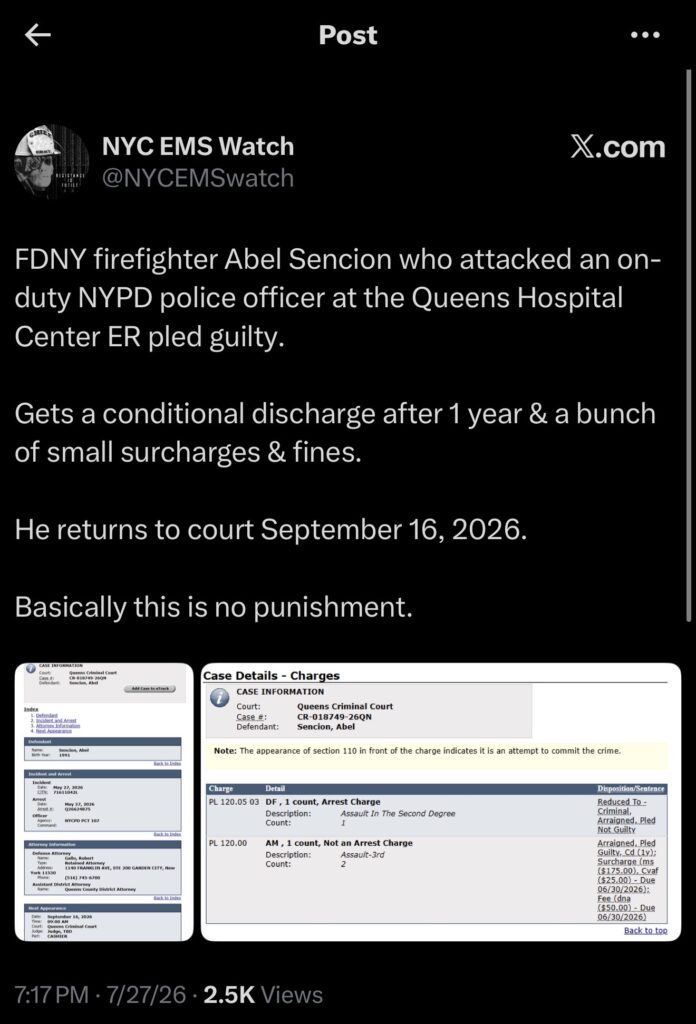
FDNY firefighter Abel Sencion, 34, has now pleaded guilty to a reduced charge stemming from the assault of an on-duty NYPD officer inside Queens Hospital Center. Court records circulating online indicate the original felony assault charge was reduced, with Sencion pleading guilty to third-degree assault, receiving a conditional discharge, and being assessed court surcharges and fees. According to the records, he is scheduled to return to court on September 16, 2026, to complete the disposition.
The Original Incident
According to multiple reports published in May:
- Sencion, assigned to Engine Company 277 in Bushwick, was reportedly suffering what authorities described as a mental health episode while on duty.
- EMS transported him to Queens Hospital Center for evaluation.
- Inside the hospital, he allegedly encountered NYPD Officer Philip Vallon, who was on duty guarding a prisoner.
- Investigators said the two men did not know each other, had no prior interaction, and there appeared to be no motive for the attack.
- Authorities allege Sencion suddenly punched Officer Vallon in the face, causing pain, redness, and swelling.
- He was arrested and initially charged with second-degree assault, a felony.
At the time, the FDNY announced that Sencion would be suspended following his medical leave while the case proceeded.
Guilty Plea Changes the Case
The criminal case has now reached a substantially different outcome than many expected.
Screenshots of Queens Criminal Court records, along with reporting circulating this week, indicate:
- the felony assault charge was reduced,
- Sencion pleaded guilty to Assault in the Third Degree (a misdemeanor),
- he received a conditional discharge rather than jail,
- and was ordered to pay statutory fines and surcharges before the matter is ultimately closed if he complies with the court’s conditions.
Questions Facing the FDNY
The criminal case may be nearing its conclusion, but several administrative questions remain.
Will the FDNY terminate him?
That remains unknown.
A guilty plea—even to a misdemeanor—does not automatically require termination from the FDNY. The department generally conducts its own disciplinary review under its internal rules, and disciplinary outcomes can range from penalties short of dismissal to termination depending on the circumstances.
Factors the department could consider include:
- the guilty plea,
- the assault on another first responder while both were on duty,
- whether department rules were violated,
- any medical or psychological evaluations,
- fitness-for-duty findings,
- and whether Sencion is ultimately deemed capable of safely performing the duties of a firefighter.
At this time, there has been no public announcement that the FDNY has terminated Sencion.
Mental Health vs. Fitness for Duty
News reports consistently stated Sencion appeared to be experiencing a mental health crisis when the assault occurred.
That raises another important—but separate—question.
A person can experience a temporary mental health crisis without necessarily being permanently unfit for public safety work. Whether someone is fit to return to duty is generally determined through medical and psychological evaluations conducted by the employing agency rather than by the criminal court.
Because of that, it cannot be concluded solely from the guilty plea that Sencion is permanently incapable of serving as a firefighter.
Questions for FDNY Leadership
With the criminal case largely resolved, several questions remain unanswered:
- Has the FDNY completed its internal investigation?
- Is Sencion still employed by the department?
- Has he been found fit for duty?
- Will disciplinary charges be filed?
- Will Commissioner Robert Tucker pursue termination or another disciplinary outcome?
Those answers have not yet been publicly released.
The Queens District Attorney’s Resolution
The plea agreement is also likely to generate discussion.
The case began with allegations that an on-duty firefighter randomly assaulted an on-duty police officer who was guarding a prisoner inside a hospital. Prosecutors initially charged the case as felony second-degree assault before resolving it through a misdemeanor guilty plea with a conditional discharge.
Some observers—including members of law enforcement—may question whether that resolution was sufficiently severe given that the alleged victim was another first responder working in the line of duty.
Others may argue that prosecutors appropriately took into account the reported mental health crisis and the specific facts developed during the case.
Without access to the prosecution’s evidence, internal evaluations, plea negotiations, or victim input, it is not possible to determine why the Queens District Attorney’s Office agreed to this specific disposition.
Comparisons to Cases Involving Police Officers
Some readers have compared this outcome to cases in which police officers accused of assault receive harsher criminal or employment consequences.
It is true that police officers have, in some instances, faced felony prosecutions, convictions, or termination following use-of-force incidents. However, outcomes vary significantly depending on factors such as the evidence, injuries, intent, legal defenses, prior history, and plea negotiations. For that reason, it cannot be concluded from this case alone that prosecutors apply different standards to firefighters and police officers.
Even so, the contrast is likely to fuel debate about consistency in charging decisions and plea agreements involving public employees.
Bottom Line
The criminal prosecution appears to have ended with a misdemeanor guilty plea and conditional discharge rather than a felony conviction. The legal case may be winding down, but the employment questions remain open.
Whether the FDNY ultimately determines that Abel Sencion should remain a firefighter, be returned to duty after medical review, or be terminated will likely depend on the department’s own disciplinary and fitness-for-duty process—decisions that, at least publicly, have yet to be announced.