BY SAL GRECO
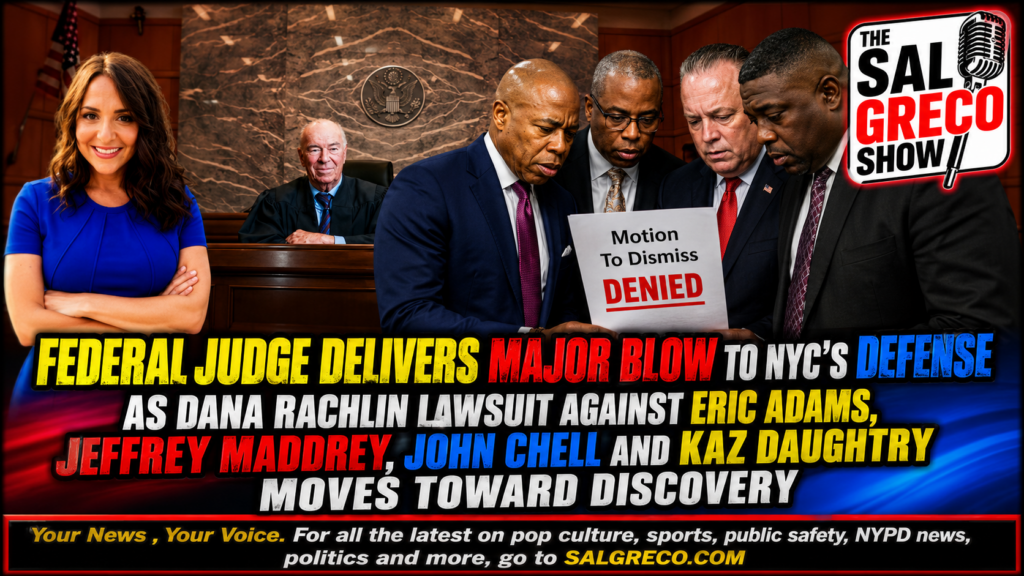
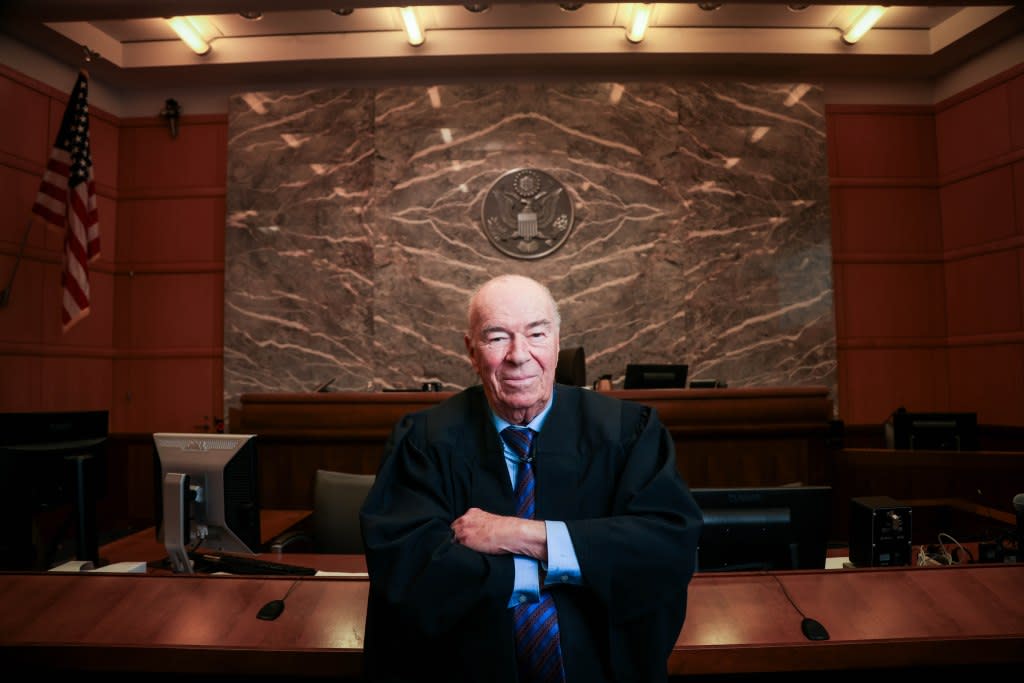
In one of the most significant civil rights rulings involving senior New York City officials in recent years, a federal judge has allowed the heart of Dana Rachlin’s lawsuit against the City of New York and several current and former top NYPD leaders to move forward, rejecting much of the City’s effort to have the case dismissed before discovery ever began.
Judge Frederic Block’s July 20, 2026 Memorandum and Order leaves intact several of the lawsuit’s most consequential constitutional claims, including allegations involving the violation of Rachlin’s constitutional right to privacy, First Amendment retaliation, municipal liability under Monell, and failure to intervene. While several state-law claims were dismissed on procedural and legal grounds, the core federal claims survived and now place the City of New York—and potentially some of its highest-ranking current and former officials—on a path toward discovery.
A Lawsuit Centered on Alleged Retaliation After a Reported Sexual Assault
According to the complaint, Dana Rachlin reported a sexual assault in 2017 after attending a gathering where several NYPD officials were present. The complaint alleges that then-NYPD officials assured her that her identity and investigative file would remain confidential.
Years later, after Rachlin became increasingly critical of NYPD leadership and advocated for policing reforms, she alleges that confidential information surrounding her reported sexual assault was improperly disclosed and that false narratives were spread portraying her as someone who fabricated the allegation. She further alleges that this campaign was intended to damage both her reputation and her community organizing efforts. These are allegations in the lawsuit, and they have not yet been proven in court.
Judge Block concluded those allegations were sufficiently plausible to proceed beyond the pleading stage.
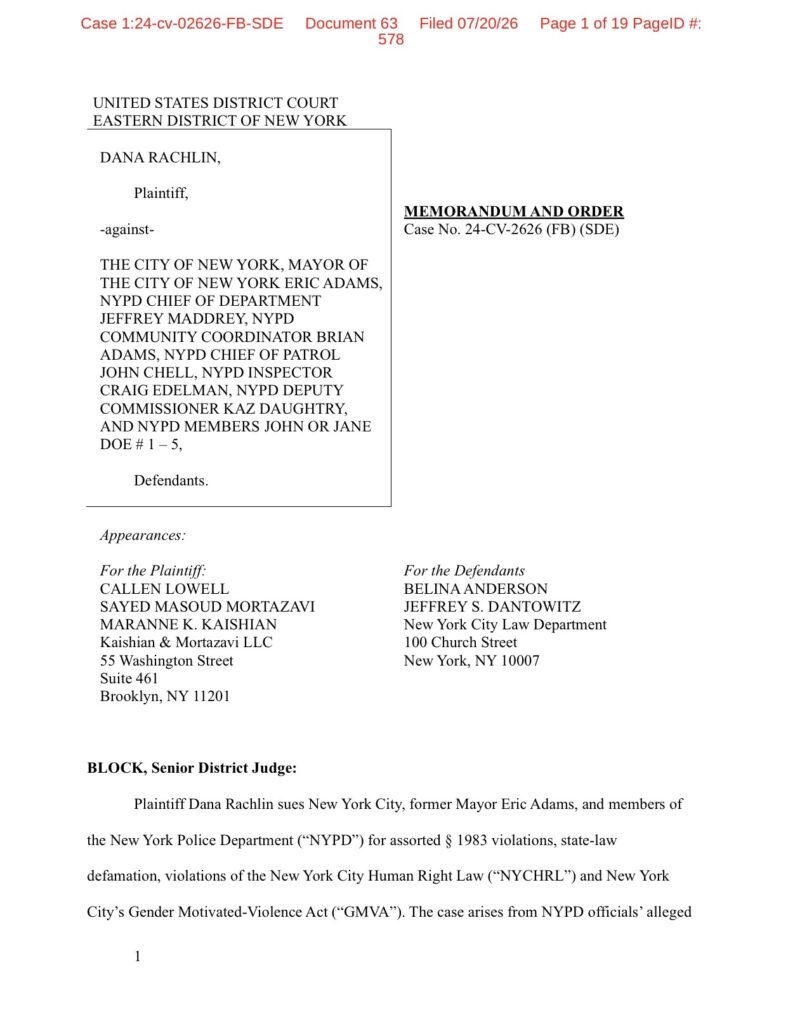
Judge: Constitutional Privacy Claims May Proceed
Perhaps the most significant portion of the ruling concerns Rachlin’s constitutional right to privacy.
The court held that the complaint plausibly alleges that confidential details surrounding her reported sexual assault were disclosed in a manner that forced her to repeatedly relive and explain one of the most traumatic experiences of her life.
Judge Block rejected the City’s argument that the alleged disclosures could not violate her constitutional privacy rights simply because some accompanying statements were allegedly false. Instead, the court wrote that true details surrounding the reported assault were allegedly intertwined with false statements in a manner sufficient to support a constitutional privacy claim at this stage of litigation.
For survivors of sexual assault, that portion of the ruling is particularly significant. Allegations involving a reported rape carry profound emotional consequences regardless of the eventual outcome of litigation. The complaint describes years of emotional distress stemming from the alleged dissemination of confidential information, and the court determined those constitutional claims deserve to proceed.

The City Itself Remains in the Case
Equally important, the City failed to dismiss the Monell claim.
Municipal liability claims are among the most difficult civil rights claims to maintain because plaintiffs must plausibly allege that unconstitutional conduct resulted from municipal policy, custom, or deliberate indifference—not merely isolated misconduct by individual employees.
Judge Block concluded that the complaint plausibly alleges senior NYPD leadership may have been placed on notice of an organized campaign yet failed to stop it.
The court noted allegations that Jeffrey Maddrey acknowledged Rachlin “absolutely were not making false allegations” and promised there would be “no further issues.” The complaint nevertheless alleges that the alleged campaign continued afterward. At this stage, Judge Block concluded those allegations could support municipal liability based upon deliberate indifference or tacit approval if ultimately proven.
The court also permitted Rachlin’s “ghost access” theory to proceed, allowing discovery into allegations that confidential NYPD investigative files could be accessed without a complete audit trail.
Discovery Could Become the Most Significant Phase of the Case
Because the City’s motion to dismiss was denied on several major claims, the lawsuit is now positioned to enter discovery unless the parties reach a settlement or the court later narrows the case.
Discovery typically includes document production, electronic communications, internal NYPD records, interrogatories, and depositions under oath.
Given the allegations and the individuals named in the lawsuit, the plaintiff may seek depositions of former Mayor Eric Adams, former Chief of Department Jeffrey Maddrey, Chief of Patrol John Chell, Deputy Commissioner Kaz Daughtry, and other current or former NYPD officials, subject to the Federal Rules of Civil Procedure and any rulings by the court.
Should such depositions occur, they would represent a significant development. Depositions of a former Mayor of New York City in litigation involving alleged constitutional violations and senior NYPD leadership are uncommon and could become one of the most closely watched aspects of this case.
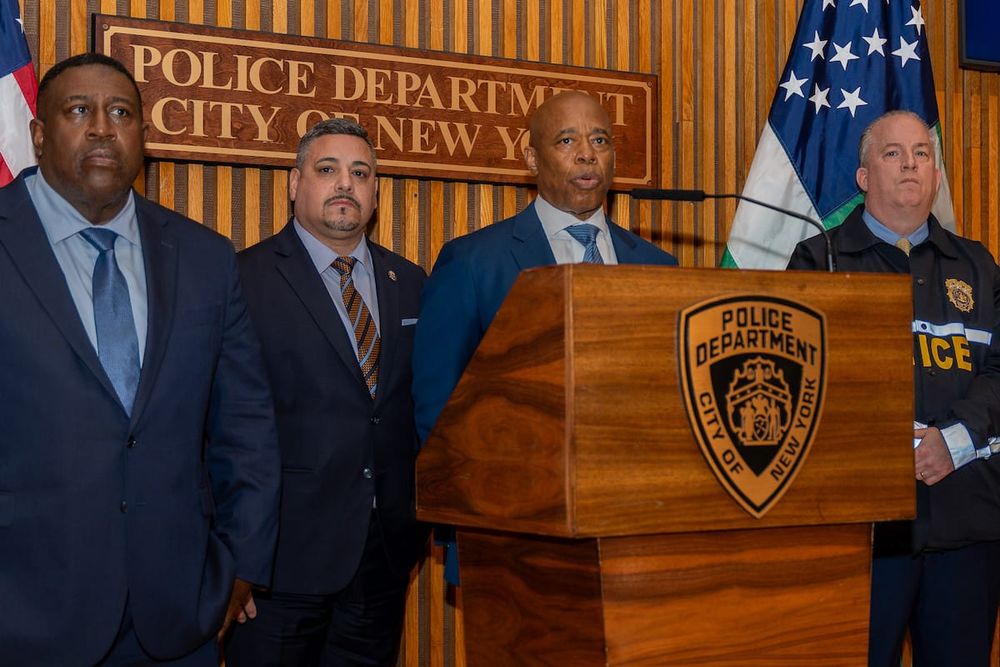
Questions Surrounding City Representation
The ruling also renews questions regarding the City’s decision to provide legal representation to defendants in this litigation.
Under New York General Municipal Law § 50-k, representation by the City generally depends on whether the alleged conduct occurred within the scope of public employment and satisfied the statute’s requirements, with those determinations made by the Corporation Counsel.
The City’s decision to represent certain defendants may draw additional scrutiny under General Municipal Law § 50-k(2), which authorizes representation only where the Corporation Counsel determines the alleged conduct occurred within the scope of public employment, in the discharge of official duties, and not in violation of agency rules. Whether those statutory requirements are satisfied in this case has not been decided by the court or whether representation ultimately remains appropriate in this case may continue to generate public discussion as additional facts emerge during discovery.
Questions Surrounding Kaz Daughtry’s Federal Employment and Taxpayer-Funded Legal Defense

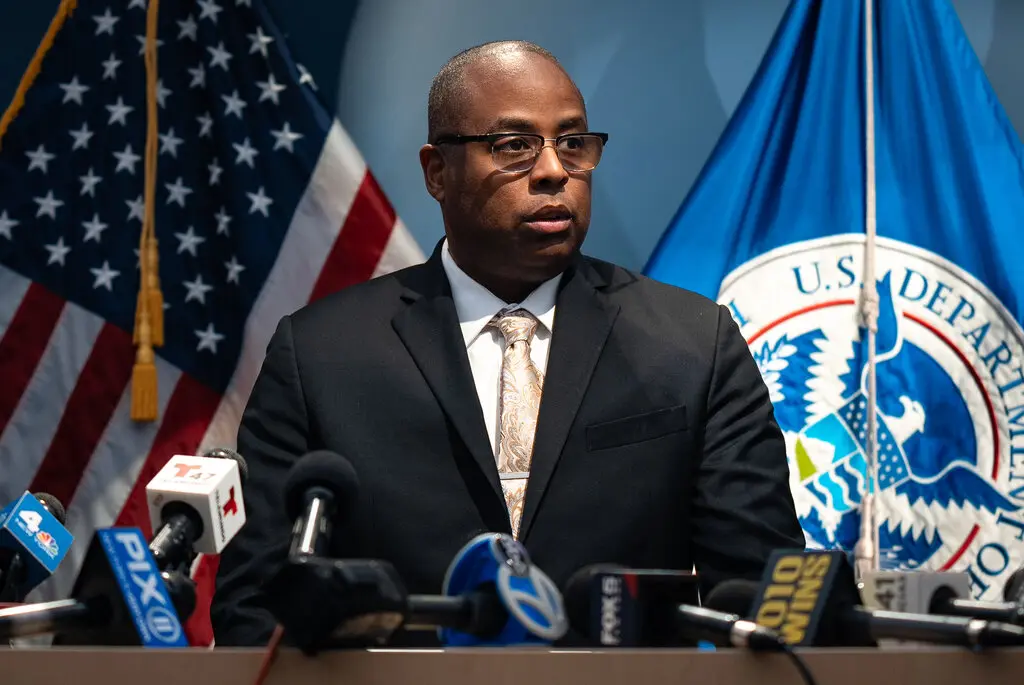
Another issue likely to draw increasing public scrutiny is the continued federal employment of former NYPD Deputy Commissioner Kaz Daughtry. Although the allegations against him in this lawsuit have not been proven, Daughtry remains a named defendant in a federal civil rights case alleging serious constitutional violations that a federal judge has now ruled are sufficiently plausible to proceed into discovery.
That raises obvious questions about the vetting process used before he entered federal service with the U.S. Department of Homeland Security. The allegations contained in this lawsuit were already matters of public record before his federal appointment. As discovery moves forward, critics are likely to ask whether those allegations should have received greater scrutiny before a senior federal position was entrusted to him.
The City’s decision to provide Daughtry with taxpayer-funded legal representation also raises questions under New York General Municipal Law § 50-k(2), which generally authorizes the City to defend employees only after the Corporation Counsel determines that the alleged conduct occurred within the scope of public employment, in the discharge of official duties, and not in violation of agency rules. Whether those statutory requirements are satisfied in this case has not been decided by the court, but the issue is likely to receive renewed attention as the litigation progresses.
If the allegations ultimately proven in this case are found to involve conduct outside the scope of official duties, critics will undoubtedly question why taxpayers were asked to finance the legal defense in the first place. Likewise, the federal government may face questions about whether an official serving in a senior Homeland Security position should continue receiving a federal taxpayer-funded salary while simultaneously defending against allegations that survived a motion to dismiss in federal court.
Those questions extend beyond the courtroom. They go to public confidence, government accountability, and whether the same standards applied to rank-and-file public employees are being applied to those who occupy positions of power.
Should New York City Taxpayers Continue Paying for These Defenses?
The question of taxpayer-funded legal representation does not end with Kaz Daughtry.
Former Mayor Eric Adams and former NYPD Chief of Department Jeffrey Maddrey have each previously faced situations in which the City declined to provide taxpayer-funded legal representation in separate litigation involving allegations of sexual misconduct. Those decisions demonstrated that City-funded legal representation is not automatic and that the Corporation Counsel may determine an employee is not entitled to a City-paid defense under certain circumstances.

That raises an obvious question: if the City previously determined that taxpayer-funded representation was inappropriate in other cases involving these officials, why should taxpayers finance their legal defense in this lawsuit?
The same question extends to the other defendants. This lawsuit alleges constitutional violations involving the alleged misuse of confidential information, retaliation, and privacy rights—claims that a federal judge has now ruled are sufficiently plausible to proceed into discovery. If these allegations ultimately involve conduct outside the scope of official duties or conduct inconsistent with agency rules, critics argue that New York General Municipal Law § 50-k(2) should not permit taxpayers to finance the defense of any defendant in this case.
John Chell presents another example of why many taxpayers are likely to question the City’s continued legal representation. Over the years, Chell has been named in numerous lawsuits against the City, many involving allegations of police misconduct, contributing to litigation that has cost New York City taxpayers millions of dollars in settlements and judgments. At the same time, he reportedly receives a substantial NYPD disability pension while continuing his public service career. Although being named in civil lawsuits does not establish liability, critics argue that the recurring nature of the litigation warrants greater public scrutiny and accountability.
Ultimately, this is about more than one lawsuit. It is about whether government officials should receive taxpayer-funded legal defenses when accused of conduct that plaintiffs allege falls outside their legitimate governmental responsibilities. As this case moves into discovery, taxpayers have every right to ask whether public funds should continue paying for the defense of officials facing allegations that have now survived one of the most significant procedural challenges in federal court.
A Larger Conversation About Accountability
Judge Block’s ruling does not determine liability, nor does it establish that any defendant committed the alleged misconduct. Those questions remain for later stages of litigation.
However, the decision does establish that multiple constitutional claims are sufficiently plausible to warrant discovery rather than dismissal.
For years, critics have argued that senior NYPD leadership has too often escaped meaningful scrutiny while lower-ranking officers bore the consequences of misconduct. Whether this lawsuit ultimately validates or disproves those concerns remains to be seen.
What cannot be disputed is that a federal judge has now determined that several constitutional claims against the City of New York and senior NYPD officials deserve to move forward.
As discovery unfolds, this case could provide one of the most detailed examinations yet of internal decision-making at the highest levels of the NYPD.
Whether the case ultimately proceeds through discovery, summary judgment, trial, or settlement remains unknown. But unless resolved beforehand, the next phase of litigation could place current and former senior City and NYPD officials under oath while attorneys seek answers to allegations that have already survived one of the most important procedural hurdles in federal court.
For a city that has repeatedly promised transparency and accountability, this lawsuit now presents another opportunity for the public to see whether those principles extend to the highest levels of government as well.