
BY SAL GRECO
Just days after serious questions were raised over FIFA’s reported plan to sell a stake in the commercial future of the FIFA World Cup to private investors, the proposal has collapsed under overwhelming international opposition.
According to multiple reports, FIFA has now abandoned the controversial plan after UEFA, CONCACAF, the Asian Football Confederation, clubs, supporters, and even senior FIFA officials pushed back against what many viewed as an unprecedented attempt to commercialize football’s greatest competition. Internal resignations, public criticism from FIFA executives, and UEFA’s threat to boycott FIFA competitions ultimately forced the proposal off the table.
For supporters of traditional football, this is a significant victory.
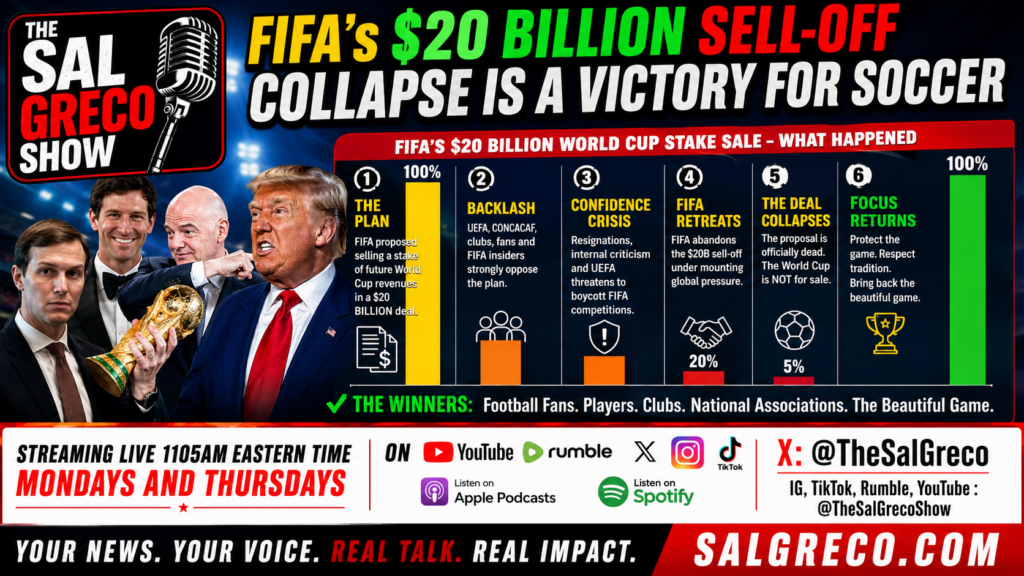
The World Cup Was Never Meant To Be An Investment Fund
The FIFA World Cup has always belonged to the game itself—not private equity firms.
For generations, the tournament has represented national pride, history, and sporting excellence. It has survived wars, political conflicts, economic crises, and corruption scandals because, at its core, the World Cup belongs to billions of supporters around the globe.
Turning portions of its future revenues into an investment product would have fundamentally changed that relationship.
UEFA’s statement captured the sentiment shared throughout much of the football world: the World Cup is not for sale.
Whether supporters cheer for Argentina, Brazil, Spain, England, Italy, Germany, Nigeria, Mexico, Japan, or the United States, the overwhelming reaction demonstrated that football fans still believe some institutions should remain outside the reach of Wall Street.
A Rare Moment Of Global Unity
It is unusual to see UEFA, CONCACAF, Asian football leaders, clubs, supporters, and many FIFA insiders aligned on virtually the same issue.
Yet this proposal managed to accomplish exactly that.
Reports indicate that the backlash became so severe that senior FIFA adviser Carlos Cordeiro resigned, FIFA Chief Operating Officer Kevin Lamour publicly criticized how the proposal was handled, and confidence in Gianni Infantino’s leadership has deteriorated significantly. UEFA has since publicly declared that it has lost confidence in Infantino following the episode.
That represents one of the biggest political defeats of Infantino’s presidency.
Politics And Big Money Continue To Shadow FIFA
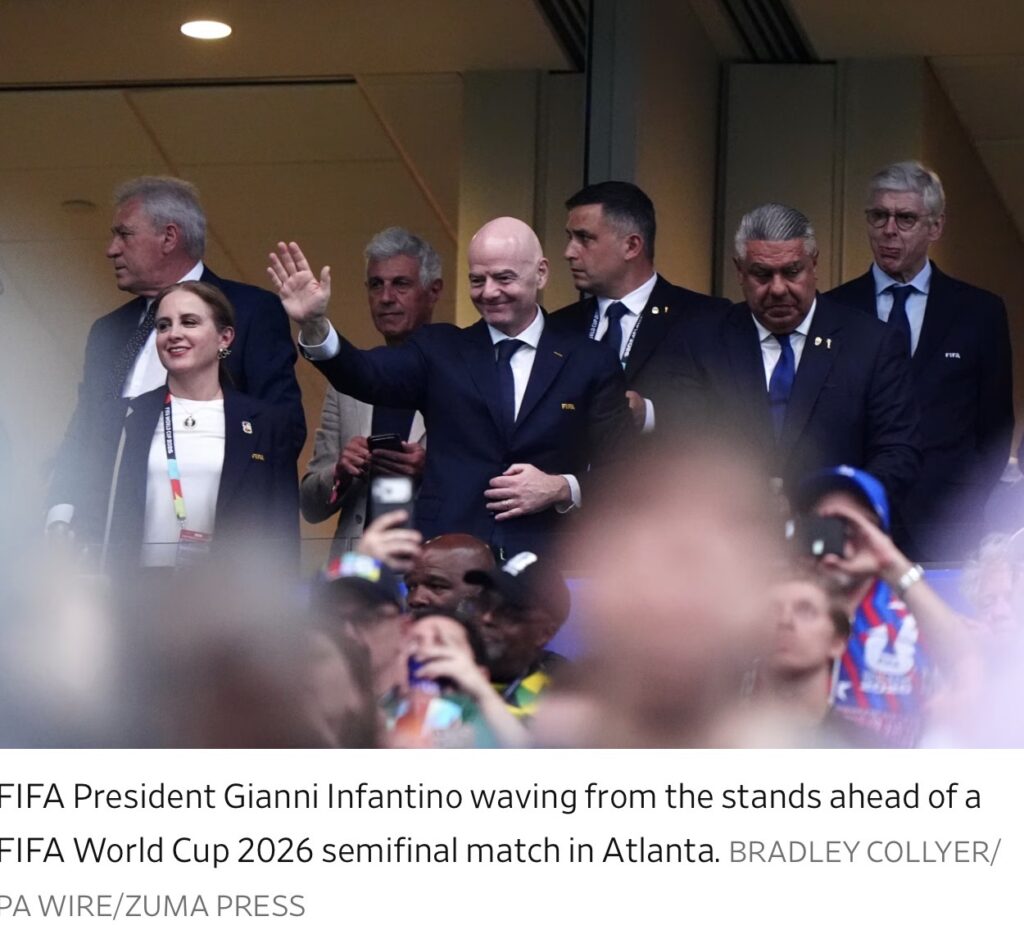
The reporting surrounding this proposal also fueled concerns about the increasingly close relationship between global football, political influence, sovereign wealth, and private investment.
Some reports connected the proposed investment vehicle to interests associated with Joshua Kushner. Those reports generated additional scrutiny because of the broader political attention surrounding the proposal.
As an opinion, I believe football benefits when no political family, investment consortium, or financial group—regardless of ideology or affiliation—has outsized influence over the sport’s most prestigious tournament.
Whether those investors are connected to Republicans, Democrats, European governments, Gulf sovereign funds, or multinational investment firms, the principle should remain the same:
The World Cup should belong to football—not outside financial interests.
From that perspective, the collapse of this proposal is welcome news.
Is It Time For Gianni Infantino To Step Down?
Leadership ultimately requires accountability.
This is now another major initiative under Infantino that has generated widespread resistance before eventually collapsing. Reports now indicate growing internal discussions regarding FIFA’s future leadership heading into the next presidential election cycle.
Whether he ultimately resigns is his decision.
But it is reasonable to ask whether FIFA needs fresh leadership capable of rebuilding trust with confederations, clubs, national associations, players, and supporters.
Football has become larger than any individual president.
The “ TRUMP EFFECT “ Factor
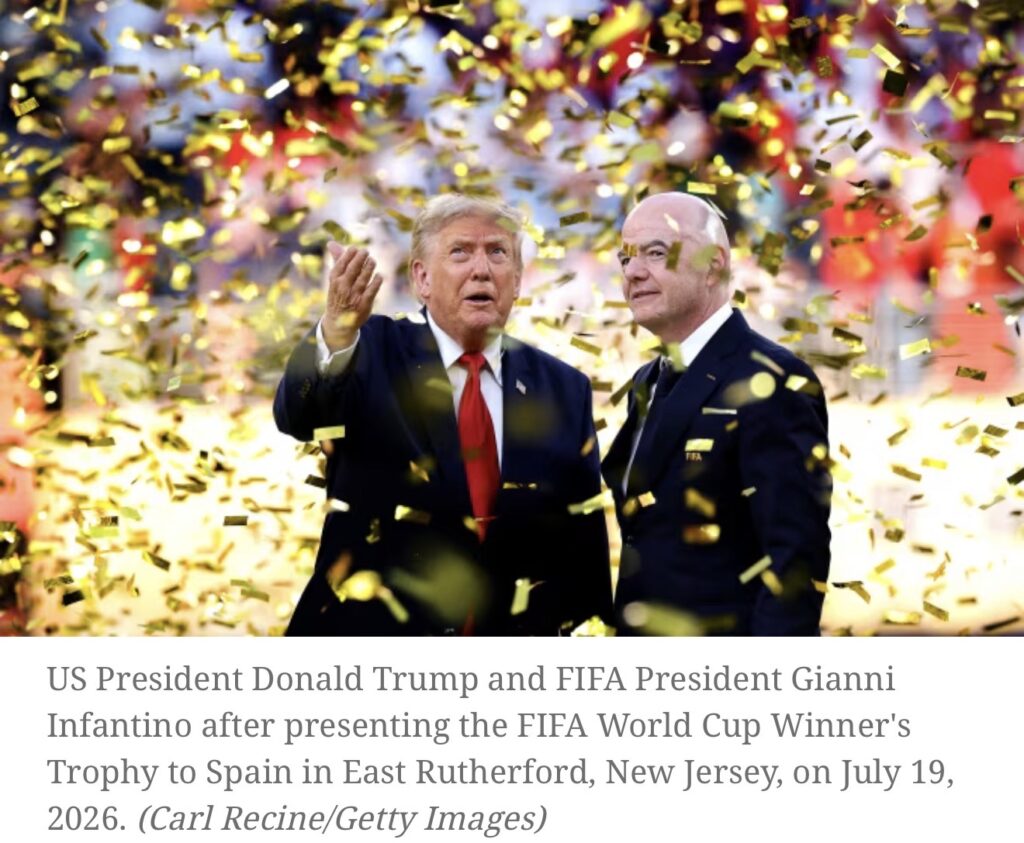
Another factor that may ultimately define Gianni Infantino’s legacy is what could be described as the “Trump Effect.” While President Donald Trump remains one of the most influential political figures in the world, leaders who are perceived as becoming too closely aligned with any one political figure often risk alienating other stakeholders. Infantino’s highly visible relationship with Trump and his apparent willingness to embrace many of the administration’s priorities have fueled criticism that FIFA’s leadership has become too politically intertwined. Whether that perception is fair or not, it may ultimately prove politically costly within FIFA’s diverse global membership. If confederations and national associations conclude that the organization’s independence has been compromised—or even appears to have been compromised—they could decide that new leadership is necessary, making Infantino’s close association with Trump one of the factors that contributes to the end of his presidency.
Bring Back The Traditional Game
The governance controversy is only part of the frustration many supporters have experienced.
The 2026 World Cup introduced mandatory hydration breaks in every match regardless of conditions, creating lengthy commercial stoppages throughout games.
FIFA insists these breaks were implemented for player welfare and competitive consistency—not advertising revenue.
Many critics disagree.
La Liga president Javier Tebas publicly called the mandatory breaks “a lie” and argued they disrupted the flow of matches while creating additional commercial opportunities during broadcasts.
Whether one agrees with Tebas or FIFA, there is little debate that many supporters would like to see football return to its traditional rhythm:
- 45-minute first half.
- 15-minute halftime.
- 45-minute second half.
- Minimal interruptions unless weather or player safety genuinely requires them.
Football became the world’s most popular sport because of its simplicity.
It does not need to resemble American television programming with increasingly frequent stoppages.
Final Thoughts
The collapse of FIFA’s reported $20 billion commercialization proposal represents more than the defeat of a business transaction.
It serves as a reminder that supporters still possess tremendous influence when football’s traditions are threatened.
For now, the World Cup remains exactly what it should be:
A competition earned on the pitch—not packaged as another financial asset.
The hope among many supporters is that FIFA listens to the message delivered over the past week.
Protect the game.
Respect its traditions.
Restore confidence in its leadership.
And remember that football’s greatest asset has never been its balance sheet.
It has always been the beautiful game itself.