
BY SAL GRECO
The latest controversy surrounding New York City Mayor Zohran Mamdani, his wife Rama Duwaji, and an anticipated trip to Syria and Lebanon certainly deserves scrutiny. But so does something else: the way the New York Post has chosen to cover Mamdani — and what that coverage says about the newspaper’s priorities when it comes to City Hall and the NYPD.
This week, the Post reported that Duwaji was expected to travel to Syria and Lebanon beginning in September and that an NYPD security detail would accompany her. City Hall spokesperson Dora Pekec initially attributed the arrangement to the NYPD, saying that upon the department’s “strong recommendation,” the First Lady’s security detail would travel with her.
There was just one major problem.
The NYPD publicly contradicted City Hall.

The department said officers are not sent into countries subject to Level 4 State Department travel advisories for discretionary travel unrelated to investigative work. The NYPD further stated that Duwaji’s trip was not investigative and therefore NYPD personnel would not accompany her.
Later Tuesday, Mamdani attempted to clean up the mess, calling the original statement a “miscommunication” and confirming that his wife would make the trip without an NYPD detail.
That is a legitimate story.
City Hall publicly attributed a security decision to the NYPD that the department promptly denied making. New Yorkers deserve to know how that happened. Who requested the detail? Who at City Hall spoke with the NYPD? What exactly did NYPD officials recommend? And how did City Hall’s spokesperson end up making a statement that was contradicted by One Police Plaza?
Those are fair questions.
But there is another question worth asking:
Why does the New York Post suddenly seem so intensely interested in virtually every move Zohran Mamdani makes?

Ramaduwaji/Instagram
Where Was This Outrage When Eric Adams Traveled Overseas?
The Post’s coverage has emphasized that Duwaji’s trip is personal, that officers could potentially have been placed at risk, and that taxpayers would have borne costs associated with an NYPD detail.
Again, those are legitimate considerations.
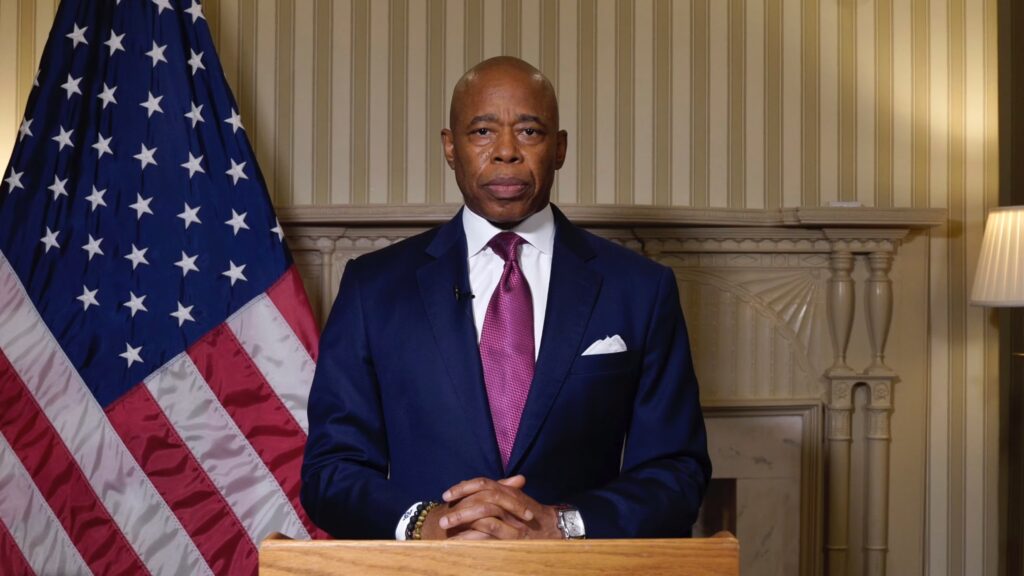
But where was this level of outrage over international travel and mayoral security when Eric Adams occupied City Hall?
Adams traveled internationally as mayor. In November and December 2022, for example, he traveled to Athens, Greece, and Doha, Qatar. The Adams administration itself announced those trips, saying the Greece visit involved a summit against antisemitism and the Qatar visit included meetings with government, security and economic-development officials connected to preparations for the 2026 World Cup.
And here’s the important part.
Contemporary reporting by NY1 explicitly stated that New York City taxpayers were paying for the NYPD security detail traveling with Adams.
Where was the campaign to demand that Adams leave his cops home?
Where were the breathless headlines questioning whether members of his detail should board the plane?
Where was the suggestion that an international trip itself represented some extraordinary misuse of police resources?
That doesn’t mean the situations are identical. They aren’t.
Adams was the sitting mayor, while Duwaji is the mayor’s spouse. Syria and Lebanon also present substantially different security concerns from Greece or Qatar, and Duwaji’s proposed trip has been described as personal rather than official city business.
Those distinctions matter.
But so does consistency.
If taxpayer expense, NYPD manpower and overseas travel are suddenly matters of enormous public concern, then the same principles should be applied regardless of who occupies City Hall.
Meanwhile, Jessica Tisch Gets a Very Different Kind of Coverage
The contrast becomes even more glaring when you examine how the Post covers Police Commissioner Jessica Tisch and the NYPD.
On the same day this Mamdani controversy exploded, the Post published another story touting the NYPD’s seizure of more than 3,000 guns and what it characterized as a “historic downturn” in shootings.
The department reported 381 shooting incidents, 462 shooting victims and 149 murders through July, figures described as historic lows. Commissioner Tisch credited “precision policing” and law-enforcement partnerships for the results.
If those numbers are accurate, declining shootings and murders are good news. Nobody should root for crime simply to win a political argument.
But statistics should be examined, not worshipped.
Crime statistics are only as meaningful as the systems used to classify, record and report crime. A headline announcing a historic low does not by itself answer questions about quality-of-life offenses, unreported crime, downgrading or classification practices, enforcement activity, response times, subway disorder, recidivism, public perceptions of safety or whether particular categories of crime are moving in a different direction.
Yet too much of the coverage surrounding Tisch reads as though the statistics themselves settle every question about the performance of the NYPD.
They don’t.
And this is where the imbalance becomes difficult to ignore.
While the Post appears eager to scrutinize Mamdani’s statements, his wife’s travel, her politics and the internal workings of his administration, where is the same sustained institutional scrutiny of the person running America’s largest police department?

The NYPD Is More Than a Crime-Statistics Press Release
There are serious questions facing the NYPD that cannot be answered by pointing to a declining shooting chart.
Leadership matters.
Internal discipline matters.
Accountability matters.
Selective enforcement and selective discipline matter.
The treatment of whistleblowers matters.
Allegations contained in lawsuits matter.
The conduct of executives matters.
Internal Affairs matters.
And whether politically or institutionally connected individuals receive different treatment than ordinary cops and civilian employees matters.
These are subjects I have repeatedly covered because I spent 14 years inside the NYPD. I understand that a police department cannot be evaluated solely by seven numbers displayed behind a podium at a press conference.
Yet Jessica Tisch has increasingly been presented as the face of an NYPD success story while serious questions about the department’s internal culture receive nowhere near the same relentless attention being directed toward Mamdani.
Why?
Journalism or Social Engineering?
This is where readers should begin examining not merely individual articles, but patterns of editorial selection.
Social engineering does not necessarily require publishing something false.
A media outlet can influence public perception simply by deciding what deserves saturation coverage, what gets an inflammatory headline, what receives repeated follow-ups, what gets buried and what never becomes a sustained story at all.
That distinction is important.
The question is not whether the Post’s reporting about Duwaji’s trip is fabricated. There is a real controversy. City Hall and the NYPD contradicted each other publicly, and that deserves coverage.
The question is whether similar standards of skepticism are being applied consistently.
When practically every Mamdani controversy becomes another political spectacle while favorable NYPD statistics are amplified without equivalent scrutiny of the department’s leadership problems, readers are entitled to ask whether they are receiving news or being steered toward a preferred narrative.
Consider even the language surrounding this latest controversy.
The Post’s follow-up characterized Mamdani as “red-faced” and emphasized that he blamed his staff after the NYPD contradicted City Hall.
That’s an editorial choice.
Now imagine applying that same level of theatrical scrutiny every time NYPD leadership offers an explanation for an internal controversy.
Imagine reporters relentlessly following every questionable disciplinary decision.
Imagine front-page treatment whenever two similarly situated NYPD employees apparently receive dramatically different punishments.
Imagine reporters treating allegations involving senior executives with the same appetite they display for the mayor’s wife’s travel plans.
That would be watchdog journalism worth celebrating.
Mamdani Should Be Scrutinized — And So Should Tisch
None of this is a defense of Zohran Mamdani.
If his administration screwed up, report it.
If City Hall misrepresented what the NYPD recommended, determine who was responsible.
If his wife requested taxpayer-funded protection for a personal trip into Level 4 countries, ask why.
If taxpayers are being asked to fund something inappropriate, expose it.
That’s journalism.
But journalism loses credibility when scrutiny appears selective.
Zohran Mamdani does not deserve immunity from aggressive reporting because he is the mayor.
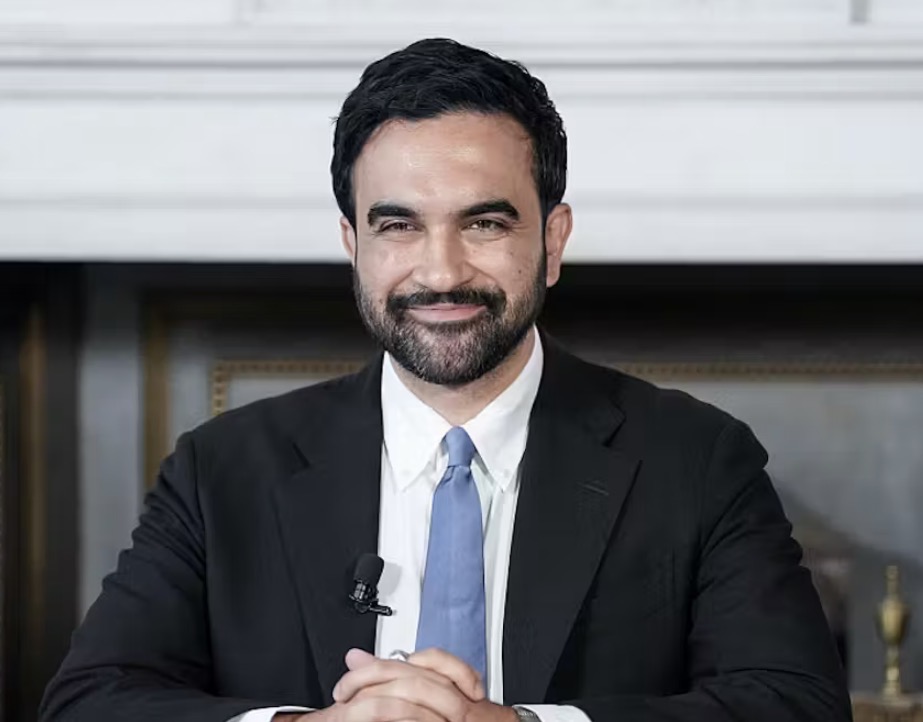
Jessica Tisch doesn’t deserve immunity because crime statistics look good either.
The public deserves journalists willing to scrutinize both City Hall and One Police Plaza without deciding beforehand who will play the hero and who will play the villain.
The New York Post was certainly capable of investigating the Adams administration. It reported critically on officials in that administration, including international travel by then-Police Commissioner Edward Caban and questions surrounding who paid for those trips. In 2024, the Post reported that Qatar had financed Caban’s Middle East travel after the administration had previously declined to identify who was paying.
That’s precisely why the current contrast deserves examination.
This isn’t an argument that the Post never investigated Eric Adams or his administration. It did.
It’s an argument about proportionality, consistency and editorial framing.
Follow the Facts — Including the Ones That Don’t Fit the Narrative
The Mamdani-Duwaji security-detail controversy should be investigated until the public knows exactly what happened.
But perhaps reporters should demonstrate the same curiosity about what happens inside the NYPD.
Who made the original security recommendation?
Why did City Hall attribute it to the NYPD?
Why did the department immediately contradict City Hall?
And beyond this particular controversy, why does every development involving Mamdani seem capable of generating another sensational headline while unresolved questions surrounding NYPD leadership struggle to receive comparable attention?
Maybe there are innocent editorial explanations.
Maybe Mamdani generates clicks.
Maybe conflict between a progressive mayor and the city’s police establishment makes irresistible copy.
Maybe the Post simply believes its readers want these stories.
But journalism is supposed to challenge institutions, not merely reinforce narratives.
So scrutinize Zohran Mamdani.
Scrutinize his administration.
Scrutinize his wife requesting NYPD protection for personal international travel.
But while you’re at it, scrutinize Jessica Tisch.
Scrutinize the NYPD.
Scrutinize its internal disciplinary system.
And scrutinize the crime statistics instead of simply repeating the press release.
Because if the objective is accountability, the standard cannot change depending upon whose name is in the headline.
Follow the facts — all of them.