
BY SAL GRECO
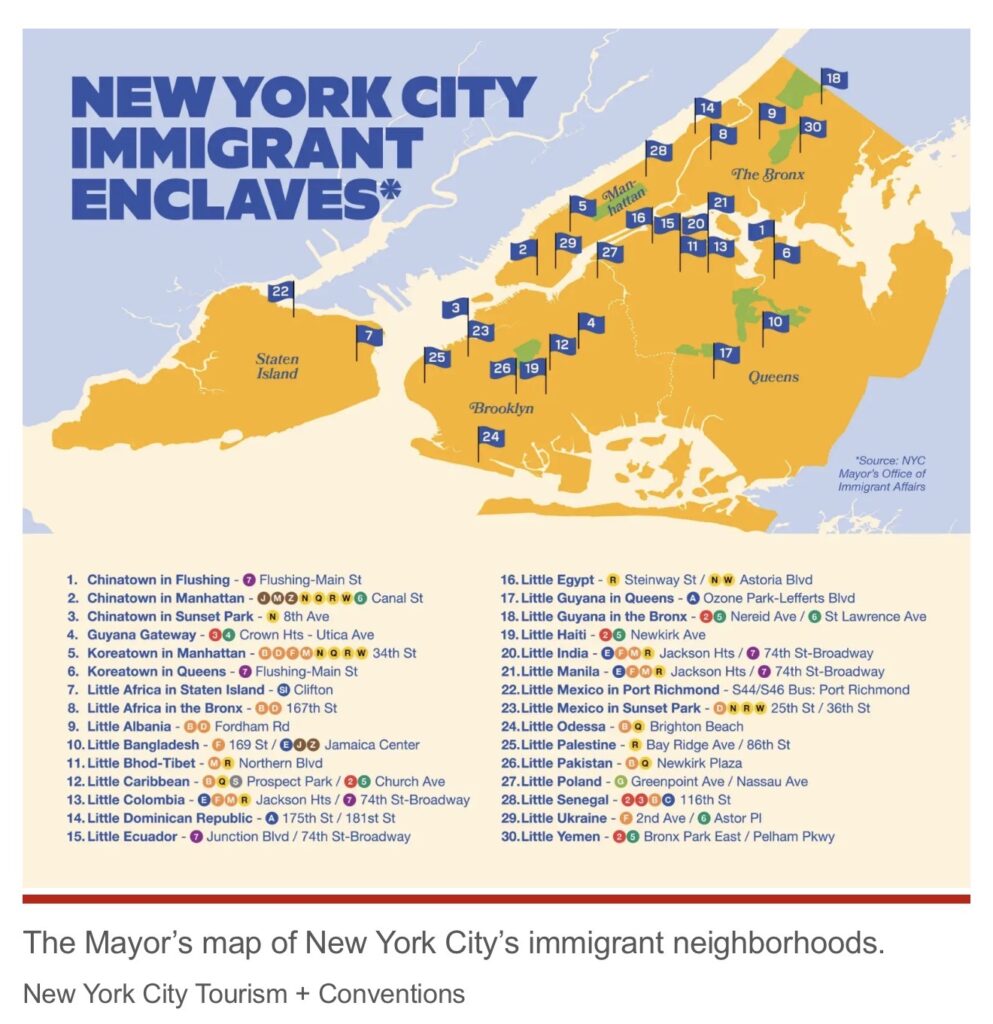
New York City has long been celebrated as the greatest melting pot in the world. Every neighborhood tells the story of immigrants who came here seeking freedom, opportunity, and a better life. That is why Mayor Zohran Mamdani’s immigrant neighborhood map has generated significant criticism after omitting Little Italy and other historic Italian-American communities while recognizing numerous other immigrant enclaves across the city.
Whether this omission was intentional or an oversight, it raises an important question: Who reviewed this project before it was released?
Public-facing materials produced by City Hall should be carefully vetted. If a map celebrating New York City’s immigrant heritage excludes one of the nation’s most recognizable immigrant neighborhoods, then someone failed in that review process. Mayor Mamdani should determine how this happened, identify the staff responsible for approving the map, and ensure it is corrected promptly.
This issue extends beyond one neighborhood.
If New York City is going to celebrate its diverse immigrant communities, then every community deserves equal respect. Government cannot selectively recognize some cultures while overlooking others. Equal treatment means exactly that—equal treatment. When one group is omitted from an official government publication recognizing immigrant heritage, it is understandable why members of that community would feel marginalized.
The Italian American Civil Rights League strongly condemned the omission.
League President Mike Crispi described the exclusion as “cultural erasure,” arguing that Little Italy represents the sacrifices and contributions of generations of Italian immigrants who helped build New York City. The organization called on Mayor Mamdani to correct the map, apologize to Italian Americans, and ensure historic Italian-American neighborhoods are properly recognized in future official materials.
As a board member of the Italian American Civil Rights League, I share those concerns.
Italian Americans have played an extraordinary role in building this city and this country. Millions of Italians immigrated to America, helping construct New York’s roads, bridges, tunnels, rail systems, churches, businesses, restaurants, and neighborhoods. Their contributions remain woven into the fabric of American life.
For generations, Italian Americans have often found themselves remembered not for their countless contributions to this nation, but through stereotypes. Popular culture has too frequently reduced Italian Americans to mob figures or caricatures—the “mafioso” image associated with people like Sammy “The Bull” Gravano, or the party-going “guidos” portrayed on MTV’s Jersey Shore. While those portrayals represent a small number of individuals or fictionalized entertainment, they have too often overshadowed the history of millions of hardworking Italian Americans.
The reality is very different.
Italian immigrants came to America seeking the promise of the American Dream and a better life for their families. Through hard work and sacrifice, they helped build America’s infrastructure—constructing roads, bridges, tunnels, railroads, skyscrapers, and neighborhoods that continue to define our cities today. Their labor and craftsmanship helped shape the United States into the nation it is today.
Italian Americans also transformed American cuisine. From neighborhood pizzerias and family-owned restaurants to fine dining establishments, Italian culinary traditions became woven into American culture. Pizza, pasta, bread, pastries, and countless other dishes have become staples of American life because of generations of Italian immigrants who brought their recipes, traditions, and entrepreneurial spirit with them.
Today, pizza is so ingrained in American culture that personalities like Dave Portnoy have built enormously successful media brands by traveling the country reviewing pizzerias—many of which owe their origins and reputations to Italian-American families and traditions.
These are the stories that deserve to be remembered.
An Italian explorer, Christopher Columbus, is widely credited with opening sustained European exploration of the Americas in 1492, and the name “America” itself derives from the Italian explorer Amerigo Vespucci, whose writings helped establish that these lands were a separate continent. Those historical facts have long connected Italian heritage to the story of the Western Hemisphere.
Italian Americans should not be defined by stereotypes or selectively remembered only when Hollywood wants a mob movie or reality television wants a caricature. They should be recognized for the generations of builders, business owners, police officers, firefighters, teachers, military members, entrepreneurs, laborers, and families whose contributions helped build New York City and the United States.
That is why omitting one of America’s most historic Italian-American neighborhoods from an official city map is more than simply a cartographical mistake. It contributes to the feeling that the contributions of Italian Americans are too often overlooked or forgotten. If New York City is committed to celebrating every culture equally, then Italian Americans deserve that same respect and recognition.
Mayor Mamdani now has an opportunity to address this issue constructively. Reviewing how the map was approved, correcting the omission, and ensuring that Italian-American neighborhoods—including Little Italy and other historic communities—are properly represented would demonstrate that City Hall values all of New York’s immigrant communities equally.
If New York truly celebrates diversity, then every culture should have a place on the map.