
BY SAL GRECO
The sudden death of Senator Lindsey Graham ended one of the longest, most influential and most complicated political careers in modern South Carolina history.
For more than three decades, Graham occupied elected office at the state and federal levels. He became a nationally recognizable senator, a powerful Judiciary Committee chairman, a central figure in Supreme Court confirmation battles and one of Washington’s most forceful advocates for an interventionist American foreign policy.
He was also one of the Republican Party’s great political contradictions.
Graham went from calling Donald Trump a “jackass,” a “kook” and a “race-baiting, xenophobic, religious bigot” to golfing with him, defending him and becoming one of his most dependable Senate allies. He denounced what happened on January 6, declared “count me out” and said Trump’s actions contributed to the crisis, yet soon returned to Trump’s political orbit and voted to acquit him during the ensuing impeachment trial.
Graham remained electorally successful, but polling showed that large numbers of South Carolinians had grown dissatisfied with him. Nevertheless, Trump repeatedly supplied the endorsement and political protection that helped Graham survive Republican opposition.
Now, following Graham’s death at age 71, South Carolina Republicans face a choice that is larger than one Senate campaign.
They can conduct a genuine competition among experienced candidates and debate the future of the party. Or they can allow Washington’s political establishment—and Trump himself—to transform Graham’s Senate seat into something resembling a family inheritance by rallying around Graham’s sister, Darline Graham Nardone , despite her lack of prior elected experience.
The question is not whether Darline Graham Nardone deserves sympathy or respect. She plainly does. Her brother’s sudden death was a personal tragedy, and their extraordinary family history is deeply moving.
The political question is different: Does being Lindsey Graham’s sister make her the best person to represent more than five million South Carolinians in the United States Senate for the next six years?
At a critical moment for Republicans, the answer should not be assumed.
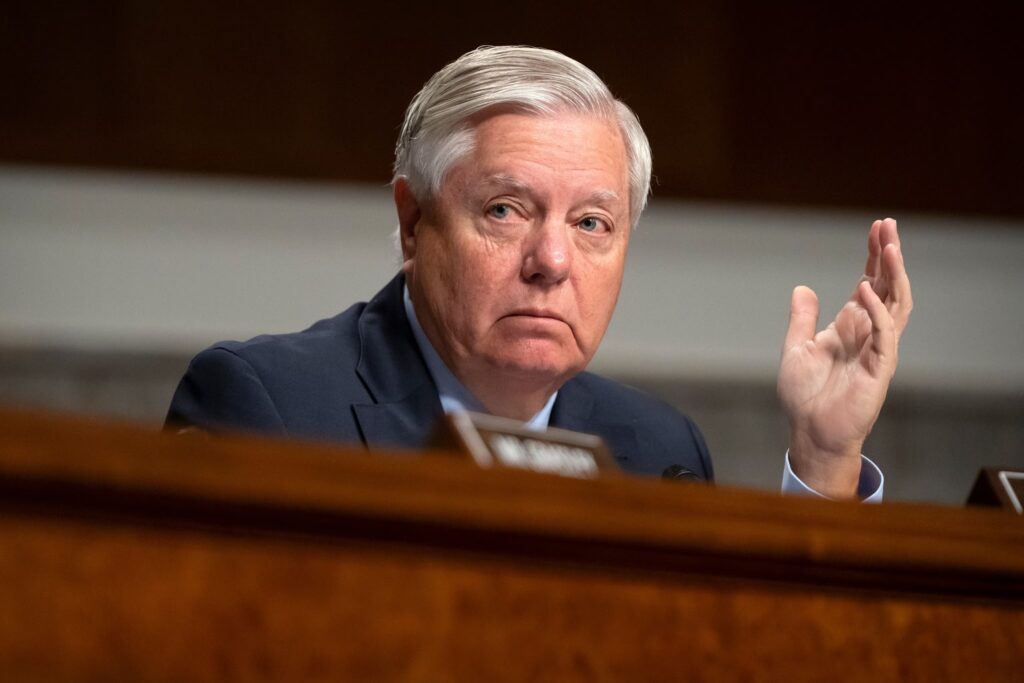
From Small-Town South Carolina to Washington Power
Lindsey Olin Graham was born in Central, South Carolina, in 1955. His parents operated a restaurant, pool hall and liquor store, and Graham grew up working in the family business.
His childhood was marked by substantial tragedy. His mother died when Graham was in his early twenties, and his father died approximately 15 months later. Graham then became responsible for his younger sister, Darline, while completing his education.
That history understandably became an important part of Graham’s public identity. It showed loyalty, resilience and personal responsibility—qualities even many of his political critics acknowledged.
Graham earned undergraduate and law degrees from the University of South Carolina. He entered the Air Force Judge Advocate General’s Corps, serving as a military lawyer and prosecutor. He later continued in the Air Force Reserve and retired as a colonel after more than three decades of combined service.
His political career began in the South Carolina House of Representatives. In 1994, during the Republican Revolution, he won election to the U.S. House from South Carolina’s Third Congressional District. He served four terms before winning the Senate seat vacated by Strom Thurmond in 2002.
Graham would remain in the Senate for more than 23 years.
His national profile began developing even before that election. As a House member, Graham served as one of the impeachment managers in President Bill Clinton’s Senate trial. The role established him as a skilled television advocate, lawyer and political combatant.
In the Senate, Graham gained influence through memberships on the Armed Services, Judiciary, Appropriations and Budget committees. He ultimately chaired both the Judiciary and Budget committees at different points in his career.
Graham’s Legislative and Institutional Record
Any serious assessment of Graham must recognize that his career consisted of more than cable-news appearances and foreign trips.
He participated in consequential legislative negotiations, sometimes angering Republicans by working with Democrats.
Graham was part of the bipartisan “Gang of Eight” that produced the 2013 comprehensive immigration bill. That proposal combined increased border enforcement with a lengthy path to legal status and potential citizenship for millions of undocumented immigrants. It passed the Senate but died in the Republican-controlled House.
Conservative critics viewed the proposal as amnesty. Graham defended it as a practical attempt to repair a dysfunctional immigration system.
He was also involved in national-security legislation concerning military detention, terrorism prosecutions and the treatment of enemy combatants. His background as a military lawyer gave him credibility in debates surrounding military commissions and detainees held at Guantánamo Bay.
Graham supported the First Step Act, the bipartisan criminal-justice legislation signed by Trump in 2018. The law revised certain federal sentencing policies and expanded rehabilitation and earned-time programs for eligible prisoners.
His most significant institutional influence may have come through the federal judiciary.
As chairman of the Senate Judiciary Committee, Graham presided over the contentious confirmation process for Supreme Court Justice Brett Kavanaugh. He also helped advance large numbers of Trump-appointed federal judges.
Graham supported the 2020 confirmation of Amy Coney Barrett shortly before the presidential election, despite having previously suggested that a Supreme Court vacancy arising during an election year should not be filled under such circumstances. Critics called that reversal hypocritical; Graham argued that political circumstances and Senate control had changed.
Whatever one thinks about that justification, the practical result is undeniable: Graham helped Trump and then-Senate Majority Leader Mitch McConnell shape the federal judiciary for a generation.
Graham also supported the Protection of Lawful Commerce in Arms Act, which restricts certain lawsuits seeking to hold lawful firearms manufacturers or sellers responsible for crimes committed using their products. That represents a documented policy relationship with the firearms industry’s legislative priorities, but it is not evidence that Graham had an improper financial interest in gun manufacturers.
A review of the publicly available information I located did not establish that Graham personally held major investments in firearms companies or had an unlawful financial relationship with defense contractors or foreign governments. Like many senior members of Congress—particularly those involved in defense and foreign policy—he received campaign support from individuals and political committees connected to major industries. Campaign contributions, however, should not automatically be described as bribery or proof that his foreign-policy positions were purchased.
The legitimate question is one of influence and priorities: Did Graham’s relationships, committee assignments and donor network reinforce a worldview he already held? That is fair to examine. Claiming an undisclosed financial conspiracy without evidence is not.
The “Warhawk” Reputation Was Earned
The most enduring criticism of Graham was not manufactured by Democrats. It came increasingly from the Republican Party’s own noninterventionist and America First wings.
Graham was unapologetically hawkish.
He supported the Iraq War and remained committed to a substantial American role in Iraq long after public support deteriorated. He advocated sustained military engagement in Afghanistan, aggressive pressure against Iran, strong support for Israel, continued assistance to Ukraine and severe sanctions against Russia.
In his worldview, American security depended on confronting threats overseas before they reached the United States. Supporters considered that strategic realism and international leadership. Critics saw an almost reflexive preference for escalation.
Graham’s frequent appearances in Ukraine and his highly visible advocacy for military assistance became especially controversial among Republicans who believed Washington was spending too much abroad while the southern border, federal debt, infrastructure, crime and economic pressures remained unresolved at home.
There is no factual basis for saying Graham literally did nothing for South Carolina. Senators maintain constituent-service operations, influence federal funding and advocate for military installations, roads, ports and employers within their states. Graham’s supporters credited him with helping protect South Carolina’s military interests and with delivering federal attention to state priorities.
But political representation is also about emphasis.
Graham’s public brand was dominated by Ukraine, Russia, Iran, Israel, NATO, military readiness and overseas threats. That allowed critics to plausibly argue that his national ambitions and foreign-policy agenda often appeared more visible than his advocacy for the daily economic concerns of South Carolina residents.
That is an opinion, but it is not an irrational one.
When voters repeatedly see their senator overseas, standing beside foreign leaders and demanding additional sanctions, weapons or military commitments, they are entitled to ask how that activity compares with the attention being devoted to their own communities.
The debate should not be reduced to whether America must engage with the world. Of course it must. The question is whether every confrontation demands escalation—and whether Graham’s instinct was too frequently to answer yes.
January 6 and the Remark Attributed to Graham
Graham’s response to January 6 illustrated both his visceral anger about the Capitol attack and the political flexibility that later frustrated his critics.
During the certification proceedings, Graham rejected attempts by Republicans to overturn the electoral results. He declared that Joe Biden and Kamala Harris had been lawfully elected and famously told his colleagues: “Count me out. Enough is enough.”
The next day, Graham said Trump needed to understand that his actions had been part of the problem rather than the solution.
Those were significant statements from a senator who had become one of Trump’s closest allies.
Former Washington Metropolitan Police Officer Michael Fanone later made an even more explosive allegation. In his 2022 memoir, Fanone wrote that after describing the violence officers experienced on January 6, Graham told him that police “should have shot them all in the head.”
That statement has been reported by major news organizations as Fanone’s account. It should therefore be presented precisely as that: a serious allegation attributed to Fanone, not an independently authenticated public declaration by Graham.
It also requires context. Fanone’s account suggested Graham was reacting to violent attackers who assaulted law-enforcement officers, not advocating indiscriminate violence against every person who attended the broader January 6 protest.
Even with that distinction, the alleged language was extreme. It reflected a view of the rioters that was far more severe than the rhetoric later adopted by many Trump-aligned Republicans.
Yet Graham’s break with Trump proved temporary.
Although he criticized Trump’s conduct, Graham voted to acquit him in the second impeachment trial. He later said that his “count me out” statement referred to efforts to overturn the election, not to ending his relationship with Trump permanently.
Within weeks, Graham was again describing Trump as essential to the Republican Party’s future.
That reversal—or clarification, depending on one’s perspective—became a defining feature of Graham’s later career.
From “Go to Hell” to the Golf Course
During the 2016 Republican presidential campaign, Graham was not merely skeptical of Trump. He was among his fiercest critics.
After Trump disparaged Senator John McCain’s military record, Graham called Trump a “jackass.” Trump responded by publicly revealing Graham’s cellphone number at a rally.
Graham later described Trump as a “race-baiting, xenophobic, religious bigot” and said he did not represent the Republican Party. He said Trump was a “kook,” “crazy” and “unfit for office.” He told Trump to “go to hell” and warned that Republicans would deserve destruction if they nominated him.
Graham did not vote for Trump in 2016.
Then the relationship changed.
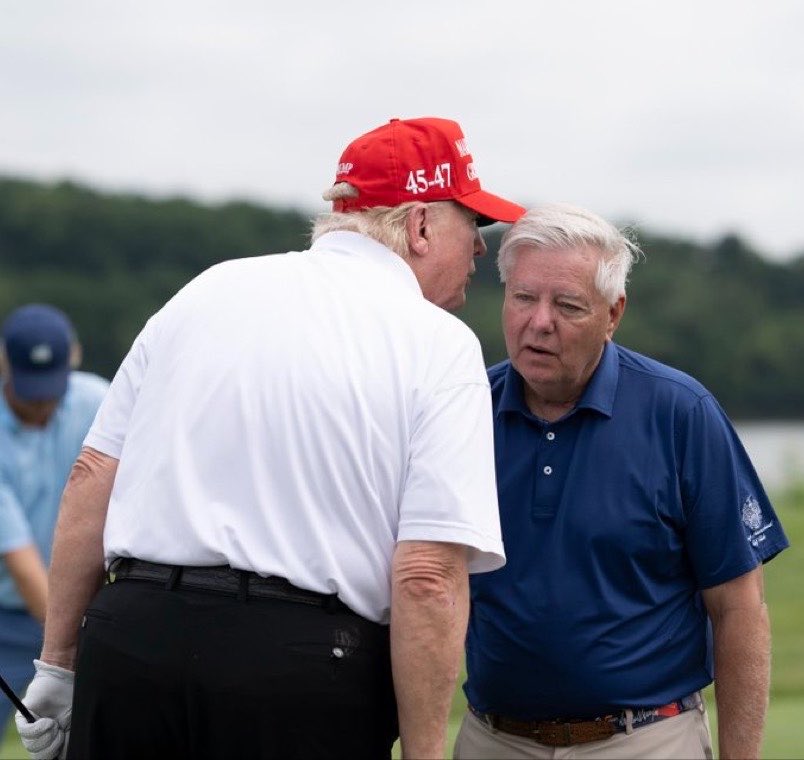
Following Trump’s victory, Graham gradually became an ally. The two began speaking regularly and playing golf. Graham praised Trump’s national-security decisions, supported much of his domestic agenda and became one of the most visible defenders of his administration.
Some of this shift can be understood as normal party politics. Trump was the Republican president, and Graham represented a state that had strongly supported him. Senators routinely work with presidents they once opposed.
But Graham’s transformation went considerably beyond cooperation.
He moved from calling Trump dangerously unfit to describing him as indispensable to the Republican Party. To critics, it looked like political self-preservation. To Graham, it may have represented a belief that he could influence Trump more effectively from inside his orbit than from the opposition.
The golf relationship became symbolic. Graham, who once warned that Trump threatened the GOP, somehow found time to cultivate a personal friendship with him even as many grassroots conservatives continued to distrust Graham.
Trump benefited too. Graham gave him a seasoned Senate advocate with foreign-policy credentials and influence over judicial confirmations. Graham gained access to a president whose endorsement had become extraordinarily powerful in South Carolina Republican politics.
It was a transactional relationship, but apparently also a genuine friendship by its later stages.
Politics produces strange alliances. Few were stranger than this one.
Weak Ratings, Strong Election Results
Graham’s electoral record demonstrated the difference between being popular and being politically protected.
He won Senate elections in 2002, 2008, 2014 and 2020. In 2026, shortly before his death, he again secured the Republican nomination for another term.
But his approval and favorability ratings were often unimpressive, especially for a Republican senator in a strongly Republican state.
A March 2026 Impact Research survey reported that 34 percent of South Carolina voters viewed Graham favorably while 61 percent viewed him unfavorably. Because Impact Research is a Democratic polling firm, its methodology and sponsorship should be considered when interpreting those numbers.
The Citadel’s May 2026 statewide survey also showed substantial dissatisfaction. According to the published results, Graham’s overall approval was around 31 percent, while approximately 57 percent disapproved. His standing was better among Republican voters, but even there he was not universally popular.
These figures help explain the paradox of Graham’s career.
His statewide image could be poor, yet he remained difficult to defeat because South Carolina’s Republican electorate ultimately determined the seat—and because Trump’s endorsement provided Graham with protection inside that electorate.
In 2020, Graham faced a nationally funded Democratic challenge from Jaime Harrison. The race attracted enormous spending and briefly appeared competitive. Graham ultimately won by more than ten percentage points.
Trump strongly supported him.
In Republican politics, Graham’s alliance with Trump muted the threat from candidates who might otherwise have attacked him as insufficiently conservative, too interventionist or too willing to negotiate with Democrats.
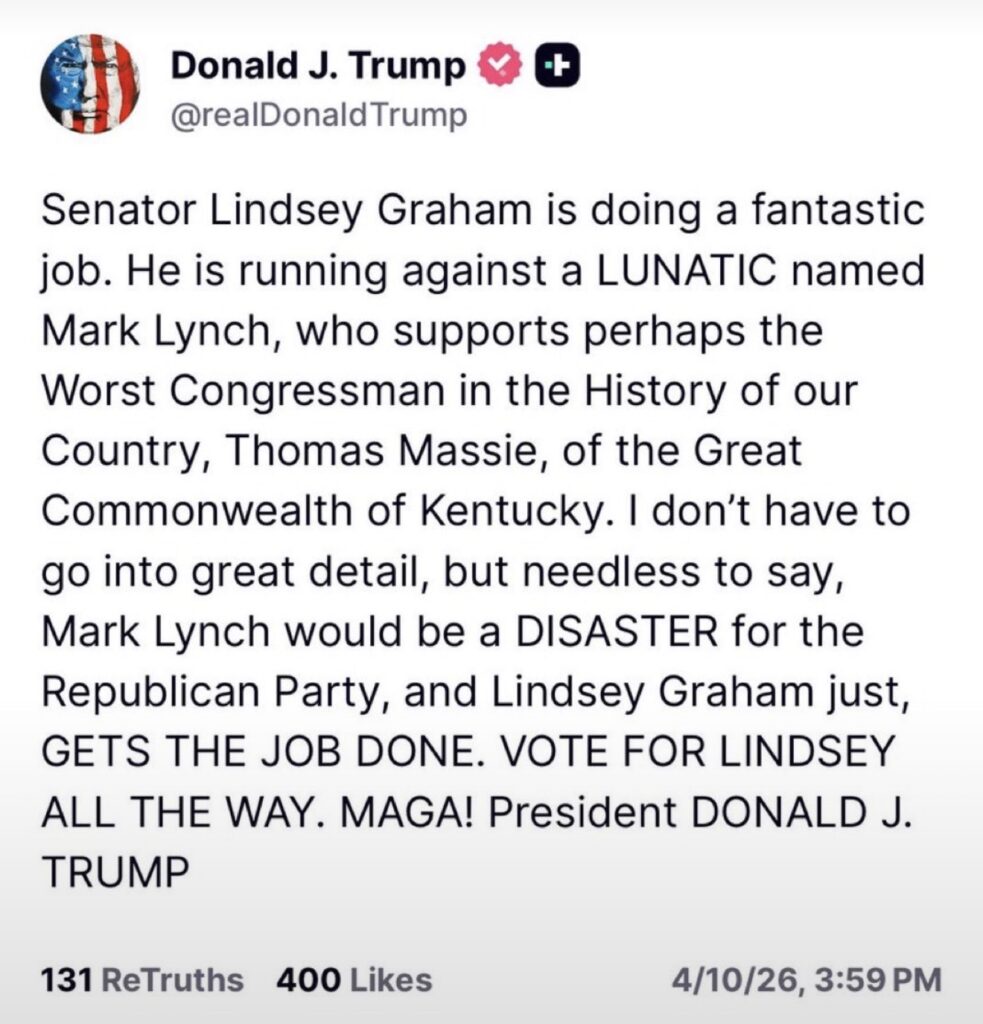
The same dynamic occurred again as Graham sought another term. Some Republican voters objected to his foreign-policy views and wanted an alternative. But Trump endorsed Graham, signaling to his own supporters that replacing the senator was not a priority.
It would be an overstatement to claim Trump’s entire base opposed those endorsements. Graham retained meaningful support among Republican voters, and Trump’s endorsement was effective precisely because large numbers of those voters followed Trump’s lead.
Nevertheless, the endorsements created resentment among some America First conservatives who believed Trump was protecting an establishment senator whose foreign-policy agenda conflicted with the movement Trump had built.
Graham understood the value of that protection. His journey from Trump antagonist to Trump golf partner was therefore not only personally remarkable—it was politically invaluable.
Graham’s Sudden Death
Graham died unexpectedly on July 12, 2026, at age 71.
His office initially described the cause as a brief and sudden illness. Preliminary medical findings later determined that he suffered an aortic dissection associated with arteriosclerotic cardiovascular disease.
An aortic dissection occurs when a tear develops in the inner layer of the aorta, the body’s main artery. Blood can then force its way between layers of the artery wall, creating a rapidly fatal medical emergency.
Authorities reported no evidence of foul play. Speculation linking Graham’s death to foreign governments or his recent international travel was unsupported by the available evidence.
His death came shortly after another trip connected to Ukraine and while he continued pushing aggressive sanctions against Russia, which inevitably fueled online theories. But timing is not proof. The documented preliminary cause was cardiovascular disease resulting in an aortic tear.
Graham’s death also carried immediate political consequences. Republicans held only a narrow Senate majority, and South Carolina suddenly needed an interim senator and an accelerated special-election process.
Governor Henry McMaster selected Graham’s younger sister, Darline Graham Nordone, to serve temporarily.
The appointment was emotional, symbolic and politically explosive.
Who Is Darline Graham Nardone ?
Darline Graham Nardone is not a complete stranger to government.
She has worked in South Carolina public service and served as a commissioner with the South Carolina Commission for the Blind. Reporting has also connected her to work involving Clemson University and the South Carolina Department of Vocational Rehabilitation.

She participated in and supported her brother’s political life over many years.
Most importantly, her relationship with Lindsey Graham was far more profound than that of an ordinary political sibling. After their parents died, Lindsey became her guardian and helped raise her. Their bond was a central part of both their lives.
That makes McMaster’s appointment understandable as a temporary tribute. Allowing Darline to complete the final months of her brother’s term honored a remarkable family story and provided continuity during a period of mourning.
But temporary appointment and six-year election are not the same thing.
Before entering the Senate through McMaster’s appointment, Darline Graham Nardone had never held elected office. She had not run a statewide campaign, compiled a congressional voting record, led a federal committee or spent years publicly defending positions on foreign policy, taxation, immigration, abortion, constitutional authority or federal spending.
That does not make her unintelligent or incapable. Many successful political leaders began without federal experience.
It does mean she should not be treated as automatically entitled to the Republican nomination.
Why Trump and Republican Leaders May Prefer Her
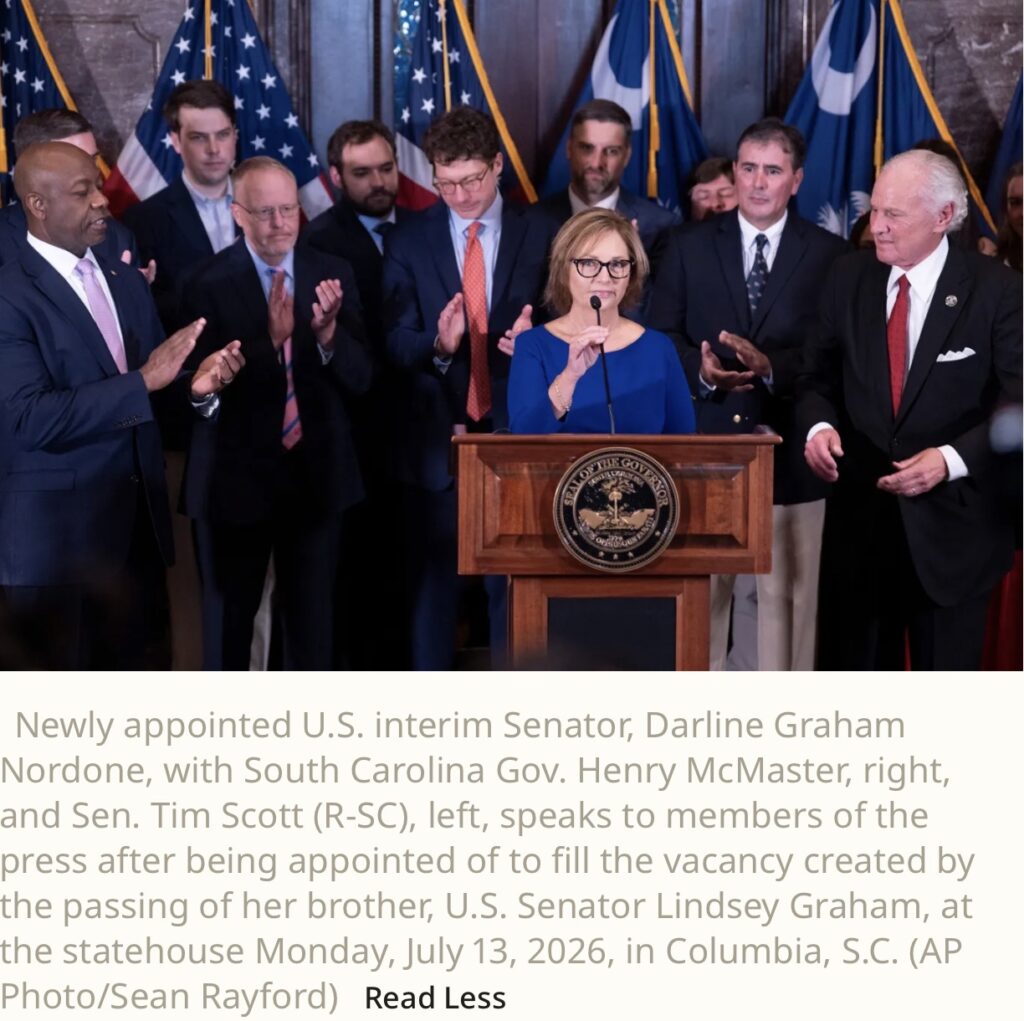
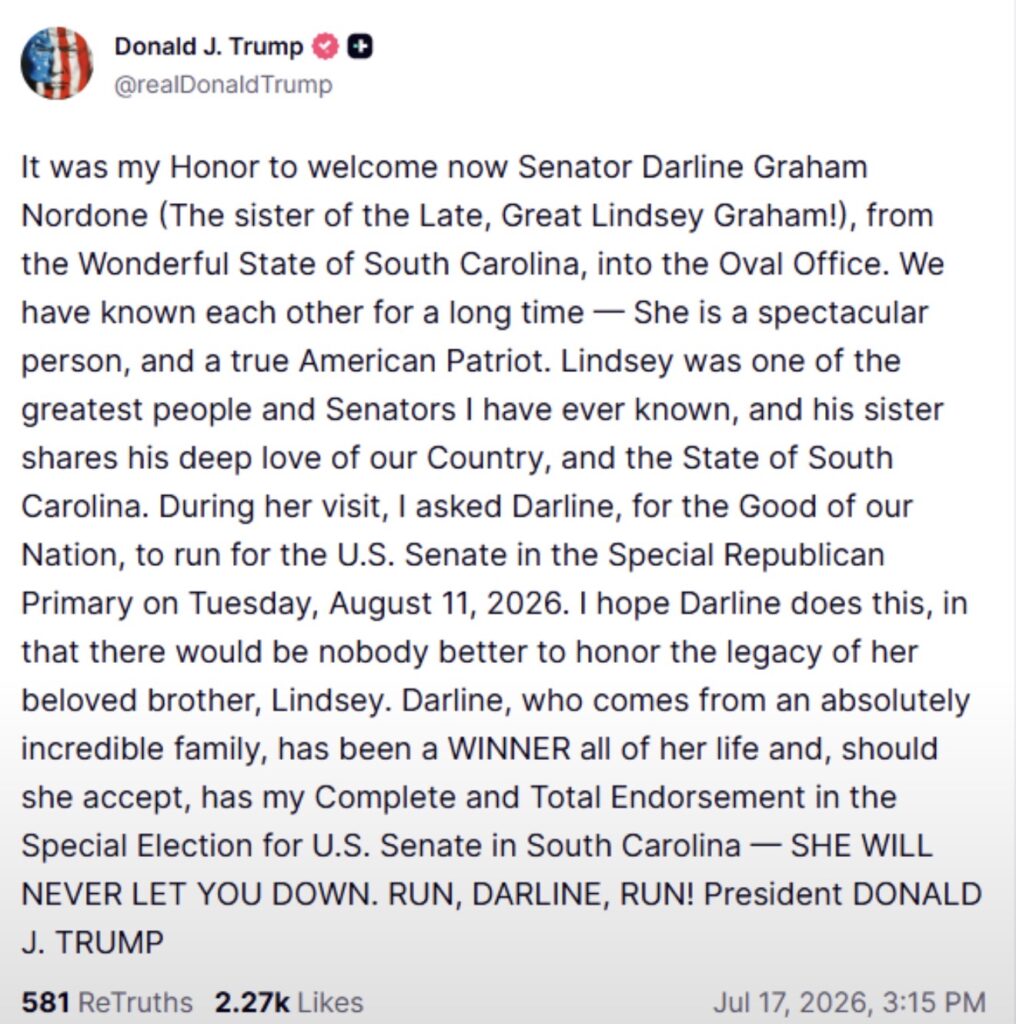
Trump quickly encouraged Darline Graham Nardone to run for a full term and gave her his “Complete and Total Endorsement.”
Supporters see several advantages.
First, the Graham name is universally recognized in South Carolina. Building statewide name recognition normally requires years and millions of dollars. Darline possesses it immediately.
Second, she can present herself as the custodian of her brother’s legacy while supporting Trump’s agenda. That combination could unite establishment Republicans, loyal Graham voters and Trump supporters.
Third, Republican leaders may want to avoid a destructive primary involving several members of Congress. Representatives Nancy Mace, Ralph Norman and Russell Fry have all been discussed as potential candidates, as have Lieutenant Governor Pamela Evette, businessman Mark Lynch and former Governor Mark Sanford.
A Senate campaign by sitting House Republicans could also create complications for the party’s narrow House majority.
Fourth, Darline may be viewed as dependable. Party leaders generally prefer candidates who will vote predictably, avoid unnecessary internal warfare and protect the seat without requiring a massive financial investment.
Finally, sympathy matters. Voters may genuinely wish to honor Lindsey Graham and the sister he helped raise.
These are logical political considerations.
But they do not answer the central question of qualification and direction.
The First Poll Complicates the Coronation
Early polling suggests that Republican voters were not initially demanding Darline Graham Nardone as their next senator.
An Emerson College Polling survey released after Graham’s death found no clear leader in a hypothetical Republican primary. Ralph Norman received 16 percent, Mark Lynch 13 percent, Nancy Mace and Pamela Evette 10 percent each, Russell Fry 9 percent, Henry McMaster 8 percent and Darline Graham approximately 6 percent.
Early polling can change dramatically, particularly after a presidential endorsement. Darline’s support could rise once Trump campaigns for her and voters learn more about her.
Still, the result matters.
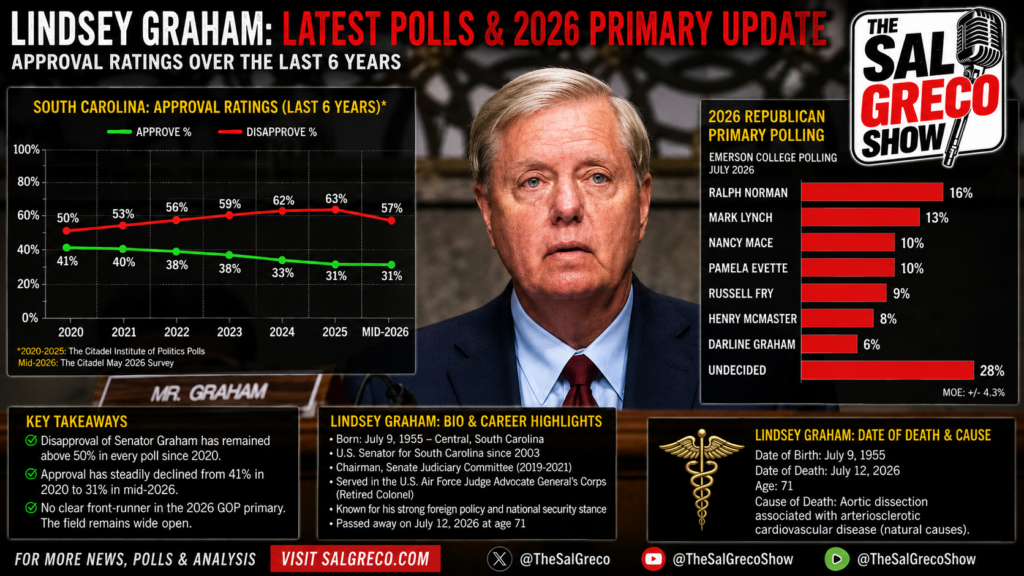
It suggests the enthusiasm for her candidacy may be stronger among national power brokers than among South Carolina Republican voters themselves.
That is precisely why the primary should remain competitive.
Trump’s endorsement should be considered by voters, not treated as a command that ends the discussion.
Continuity With What?
Darline Graham Nardone has indicated that she intends to support Trump’s agenda and continue her brother’s priorities. That promise may reassure some voters, but it should prompt others to ask what “continuity” means.
Does it mean preserving Lindsey Graham’s constituent-service operation and attention to South Carolina’s military facilities? That could be valuable.
Does it mean supporting Trump’s domestic agenda? That will appeal to Republican primary voters.
Or does it mean continuing Graham’s interventionist foreign policy, his appetite for sanctions, his recurring demands for overseas involvement and the very approach that caused many Republicans to view him as disconnected from America First priorities?
Darline should be asked directly.
She should not be presumed to share every view held by her brother merely because they were siblings. Nor should critics declare that she will automatically become another warhawk without hearing her positions.
But if her principal qualification is that she will preserve Lindsey Graham’s legacy, voters have every right to examine the parts of that legacy they did not like.
A campaign based on continuity invites a referendum on what is being continued.
What About More Experienced Republicans?
South Carolina has no shortage of Republican officials with established public records.
Nancy Mace has served in the state legislature and Congress, developed a national profile and demonstrated a willingness to challenge party leadership—sometimes to her benefit and sometimes to her detriment.
Ralph Norman has years of business, state-legislative and congressional experience. He has generally aligned himself with the House’s more conservative faction and could credibly argue that he represents the party’s grassroots rather than its Senate establishment.
Russell Fry has legislative and congressional experience and may offer a younger, less polarizing alternative.
Pamela Evette has served as lieutenant governor and could make the case that she combines executive experience with statewide electoral legitimacy.
Mark Sanford has served as governor and in Congress, although his political history and conflicts with Trump would complicate his candidacy.
Mark Lynch challenged Graham from the right and represented voters who believed Graham had become too focused on foreign intervention.
Each candidate has weaknesses. None is entitled to the seat.
That is the point.
Republicans should debate their records, policies and visions. The nomination should be earned rather than transferred through family identity and presidential endorsement.
Trump’s Own Political Risk
Trump’s endorsement of Darline Graham Nardone also raises a broader question about his relationship with the movement he created.
Trump’s political power has always rested on his ability to convince Republican voters that he is battling entrenched institutions on their behalf.
But repeated endorsements of establishment incumbents—or family-connected successors—risk weakening that argument.
Graham became useful to Trump. He defended him, helped confirm his judges and provided experienced support in the Senate. Trump’s loyalty to his late friend is understandable on a personal level.
Yet presidential endorsements are not private expressions of friendship. They shape elections and can discourage stronger candidates from entering.
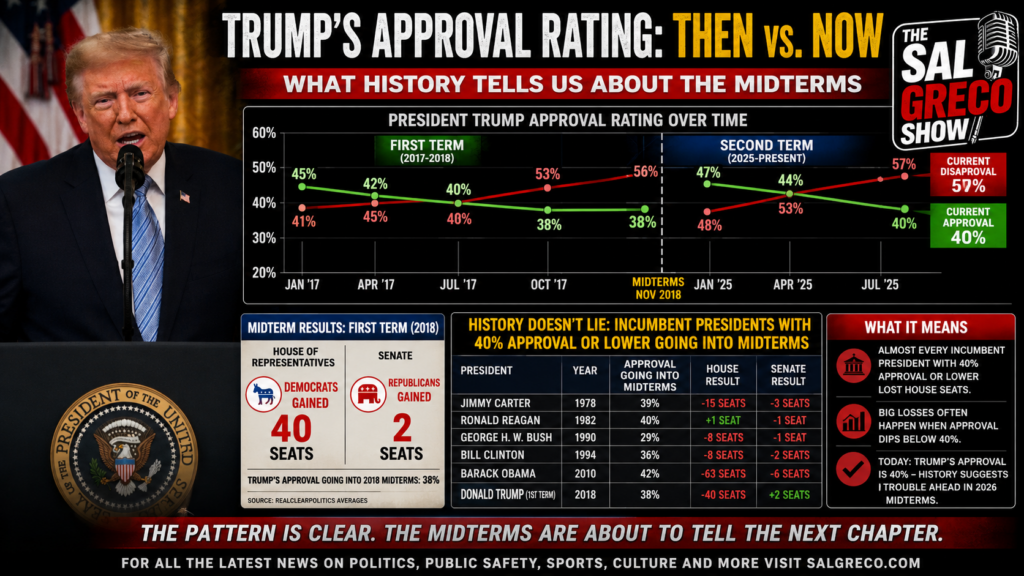
At a moment when Republicans are protecting narrow congressional majorities and Trump’s own approval ratings have shown signs of political vulnerability, alienating parts of the Republican base is not cost-free.
The party’s future will eventually belong to voters and leaders who did not come of age under the old Washington consensus. Many are less supportive of open-ended military involvement, more skeptical of intelligence and foreign-policy institutions and more focused on immigration, affordability, crime, manufacturing and national sovereignty.
Those voters may respect Lindsey Graham’s service while rejecting his worldview.
Endorsing his sister primarily as a tribute risks communicating that relationships and loyalty remain more important than renewal.
That is exactly the kind of insider politics Trump originally promised to disrupt.
South Carolina Deserves a Choice, Not a Coronation
Lindsey Graham’s career was substantial.
He rose from a difficult childhood to become an Air Force colonel, congressman, senator, presidential candidate and Judiciary Committee chairman. He helped reshape the federal courts. He participated in major negotiations and remained influential until his final days.
He also became a symbol of a Republican foreign-policy establishment that many conservative voters no longer trust.
His alliance with Trump was politically effective but ideologically inconsistent. His approval ratings showed deep voter dissatisfaction even while Trump’s support helped preserve his position. His rhetoric after January 6 demonstrated moral outrage, but his rapid reconciliation with Trump reinforced perceptions that political calculation ultimately prevailed.
His unexpected death deserves respect and factual treatment, not conspiracy theories.
His sister deserves compassion and a fair opportunity to make her case.
But neither grief nor family loyalty should determine who receives a six-year term in the United States Senate.
Darline Graham Nardone may prove herself to be a strong candidate. She may articulate positions distinct from her brother’s, demonstrate command of national issues and persuade Republican voters that she is the best person for the job.
She should have to do so.
South Carolina Republicans have an unusual opportunity to reassess what they want from their senator. They can choose a continuation of Graham-era politics, a more consistently America First foreign policy, a younger generation, an experienced statewide official or a candidate with deeper roots in the conservative grassroots.
A safe Republican Senate seat should not become a protected inheritance.
At a critical point for the party, Republicans should welcome competition rather than fear it. They should demand debates rather than endorsements issued from above. They should compare qualifications rather than surnames.
Lindsey Graham’s life and service will remain part of South Carolina history regardless of who succeeds him.
The state does not need to elect his sister to honor him.
It needs to choose the senator who is best prepared to represent South Carolina’s people, priorities and future.