
BY SAL GRECO
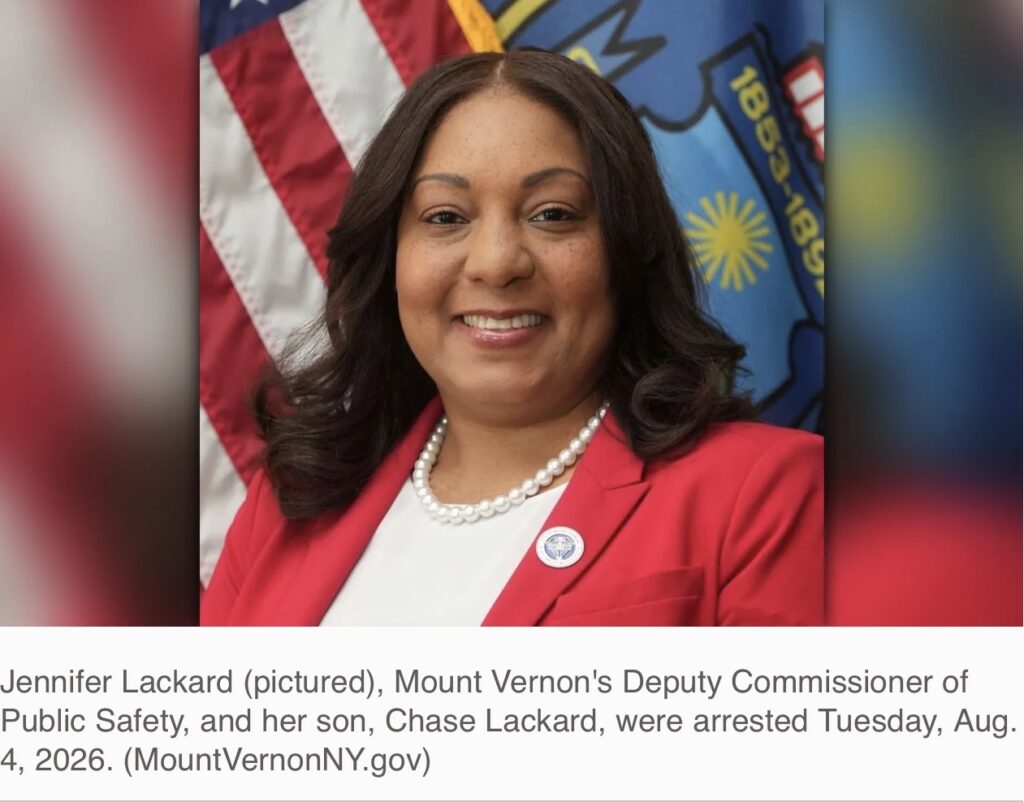
The arrest and termination of former Mount Vernon Police Department Deputy Commissioner Jennifer Lackard is another reminder that allegations of criminal conduct involving senior law enforcement officials are not confined to one agency. According to prosecutors, Lackard has been charged alongside her son, Chase Lackard, in connection with a June 29 shooting in the Bronx. Authorities allege that she acted as the getaway driver after the shooting. Both face serious felony charges, including attempted murder, conspiracy, criminal possession of a weapon, and related offenses. It is important to note that these are criminal allegations, and both defendants are presumed innocent unless and until proven guilty in court. The City of Mount Vernon announced that Lackard’s employment was terminated immediately following her arrest giving up her salary of 138,219 with the police department last year, according to SeeThroughNY.
The allegations also raise questions about whether there were warning signs that may have warranted greater scrutiny. Jennifer Lackard’s rise through the ranks was rapid. After graduating from the NYPD Citizen Police Academy in 2019, she was appointed in 2020 by Mount Vernon Mayor Shawyn Patterson-Howard as Deputy Commissioner for Special Initiatives, a position created during the nationwide protests following George Floyd’s death to focus on community relations, grassroots outreach, and police accountability. In 2022, she launched the department’s Wellness Division, which emphasized mental health interventions and alternatives to arrest. Yet, according to prosecutors’ allegations, investigators now contend that while she was entrusted with promoting accountability and public trust, she was allegedly communicating with her son during the planning and execution of the Bronx courthouse shooting. The allegations are particularly striking when viewed alongside her son’s documented encounters with the criminal justice system. Chase Lackard was shot in the chest during an alleged dispute over gang signs on a Bronx bus in January 2023 when he was 17. He was later arrested on a firearms possession charge in September 2024 and, in November 2024, was shot twice by NYPD officers after authorities alleged he pointed a loaded 9mm handgun at a police vehicle. Those prior incidents are now likely to draw renewed attention as investigators and the public examine whether they presented opportunities for intervention before the conduct alleged in the current indictment.
This case represents a stunning fall for someone who occupied one of the highest civilian leadership positions within a police department. Police executives are expected to set the ethical tone for their organizations. When those at the top are accused of serious crimes, the damage extends well beyond the individuals involved. Public confidence in the institution itself is shaken.
Unfortunately, this is part of a broader trend that has affected law enforcement agencies across the country. In recent years, headlines involving police commissioners, chiefs, deputy commissioners, inspectors, command staff, and other senior officials have become increasingly common. Whether the allegations involve corruption, abuse of authority, conflicts of interest, misconduct, or criminal behavior, every new case reinforces public skepticism toward police leadership.
The concern is not simply about one department. It is about culture.
The NYPD, as the largest municipal police department in the United States and one of the most influential law enforcement agencies in the world, often sets operational and leadership trends that other departments watch closely. Its policies, disciplinary decisions, promotional practices, and accountability standards frequently become reference points for agencies of every size.
That influence cuts both ways.
When the nation’s largest police department is perceived as aggressively enforcing accountability, smaller agencies often feel pressure to meet similar standards. Conversely, if misconduct at senior levels appears to go unaddressed—or if executives appear to receive preferential treatment compared with rank-and-file officers—it risks creating a perception that accountability is inconsistent. That perception can undermine confidence both inside police departments and among the communities they serve.
The concern is not necessarily that departments intentionally emulate misconduct. Rather, the fear is that inconsistent accountability at prominent agencies can weaken expectations elsewhere, allowing some leaders to believe that similar conduct may not result in meaningful consequences.
Every police department, regardless of size, depends on public trust. That trust is earned when misconduct is investigated fairly, disciplinary decisions are transparent, and criminal allegations are handled without regard to rank or title.
The Mount Vernon case also demonstrates why ethical leadership cannot simply be part of a department’s public messaging—it must be reflected consistently in practice. Leaders occupy positions of extraordinary responsibility. When allegations involve those leaders, the public rightly expects swift, impartial investigations based on evidence rather than status.

The City of Mount Vernon has emphasized that the allegations against Jennifer Lackard do not relate to her official duties with the police department. That distinction is important. However, allegations of serious criminal conduct involving a senior police official inevitably raise broader questions about leadership, judgment, and the standards expected of those entrusted with overseeing public safety.
Ultimately, accountability should not depend on geography, department size, political influence, or rank. Whether the agency is the NYPD, Mount Vernon, or any other police department, the same principle should apply: credible allegations deserve thorough investigations, due process must be respected, and no individual should be above the law.
That standard protects not only the public—it protects the overwhelming majority of honest officers whose reputations are damaged every time another executive is accused of betraying the public trust.