
BY SAL GRECO
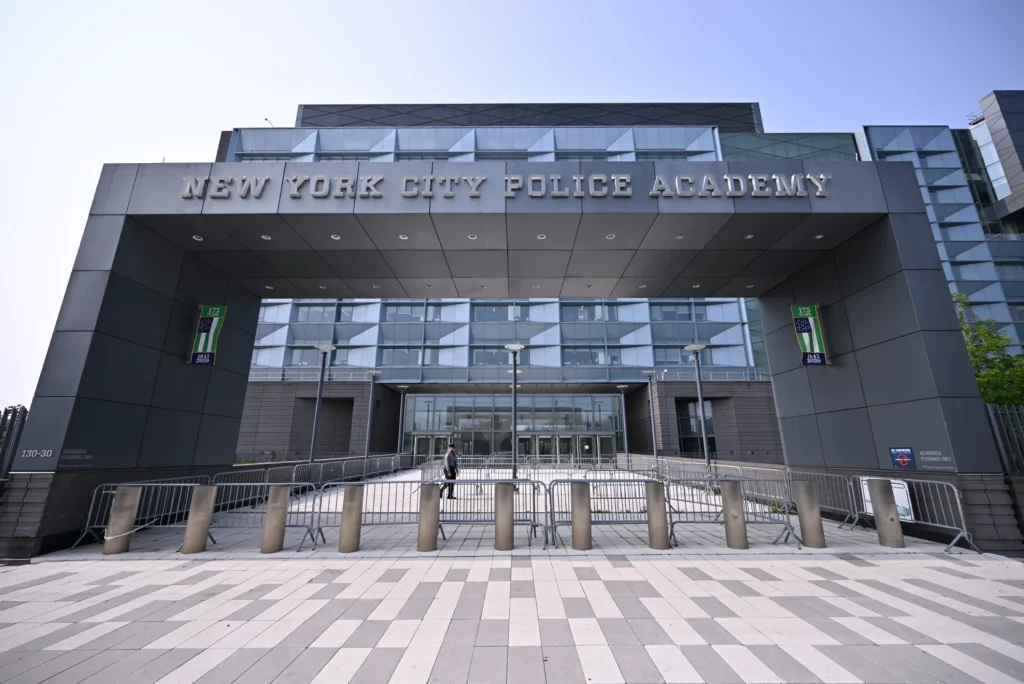
The New York City Police Department’s Police Academy is supposed to represent the foundation of one of the world’s most recognized law enforcement agencies. Every future police officer passes through its classrooms before earning the badge and the public’s trust.
Today, however, the Academy finds itself at the center of multiple lawsuits alleging a deeply troubled environment marked by retaliation, selective discipline, hostile workplace conditions, and inconsistent enforcement of Department policies.
While the allegations remain unproven and the City of New York and individual defendants will have an opportunity to respond in court, the similarity of claims appearing across multiple lawsuits has intensified scrutiny of the Academy’s leadership and raised broader questions about the culture developing under Police Commissioner Jessica Tisch.
A Growing Pattern of Allegations
In recent months, multiple civil lawsuits filed by attorney Eric Sanders have painted a troubling picture of conditions inside the NYPD Police Academy.
Among them are lawsuits filed by former recruit Slims Florentino and, most recently, Emilio Andino. Although each lawsuit involves different individuals and circumstances, both complaints describe what they allege was an environment where retaliation, unequal discipline, and failures by Academy leadership allowed problems to escalate rather than be corrected.
Sanders has publicly argued that these lawsuits reveal systemic failures rather than isolated incidents, contending that Academy leadership repeatedly failed to protect recruits who reported misconduct while allegedly responding with discipline against those who complained.
Whether the courts ultimately agree remains to be seen. But the allegations themselves deserve public attention because they concern the institution responsible for training every future NYPD officer.
The Florentino Lawsuit
According to the complaint, Slims Florentino successfully completed the Academy’s physical, firearms, and academic requirements.
The lawsuit alleges that performance was never the issue.
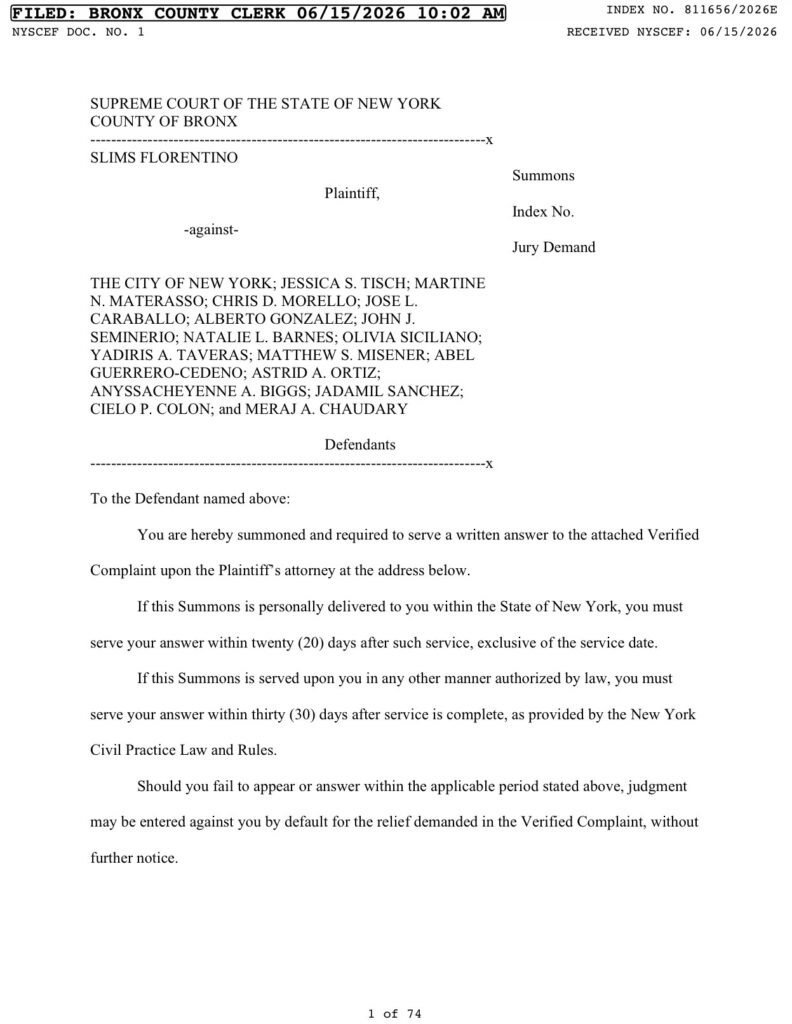
Instead, the complaint alleges that after reporting what she believed to be hostile and unsafe conditions inside the Academy, she became the subject of retaliation.
The complaint alleges an environment involving gender-based hostility, coordinated intimidation, property damage, threats, retaliation, and failures to properly preserve evidence after misconduct was reported. It further alleges that supervisors mishandled an incident in which Florentino reported being struck by another recruit, ultimately treating her as a disciplinary problem rather than a complainant.
The lawsuit also challenges aspects of the NYPD’s hiring and psychological screening process, alleging deficiencies in the way recruits are evaluated and monitored.
The City has not yet responded to those allegations in court.
The Andino Lawsuit
The newest lawsuit, filed on behalf of Emilio Andino, raises another set of allegations regarding Academy leadership.
According to the complaint, Andino alleges he became the target of retaliation because he is the nephew of retired Lieutenant Quathisha Epps after Epps publicly accused former Chief of Department Jeffrey Maddrey of misconduct.
The complaint alleges that Andino was subjected to racial hostility, selective discipline, an incomplete investigation following a confrontation with another recruit, suspension, disciplinary charges, hair testing, and ultimately termination despite successfully completing the Academy’s academic requirements.
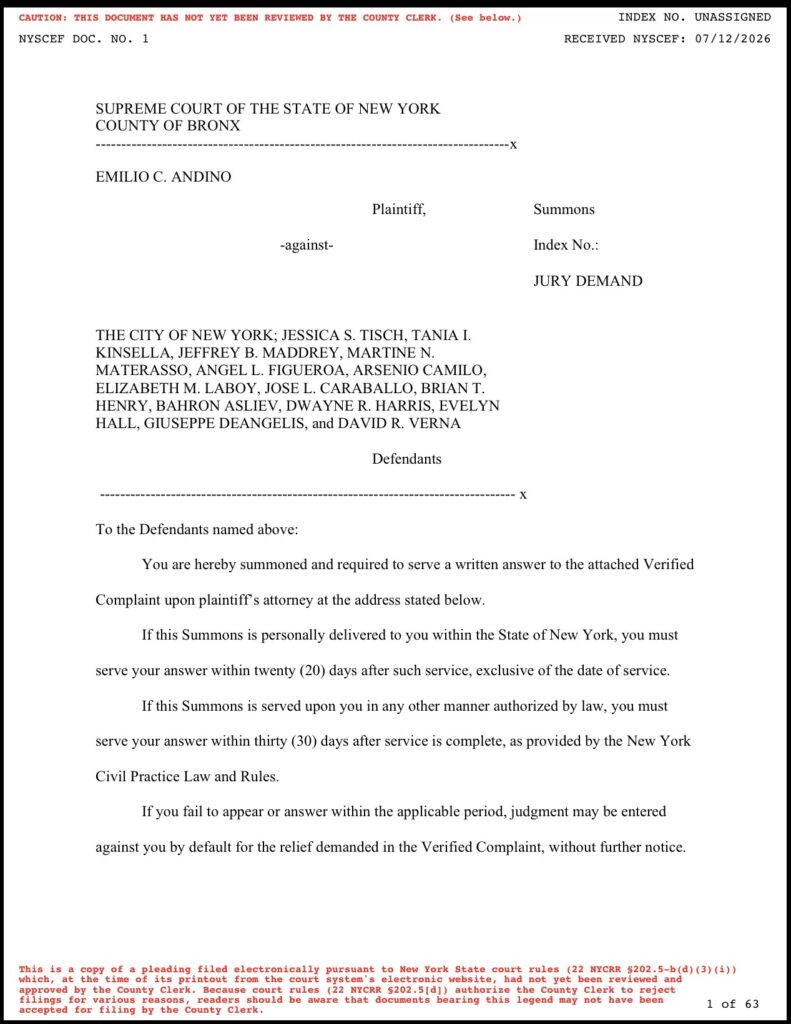
The lawsuit argues that Academy supervisors and investigators failed to conduct an impartial investigation and instead focused disciplinary action on Andino while not imposing comparable discipline on another recruit whom the complaint alleges engaged in threatening and offensive conduct.
Those allegations have not been adjudicated.
Leadership Under Scrutiny
One of the most notable allegations in the Andino complaint concerns NYPD Chief of Training Martine Materasso.
The complaint alleges that Materasso was publicly photographed socializing with Jimmy “Jamie” Rodriguez, whom the lawsuit identifies as a person publicly described by former Lucchese crime family member and government witness John Pennisi as an associate of the Lucchese crime family.

The complaint argues that NYPD Patrol Guide Procedure 304-06, which governs prohibited associations, should have been applied consistently and alleges that no investigation or disciplinary action followed with respect to Materasso, while lower-ranking members have allegedly faced discipline under the same policy.
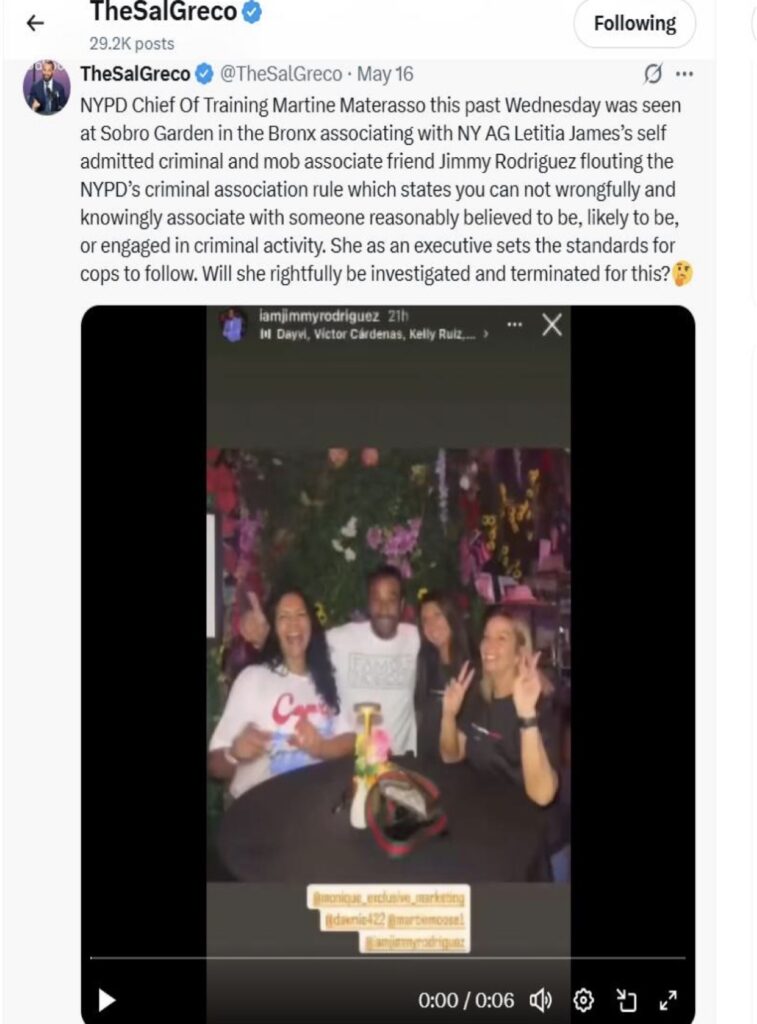
Former NYPD Officer Sal Greco argues that the allegation highlights what he views as unequal enforcement of Department rules. Greco has long maintained that he was investigated and ultimately terminated over alleged prohibited associations, while alleging that senior executives have not faced similar scrutiny when comparable questions are raised.
Those allegations remain contested and have not been decided by a court.
Recurring Themes
Although each lawsuit involves different facts, several recurring themes emerge:
- allegations of retaliation after recruits reported misconduct;
- allegations of selective enforcement of Department rules;
- allegations that evidence was not properly preserved;
- allegations that complaints were minimized while complainants faced discipline;
- allegations that Academy leadership failed to foster a professional training environment.
Whether those similarities reflect broader systemic problems is ultimately a question that may be explored through litigation and any future investigations.
Why the Police Academy Matters
The Police Academy is more than another NYPD command.
It is where future officers learn not only tactics and law but also professionalism, ethics, accountability, and leadership.
If recruits perceive that rules are enforced inconsistently, or that reporting misconduct results in retaliation rather than protection—as alleged in these lawsuits—that could have implications far beyond the Academy itself.
Those allegations, if proven, would raise important questions about organizational culture and public confidence.
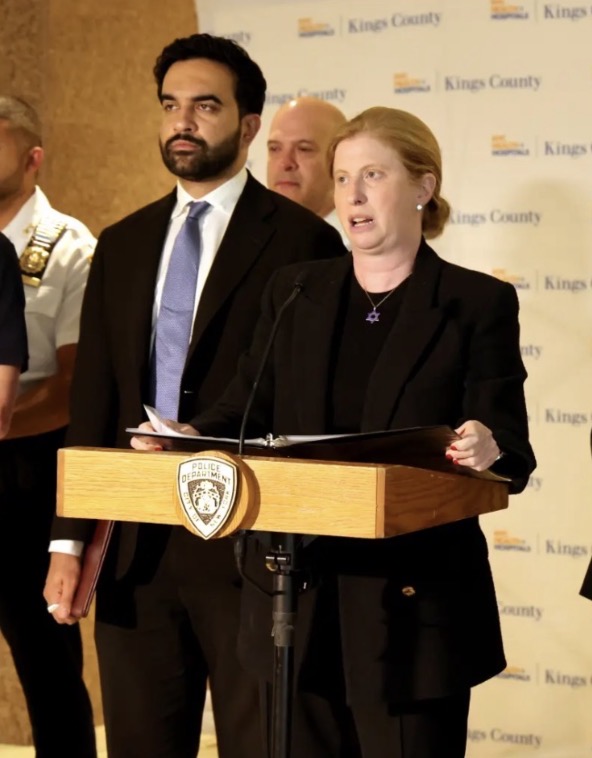
Commissioner Jessica Tisch
Commissioner Jessica Tisch assumed leadership of the NYPD pledging professionalism, accountability, and reform.
The lawsuits, however, place the Academy under increasing public scrutiny during her tenure.
The complaints name Commissioner Tisch among the defendants and allege that Department leadership failed to correct or prevent the conduct described in the lawsuits. Those allegations remain unproven, and the Commissioner and other defendants will have the opportunity to respond in court.
The Bottom Line
Standing alone, one lawsuit can reflect an isolated dispute.
Multiple lawsuits alleging similar patterns inside the same command naturally invite greater public scrutiny.
Whether the allegations are ultimately substantiated will be determined through the courts, but they raise questions that are difficult to ignore about the culture, oversight, and leadership of the NYPD Police Academy.
For an institution entrusted with preparing the next generation of police officers, the stakes extend beyond any single lawsuit. Public confidence in the NYPD begins long before officers graduate from the Academy. As these cases move through the legal system, the answers they produce may shape not only the futures of the plaintiffs involved but also the public’s perception of how the Department trains, disciplines, and leads those sworn to protect New York City.