
BY SAL GRECO
For the second time in a matter of months, the New York City Police Department’s 46th Precinct has become the subject of significant civil litigation alleging serious workplace misconduct. While the allegations in both lawsuits remain unproven and will ultimately be decided through the judicial process, the recurrence of litigation involving the same command raises legitimate questions about workplace culture, leadership, accountability, and oversight within one of the NYPD’s busiest precincts.
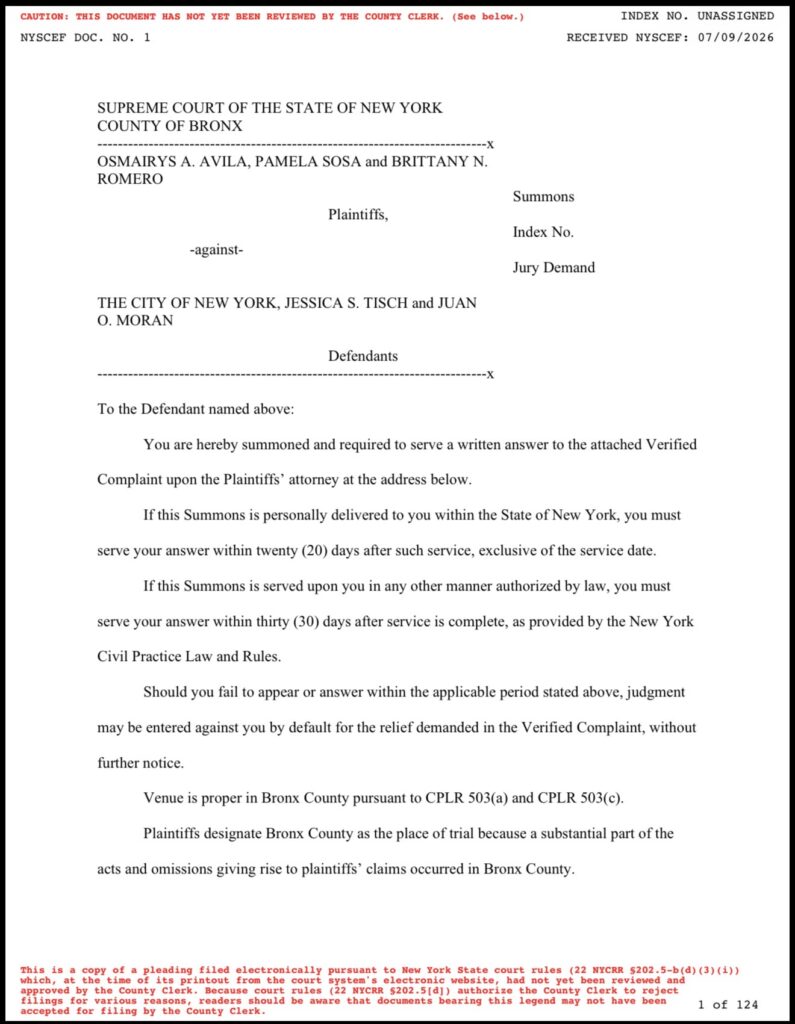
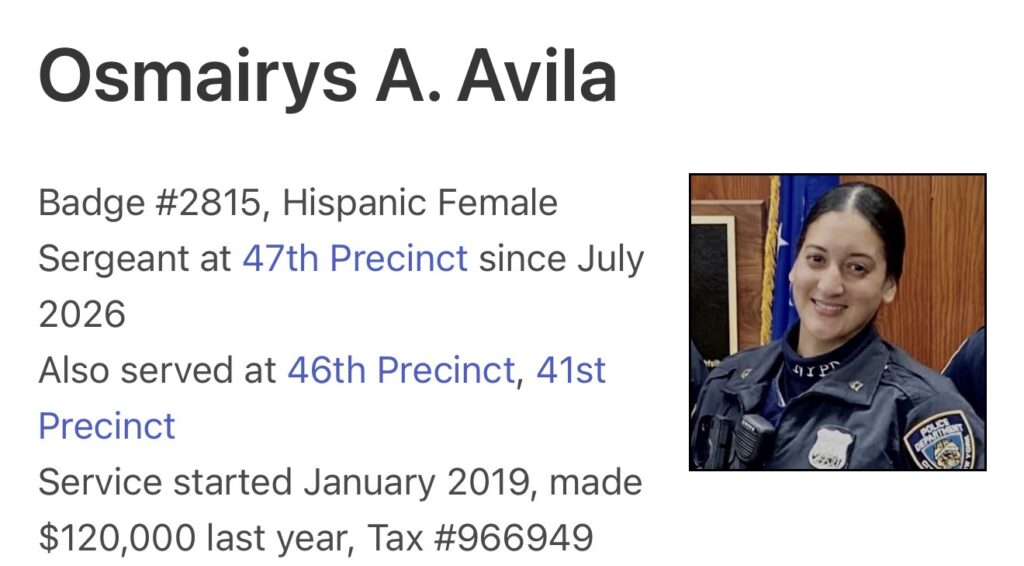
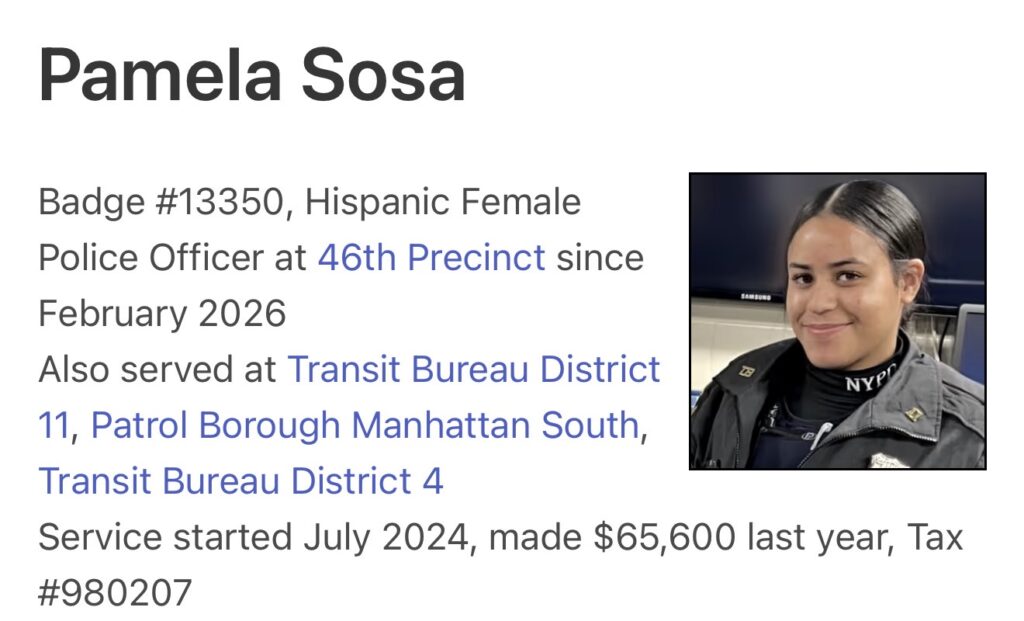
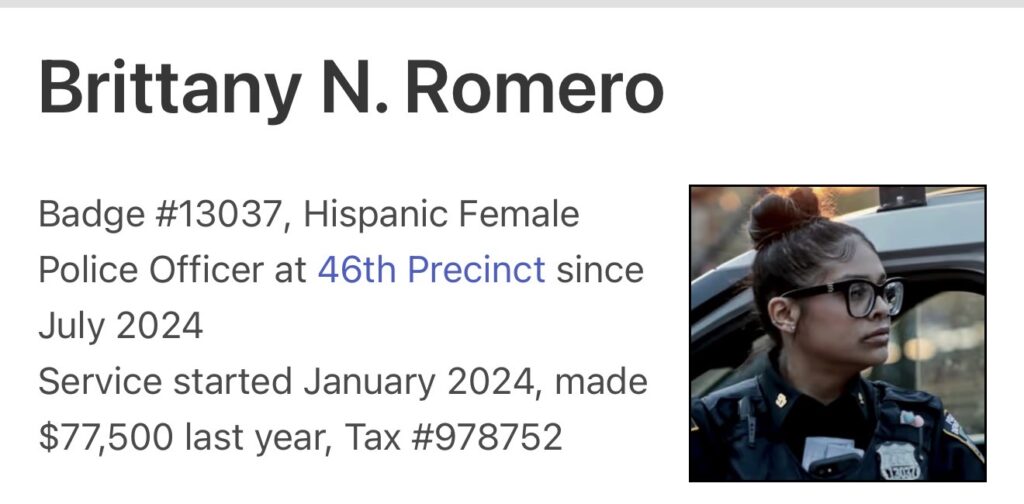
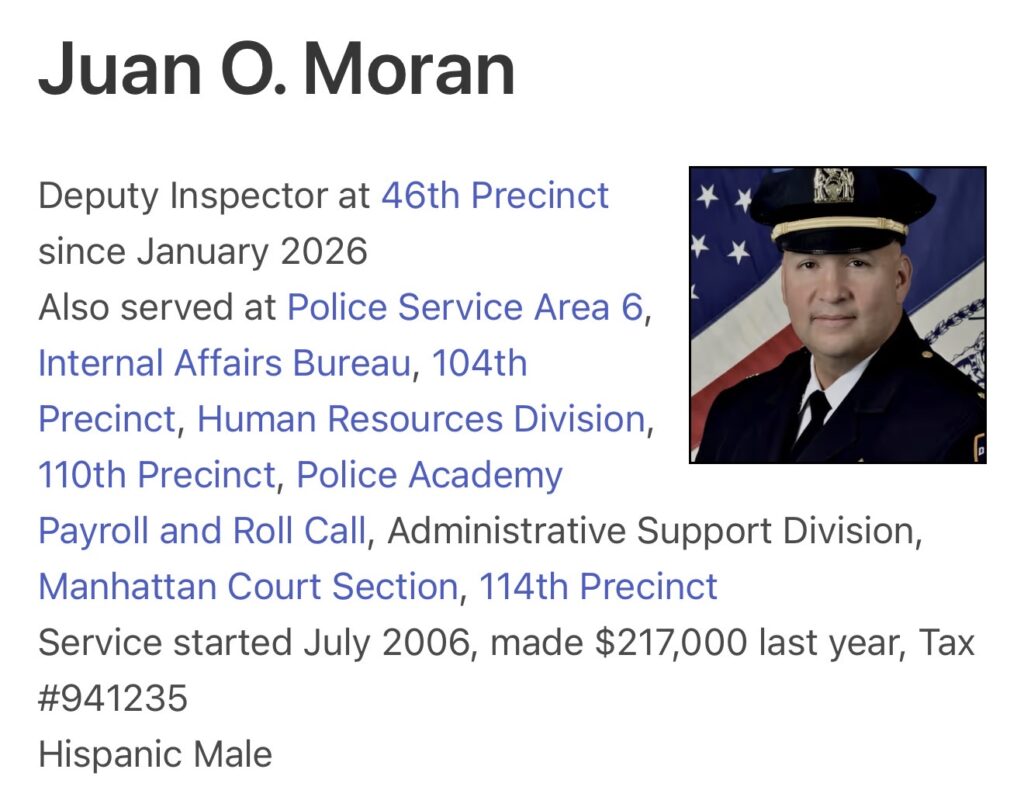
On July 9, 2026, a new lawsuit was filed in Bronx Supreme Court by The Sanders Firm, P.C., on behalf of three female NYPD members of service. The complaint names the City of New York, Police Commissioner Jessica S. Tisch, and Deputy Inspector Juan O. Moran as defendants and asserts claims under the New York State Human Rights Law and the New York City Human Rights Law. The lawsuit alleges discrimination, retaliation, sexual harassment, and a hostile work environment. Those allegations have not been proven, and the defendants will have an opportunity to respond through the litigation process.
The filing follows an earlier lawsuit involving former 46th Precinct Commanding Officer Inspector Jeremy Scheublin. That case likewise alleges serious workplace misconduct and remains pending. Like all civil litigation, the allegations contained in that complaint are claims made by the plaintiff and are subject to judicial review and the presentation of evidence.
Why This Matters
One lawsuit can arise from an isolated dispute. Two lawsuits involving successive command leadership at the same precinct naturally draw broader public attention.
The existence of multiple lawsuits does not establish wrongdoing by the defendants. Courts—not headlines—determine liability. However, repeated litigation involving the same workplace can legitimately prompt questions about organizational culture, supervision, complaint handling, and whether prior concerns were adequately addressed.
Those are questions that extend beyond any individual defendant. They concern how a public institution responds when serious workplace complaints emerge and whether corrective measures are effective.
A Command Already Under Public Scrutiny
The latest complaint expressly references the earlier litigation involving the 46th Precinct and argues that NYPD leadership was already aware of prior allegations before the events described in the new complaint allegedly occurred. Whether that legal theory ultimately succeeds is a question for the courts, but it illustrates one of the central issues likely to be explored during discovery: what information was known to leadership, when it was known, and what actions followed.
Those questions are not unique to the NYPD. Across public agencies, employment litigation often focuses not only on the conduct of individual supervisors but also on institutional responses once complaints are received.
Leadership and Oversight
As Police Commissioner, Jessica Tisch oversees the nation’s largest municipal police department and bears ultimate executive responsibility for departmental policies, discipline, command assignments, and organizational culture. The new complaint includes claims against the Commissioner, which remain allegations to be litigated.
Separate from the litigation itself, the lawsuits raise broader policy questions that New Yorkers may reasonably ask:
- How are commands monitored after significant workplace complaints arise?
- What safeguards exist to prevent retaliation against employees who report misconduct?
- How are commanding officers selected for assignments where prior concerns have been raised?
- What reforms have been implemented following earlier complaints?
- How does the NYPD evaluate whether those reforms have been effective?
These are governance questions that exist independently of whether any individual allegation is ultimately proven.

The Cost Beyond the Courtroom
Employment litigation involving public agencies carries consequences beyond the courtroom.
Every lawsuit requires attorneys, investigators, supervisors, witnesses, and court resources. If claims are ultimately resolved through settlement or judgment, taxpayers may bear substantial financial costs. Even where defendants ultimately prevail, prolonged litigation can consume significant public resources and affect employee morale.
Repeated lawsuits also influence public confidence. Residents expect police departments not only to enforce the law but also to maintain professional workplace standards within their own ranks. Allegations of discrimination, harassment, or retaliation—whether ultimately proven or not—can affect public perception and underscore the importance of transparent internal accountability.
What Happens Next?
The filing of a complaint is the first stage of civil litigation, not its conclusion. The defendants will have the opportunity to file formal responses, challenge the legal sufficiency of the claims, present evidence, conduct discovery, and defend themselves in court. Judges and, if necessary, juries will evaluate the evidence presented before reaching any conclusions.
As these cases move forward, the public record will continue to develop through motions, discovery disputes, court rulings, and, potentially, trial proceedings. Those developments—not speculation—will provide the clearest picture of what occurred and whether the plaintiffs can meet their burden of proof.
For now, one fact is beyond dispute: the 46th Precinct has become the subject of repeated, high-profile employment litigation in a relatively short period of time. That reality alone warrants continued public attention, careful reporting, and thoughtful examination of how large public institutions address allegations of workplace misconduct while ensuring fairness to everyone involved.
The Sal Greco Show will continue following these cases through publicly available court records, official statements, and other verifiable sources as the litigation progresses.