
As online political gambling becomes more mainstream than spending a weekend at the local casino, city agencies such as the NYPD must be wary of the legal conflict of interest dangers that exist. In the same way that athletes in the NFL, MLB, and NBA are disallowed from betting on results of their own sports, city workers should be banned from gambling on happenings in which they could have a personal interest or professional information on.
Simply put: If a governmental decision has a direct impact on their job or if they have exclusive inside information on an event, they should be banned from gambling on it. As things stand right now, there are few guardrails in place to prevent such happenings, opening up the possibility for a major scandal should anyone be caught in the wrong. Strict limitations are necessary to ensure that city employees aren’t exploiting their institutional knowledge of upcoming bureaucratic events to line their pockets. Especially given the level of financial intrigue that exists in this new era of legal gambling.
With speculation regarding NYPD Commissioner Jessica Tisch’s departure running rampant on social media, gamblers have already placed over $17,000 worth of bets on the odds of a switch, with a highly fluctuating percentage. The volume of bets and volatility are indicative of the keen interest behind her decision. And it’s not outlandish to hypothesize that some of those involved could have skin in the game – be it inside of 1PP, City Hall, or elsewhere.
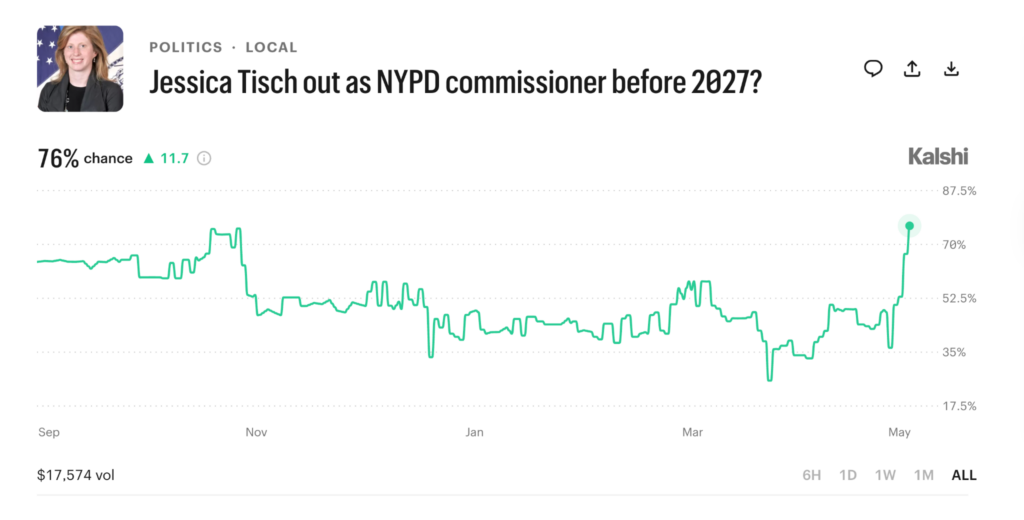
So, in the spirit of deploying a crime prevention strategy as a deterrent, strict measures need to be put in place so that the betting markets aren’t exploited by those internally involved. If a high-ranking official or union head within the NYPD capitalized on access to inside information about Tisch’s departure prior to her leaving by placing a large bet on Kalshi, that should be viewed as a major no-no.
While the novelty of widespread online gambling creates systemic blind spots in actively trying to prevent it, city agencies and police departments must be made aware of the potential dangers of not nipping it in the bud right away. Think about the endless possibilities for abusive profiteering amongst those who are in the know. And in the same way that if you give a mouse a cookie, it’s going to want some milk on the side, city employees could end up gambling on a range of happenings spanning from mayoral elections to policy decisions.
Which is contextually inappropriate given their proximity to said events. Instead of ignoring the elephant stomping in the room, bureaucratic officials should create strict regulatory measures, outright banning employees from betting on governmental matters. Otherwise, the most egregious white-collar offenders could come from within.