
BY SAL GRECO
The arrest of NYPD Officer Jonathan Baez on attempted murder charges marks yet another embarrassing chapter for a police department already engulfed in controversy.
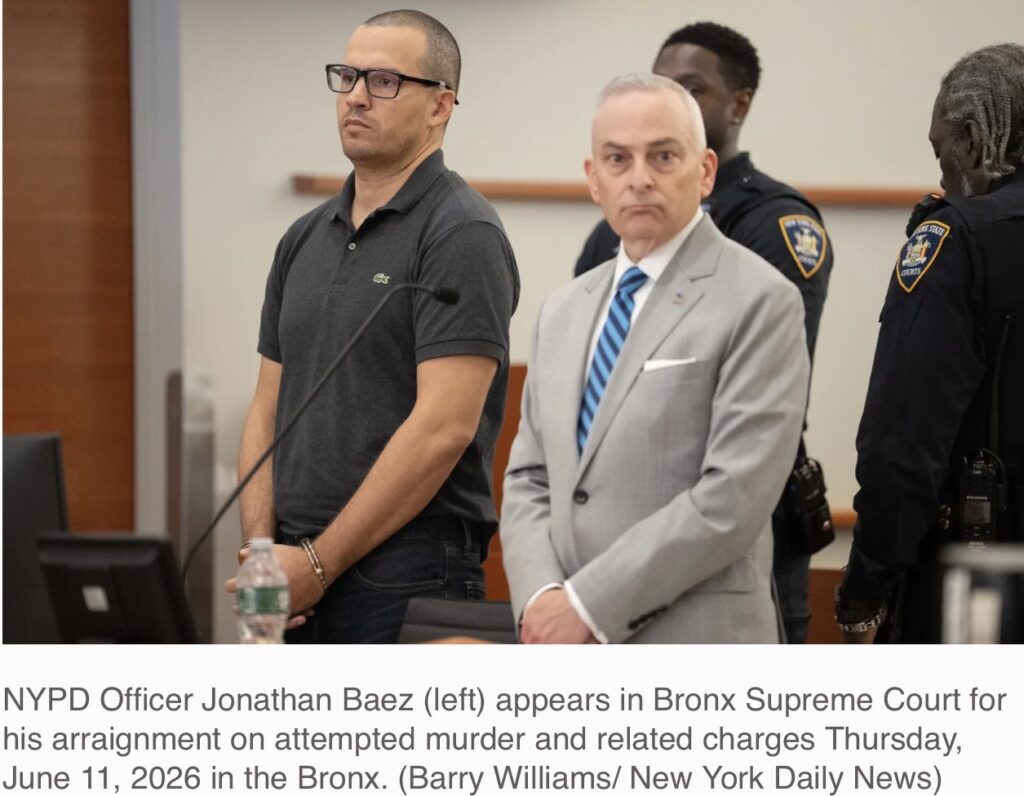
According to multiple media reports, including the New York Daily News and other local outlets, Baez, a member of the NYPD Intelligence Bureau and a former member of security details assigned to City Hall and Gracie Mansion, was arrested months after an off-duty shooting in the Bronx that left a man critically wounded. Prosecutors allege Baez fired a shot during a confrontation involving individuals he believed were connected to the theft of his vehicle. The victim suffered a gunshot wound to the head and was hospitalized in critical condition. Baez was subsequently suspended without pay as the investigation continued.
Long before the arrest became official, The Sal Greco Show and @TheSalGreco on X reported significant developments in the case. Sources familiar with the matter indicated that Baez’s law enforcement career was in serious jeopardy as investigators examined the circumstances surrounding the shooting. Those reports also raised questions about supervision, training, and the decision-making process that led to an off-duty police officer allegedly engaging suspects on his own rather than relying on responding units and established procedures.
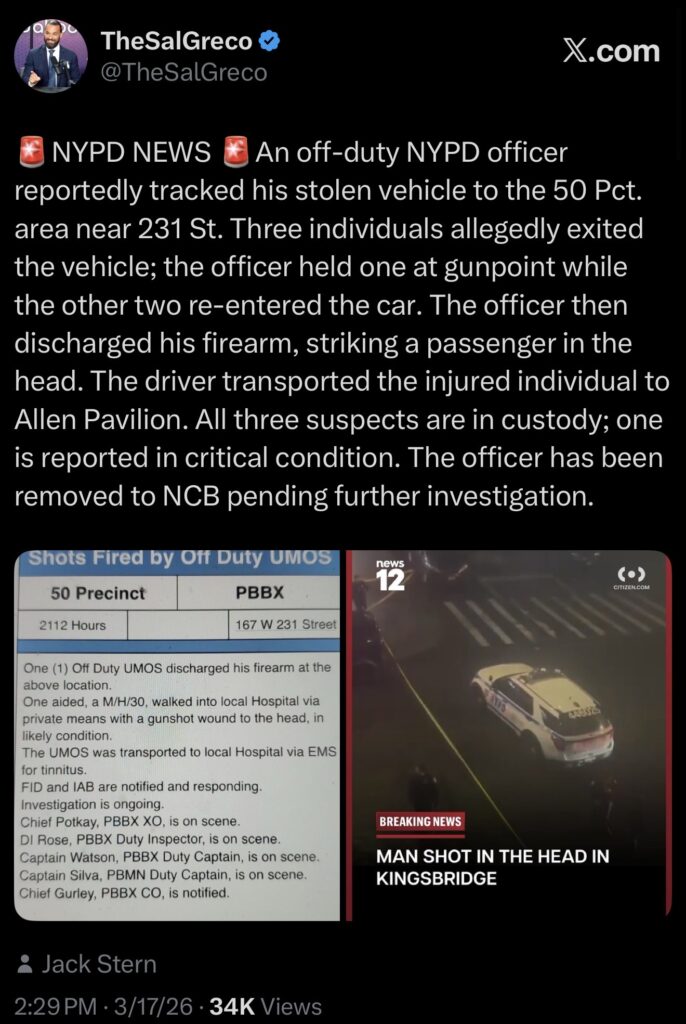
Now, with criminal charges filed, the case has moved from internal controversy to a full-blown criminal prosecution.
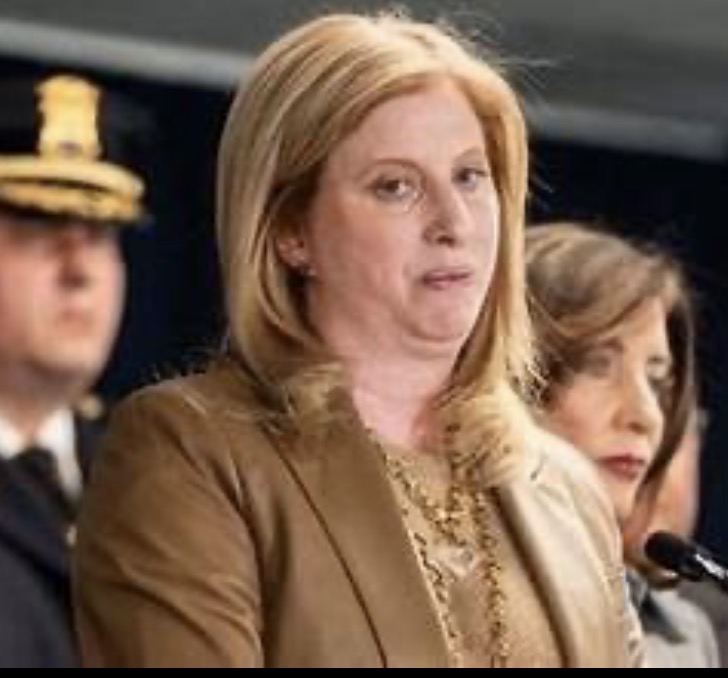
The timing could not be worse for Police Commissioner Jessica Tisch.
Over the past several weeks alone, the NYPD has found itself under relentless scrutiny. The fallout from the Jeffrey Maddrey overtime scandal continues to haunt the department with the recent “ NYPD OVERTIME SCANDAL : The Paul Saraceno Files “ series being released by The Sal Greco Show which is the official internal affairs interrogation conducted with Paul Saraceno on December 31, 2024 shows a completely different reality then the one the NYPD was painting about former NYPD lieutenant Quatisha Epps . Questions remain about how overtime was approved, processed, and supervised at the highest levels of the organization. The controversy generated national headlines and left many wondering whether accountability standards apply equally across all ranks.
At the same time, the department has been dealing with allegations of time theft, selective discipline, executive misconduct investigations, lawsuits involving current and former employees, and a growing perception among critics that politically connected officials receive treatment unavailable to rank-and-file members.
Now comes the Baez arrest.
For the average New Yorker, the details are alarming. An NYPD officer assigned to one of the department’s most sensitive commands allegedly fired a shot during an off-duty confrontation that prosecutors now believe warrants attempted murder charges. Whether Baez is ultimately convicted will be decided in court, but the arrest itself raises troubling questions about screening, supervision, training, and accountability.
The larger issue facing the NYPD is no longer any single scandal.It is the accumulation of scandals.
Every police department experiences isolated incidents involving misconduct, corruption, or poor judgment. What becomes far more difficult to explain is when controversy after controversy dominates headlines while public confidence continues to erode.
Jessica Tisch inherited many of the department’s problems. That is true. However, she also accepted responsibility for fixing them. Instead, critics argue that New Yorkers continue to witness executive misconduct investigations, overtime controversies, disciplinary inconsistencies, lawsuits, questionable personnel decisions, and now the arrest of an Intelligence Bureau officer on attempted murder charges.
The question facing City Hall is becoming increasingly difficult to ignore:
How many scandals can one administration absorb before the public concludes these are not isolated incidents but symptoms of a deeper leadership problem?
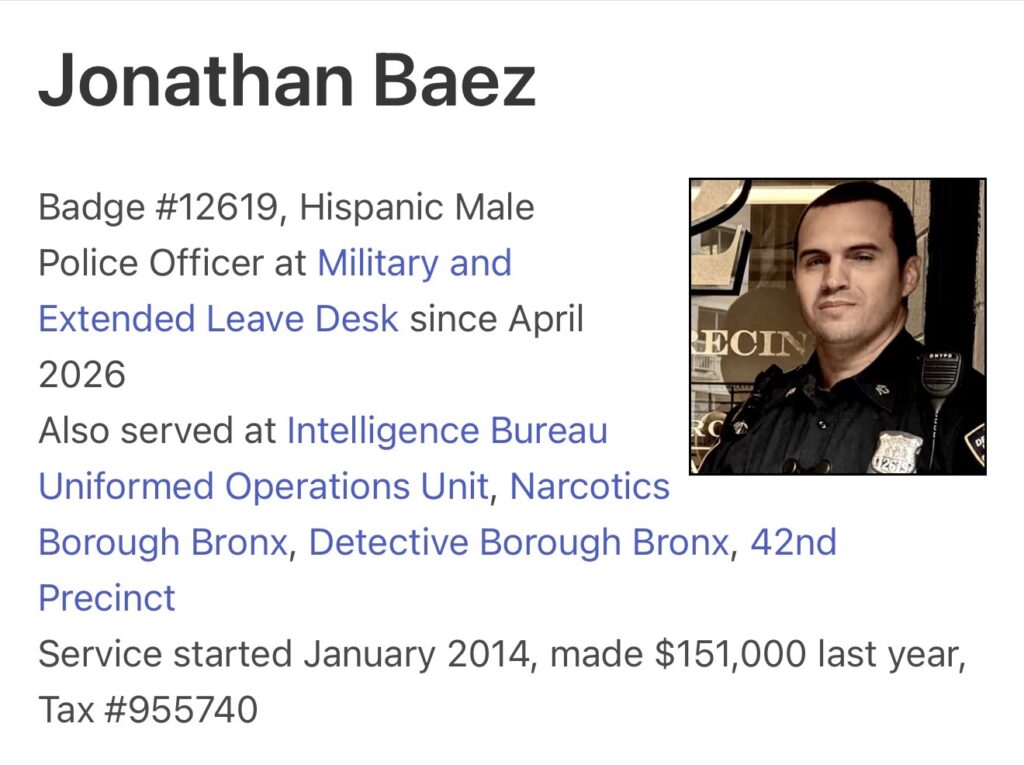
For an NYPD already reeling from the Maddrey scandal and a series of embarrassing headlines, the Jonathan Baez arrest is more than another bad news cycle.
It is another stain on a department struggling to convince New Yorkers that accountability begins at the top.