
BY SAL GRECO
When Jessica Tisch took over as New York City Police Commissioner, she was presented as the person who would restore order, accountability and credibility to an NYPD battered by scandal. She was supposed to be the reformer—the steady hand who would clean up a department that had become increasingly synonymous with internal turmoil, misconduct allegations and questions about leadership.
Yet another lawsuit now raises a difficult question: what exactly has changed for women inside the NYPD?
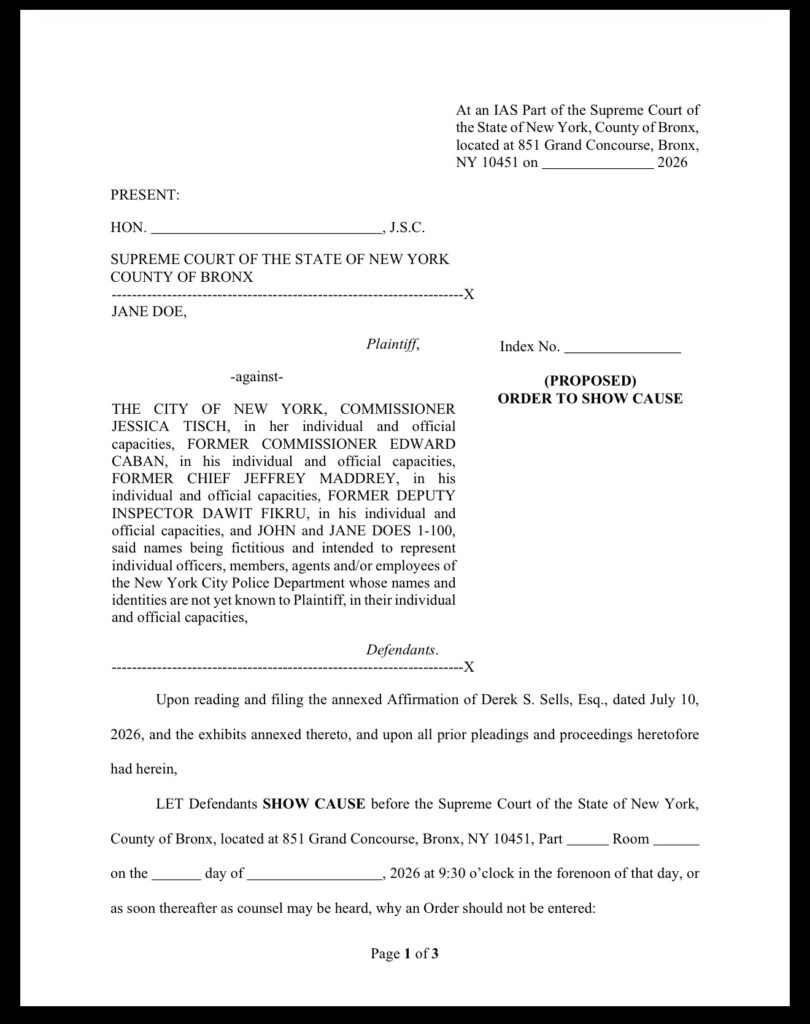
A 75-page verified complaint filed in Bronx Supreme Court on July 10, 2026, by an NYPD captain identified as “Jane Doe” accuses the City of New York, Commissioner Jessica Tisch, former Commissioner Edward Caban, former Chief of Department Jeffrey Maddrey, former Deputy Inspector Dawit Fikru and other unidentified NYPD personnel of discrimination, retaliation, sexual harassment and negligent supervision. The plaintiff is a more than 22-year NYPD veteran who rose to become the first Arab-American woman and first Muslim woman to attain the rank of Captain and eventually commanded the 50th Precinct.
The lawsuit tells an extraordinarily disturbing story.
Doe alleges that beginning around 2020, former NYPD Captain Hariton Marachilian subjected her to a prolonged pattern of stalking, sexual harassment, psychological abuse and physical violence. According to the complaint, when the NYPD and Internal Affairs eventually learned that she was allegedly a domestic-violence and stalking victim, the Department did not protect her. Instead, she alleges that NYPD retaliated against her—and continued doing so even after Marachilian was prosecuted in New Jersey.

Those allegations predate Tisch’s tenure as commissioner. What should concern New Yorkers, however, is what the lawsuit says happened after Tisch took control of the Department.
Doe alleges she remained on Modified Duty until January 5, 2026, after having been stripped of her command, badge, service weapon and personal firearms. Her lawsuit further claims that after eventually returning to full duty, she was moved from Commanding Officer of the 50th Precinct to Executive Officer of the 10th Precinct—an assignment she characterizes as a meaningful reduction in authority, responsibility and prestige. She also alleges that she was denied opportunities in Intelligence, Force Investigation, Narcotics and Internal Affairs.
This is where the “new era” narrative surrounding Tisch deserves scrutiny.
Tisch is specifically named in the lawsuit in both her individual and official capacities. The complaint alleges that as commissioner she was responsible for supervising, disciplining and retaining NYPD employees and for maintaining policies designed to prevent discrimination and retaliation.
That does not mean Tisch personally committed every act alleged in this case, nor does the lawsuit establish that she personally ordered Doe’s treatment. But it does raise a broader leadership question that has become increasingly difficult to avoid: how can serious allegations of retaliation, harassment and mistreatment continue within the NYPD while the commissioner publicly projects an image of accountability and reform?
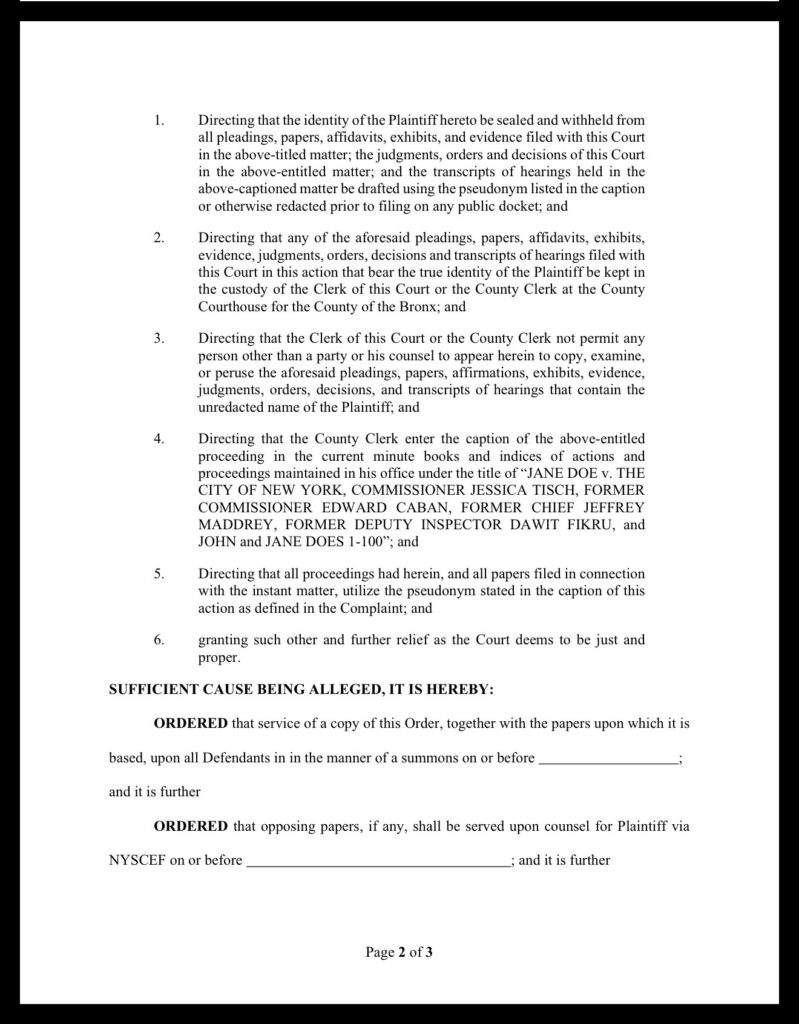
The plaintiff’s sworn affirmation supporting her request to proceed anonymously makes the allegations even more troubling.
Doe states under penalty of perjury that she suffered approximately two and a half years of sexual abuse and harassment, including unwanted sexual touching and threats of rape. She alleges that her abuser secretly photographed and recorded her and threatened to distribute the material to NYPD members in an effort to keep her silent.
But perhaps the most damaging allegation for the NYPD as an institution is what Doe says the Department itself did after learning she was a domestic-violence victim.
According to her sworn affirmation, NYPD personnel allegedly circulated her official photograph along with what she describes as false and sexually charged rumors about her to large numbers of Department members through electronic communication forums. She alleges the information was spread in a manner intended to humiliate her and destroy her personal and professional reputation.
Doe further alleges that NYPD disclosed confidential information regarding her cooperation with criminal investigators to her alleged abuser at a time when the Department had confiscated her firearms.
If proven, those allegations would point to something far deeper than one bad supervisor, one bad investigator or one dysfunctional command. They would raise questions about institutional culture.
That is precisely why Tisch’s leadership must be examined critically.
For years, women within the NYPD have brought allegations involving sexual harassment, retaliation, favoritism, inappropriate relationships and unequal treatment. Every administration promises reform. Every new commissioner speaks about integrity. Yet the complaints continue arriving.
Tisch was not commissioner when the alleged abuse in this case began. That distinction matters. But she was commissioner while Doe alleges retaliation and adverse employment consequences continued, and she leads the institution being accused of failing to correct those conditions.
A commissioner cannot reasonably be expected to personally investigate every allegation involving more than 30,000 uniformed members. But leadership ultimately means creating a system in which victims believe complaints will be taken seriously, investigators are impartial, retaliation is not tolerated and disciplinary standards are applied consistently.
Doe alleges almost the opposite occurred.
Her complaint accuses former Deputy Inspector Dawit Fikru of conducting what she characterizes as a retaliatory and sexually invasive Internal Affairs interrogation. She claims she was questioned at length about her sexual history during an investigation she alleges was pretextual. The lawsuit asserts that this amounted to sexual harassment and retaliation.
The complaint goes further by asserting a negligent-supervision claim against the City, Tisch, Caban, Maddrey and others concerning Fikru. Doe alleges that defendants knew or should have known of his alleged propensity to engage in retaliatory conduct and nevertheless failed to adequately train, supervise or remove him. Those allegations remain unproven, but they are now formally before a court.
That brings us back to the political image of Jessica Tisch as the person sent in to save the NYPD from itself.
Public relations cannot substitute for internal accountability.
High-profile announcements, carefully managed press appearances and promises of reform mean little if members of the Department—particularly women alleging harassment or abuse—believe the system will turn on them once they speak out.
It can also create the appearance that certain misconduct receives intense attention when it is politically convenient or publicly embarrassing, while other allegations languish inside internal processes for months or years. Whether that perception is fair is precisely why transparency and consistency matter.
The commissioner’s job is not merely to respond when a scandal becomes public. It is to build an organization where the underlying misconduct is detected, addressed and stopped before another lawsuit is required to expose it.
This complaint alleges that did not happen here.
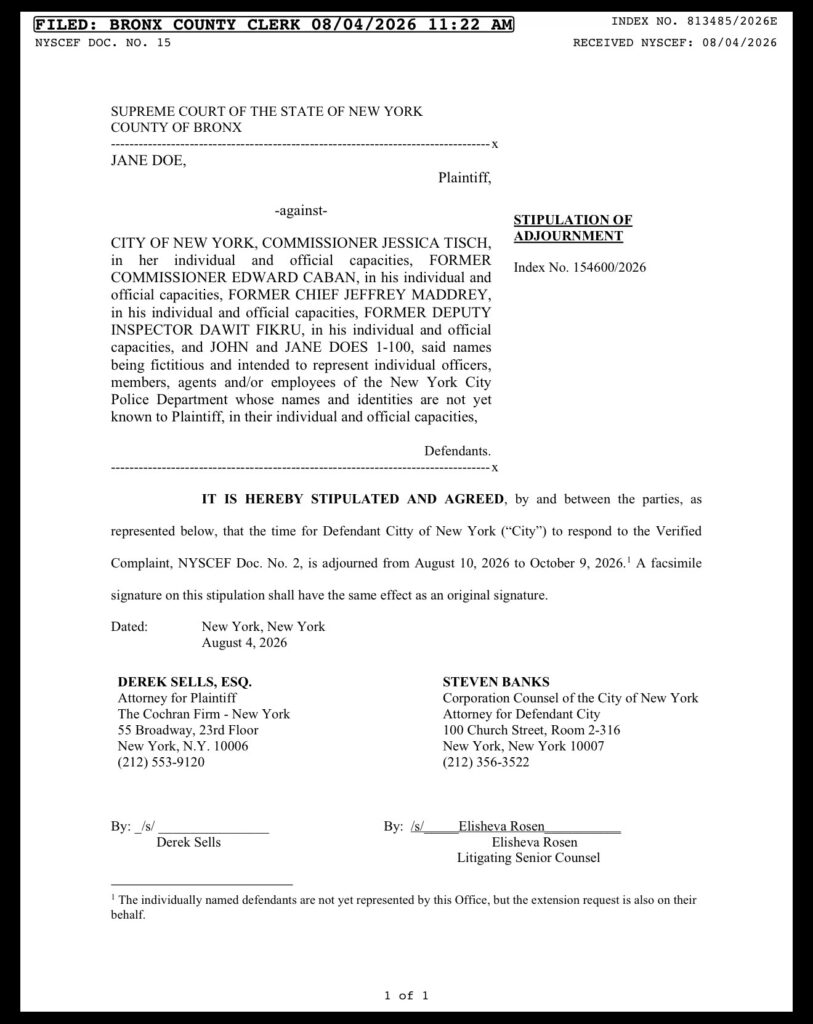
The case is still in its early stages. The City and the individually named defendants have not yet had their allegations adjudicated, and the claims in the lawsuit should not be confused with findings of fact. An August 4 stipulation extended the deadline for the City to respond to the complaint from August 10 until October 9, 2026.
But the existence of another detailed lawsuit by a veteran female NYPD member should not simply be dismissed as another piece of litigation.
Doe is asking a jury to consider allegations that she was abused by a fellow NYPD captain, punished after becoming known as his alleged victim, subjected to invasive Internal Affairs questioning, stripped of her command and professional opportunities, and forced to spend years fighting the very Department she served.
Jessica Tisch inherited many of the NYPD’s cultural problems. She did not create all of them.
But at some point, an inherited problem becomes your problem when you are the person sitting in the commissioner’s chair.
And if women continue alleging harassment, retaliation and institutional indifference under the administration that was supposed to restore accountability, New Yorkers are entitled to ask whether the promised reform was substantive—or simply another change in branding.