
BY SAL GRECO
The allegations against Dallas Police Sgt. Daylon L. Grandberry have reignited a conversation that law enforcement agencies across America can no longer avoid. According to public reporting and statements released by the Dallas Police Women’s Association (DPWA), Grandberry allegedly persuaded a subordinate female officer to hand him her unlocked phone under the guise of downloading a game. After observing her passcode, he allegedly accessed her password-protected hidden photo folder, sent intimate images to himself twice, and later deleted evidence before returning the phone. The officer ultimately discovered the images had been texted to him and reported the incident despite fearing retaliation.
Following an internal investigation, Grandberry received a 15-day suspension. According to reports, the disciplinary outcome effectively amounted to the loss of accrued vacation time while he remained employed as a police sergeant.
If these allegations are accurate, many will reasonably question whether this punishment reflects the seriousness of the alleged misconduct. A supervisor who allegedly exploits the trust of a subordinate to obtain intimate photographs without consent has compromised the integrity expected of someone entrusted with police authority. A temporary suspension—particularly one equating largely to the loss of vacation days—may be viewed by many as insufficient given the nature of the allegations.

A Betrayal of Trust
The Dallas Police Women’s Association issued an unusually forceful statement, describing the incident as a “horrific breach of trust.” The organization argued that the female officer placed her trust in a supervisor only to have that trust shattered. It emphasized that she feared retaliation for reporting the incident but nevertheless came forward because the issue extends beyond a single victim and affects every woman serving in the department.
The Association further criticized the discipline imposed, stating that the supervisor was neither fired nor demoted and remained in a position of authority. According to the DPWA, that outcome sends the wrong message to female officers and contributes to a workplace culture in which misconduct against women is not addressed with sufficient seriousness. The Association also called for meaningful reforms and argued that incidents like this discourage female recruitment and undermine confidence in departmental leadership.
Should a Supervisor Remain Employed?
If the allegations are substantiated, many will argue that termination—not merely a suspension—would be the appropriate disciplinary outcome.
Police supervisors hold extraordinary authority over the careers, evaluations, schedules, promotions, and daily working conditions of subordinate officers. That authority carries an equally extraordinary responsibility to protect those under their command—not exploit them.
The question is one many members of the public may naturally ask:
If this were your spouse, daughter, sister, mother, or close friend, would you be comfortable knowing that the supervisor accused of secretly accessing and sending intimate photographs remained employed by your local police department and continued supervising officers?
Reasonable people may answer that question differently, but it underscores why allegations involving abuse of authority are so significant. Public confidence depends not only on fair investigations but also on disciplinary outcomes that are viewed as proportionate when misconduct is sustained.
A National Problem
Unfortunately, Dallas is hardly alone.
Across the country, police departments have repeatedly confronted allegations involving supervisors accused of sexual harassment, sexual misconduct, abuse of authority, retaliation, and hostile work environments. While the overwhelming majority of officers serve honorably, departments that fail to respond decisively to sustained misconduct risk creating an environment where victims fear reporting abuse and predators believe the consequences will be minimal.
That concern has also been raised regarding the NYPD under Police Commissioner Jessica Tisch. Multiple lawsuits and public allegations involving sexual misconduct, harassment, and supervisory abuse have been filed during her tenure. Each allegation deserves to be evaluated on its own facts, and individuals accused of misconduct are entitled to due process. At the same time, critics have questioned whether disciplinary systems within the department have consistently imposed consequences that match the seriousness of sustained misconduct.
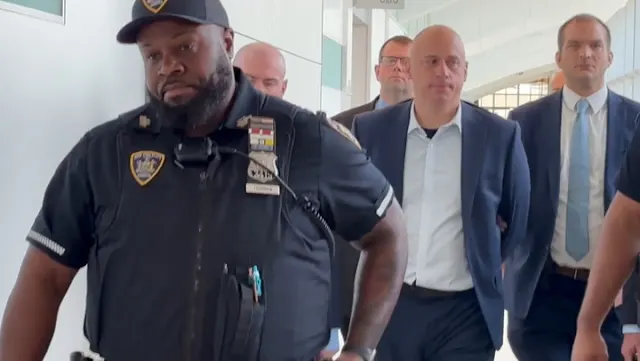
The recent criminal indictment of former NYPD Inspector Jeremy Scheublin has also intensified scrutiny over how allegations involving high-ranking public servants are handled. Many officers and observers hope that cases involving alleged sexual harassment or assault—regardless of the accused individual’s rank—will now receive greater attention from both prosecutors and police leadership.
Public Service Requires Public Accountability
Police officers enforce laws protecting victims from exploitation, invasion of privacy, stalking, and abuse. Departments therefore have an obligation to hold their own members to standards that are at least as demanding as those expected of the public.
If misconduct involving abuse of authority is sustained, discipline should demonstrate that no rank, badge, or title shields an individual from accountability.
Temporary suspensions may satisfy internal disciplinary procedures, but they do not necessarily restore public confidence. Accountability requires consequences that reflect both the seriousness of the misconduct and the unique public trust vested in law enforcement officers.
Protecting victims, encouraging reporting, and removing those who abuse positions of authority are not merely personnel issues—they are essential to maintaining the integrity of policing itself.