
BY SAL GRECO
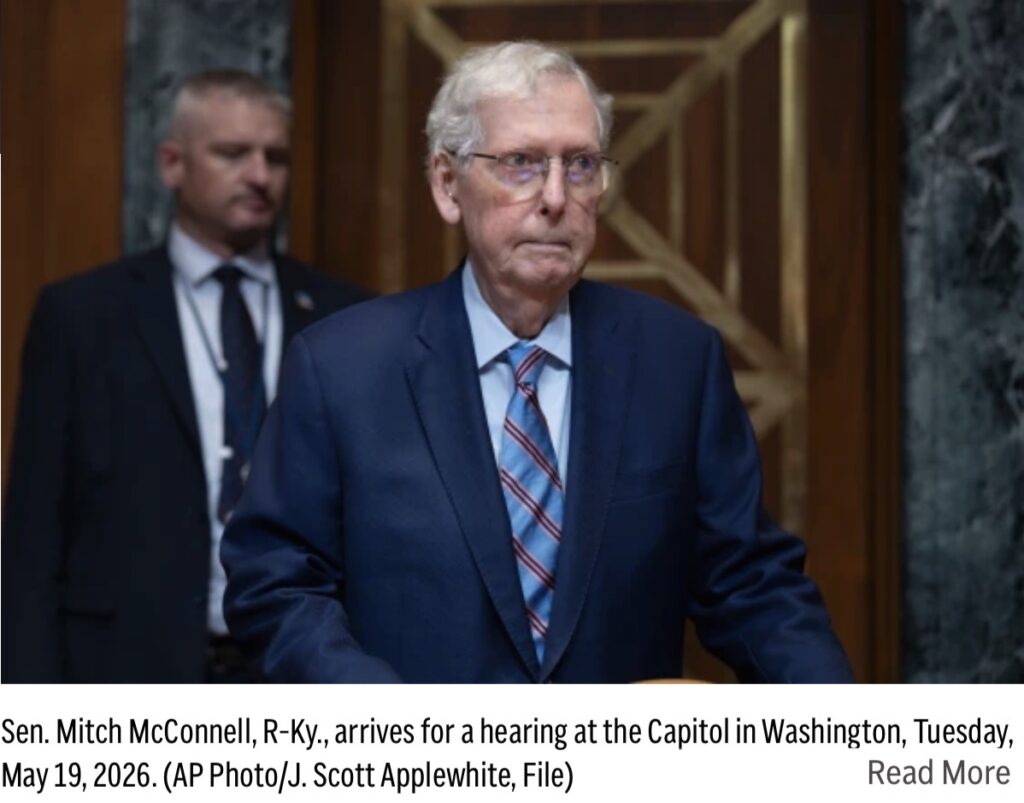
For nearly a month, the American public has received remarkably little information regarding the health of U.S. Senator Mitch McConnell. The 84-year-old Kentucky Republican has remained hospitalized since June 14, 2026, with no public appearances, no photographs, no videos, and no direct statement released by McConnell himself.
As the U.S. Senate returns to Washington to consider major legislation, one of its longest-serving members remains absent while his office continues to release only brief statements indicating he is “continuing his recovery” and remains engaged with Senate matters.
What Is Known
Several facts are publicly documented:
- Senator McConnell was hospitalized on June 14.
- Emergency dispatch audio reported an unconscious patient suffering cardiac arrest at McConnell’s Washington residence with CPR reportedly in progress before transport to a hospital. His office has not publicly confirmed those specific emergency reports.
- McConnell has not cast Senate votes since June 11.
- He has not appeared publicly since early June.
- His office has repeatedly declined to disclose the nature of his illness or provide a timeline for returning to work.
CNN footage later showed McConnell being transported from his residence by EMS, but the video itself does not establish his medical condition beyond confirming emergency transport.
Elaine Chao’s Absence
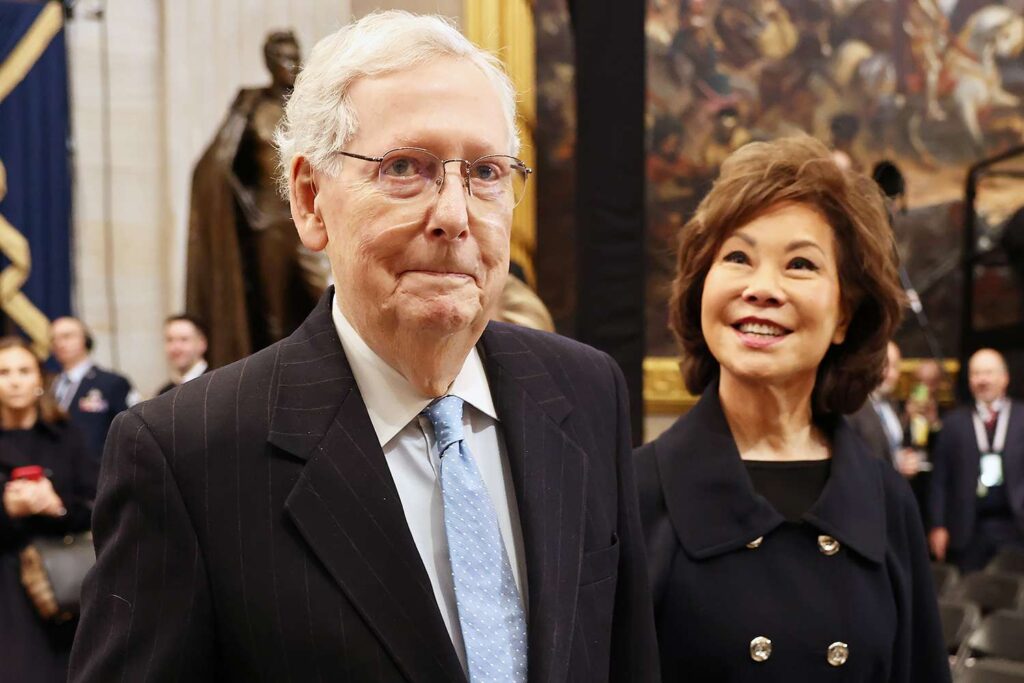
Another point that has generated public attention involves McConnell’s wife, former Transportation Secretary Elaine Chao.
According to her spokesperson, Chao was on a previously planned trip to China supporting her family’s philanthropic activities. The statement said McConnell’s condition “did not warrant an immediate return to the United States.” During the trip she met with several officials, including China’s Vice President Han Zheng.
The timing has naturally prompted questions from both supporters and critics. However, no public evidence establishes that her travel affected McConnell’s medical care or recovery.
Growing Calls for Transparency
The larger issue extends beyond one senator’s health.
McConnell has experienced multiple well-publicized health incidents over recent years, including:
- highly publicized freezing episodes during press conferences;
- multiple falls;
- hospitalizations following injuries;
- longstanding mobility challenges related to childhood polio;
- increased reliance on a wheelchair during Senate activity.
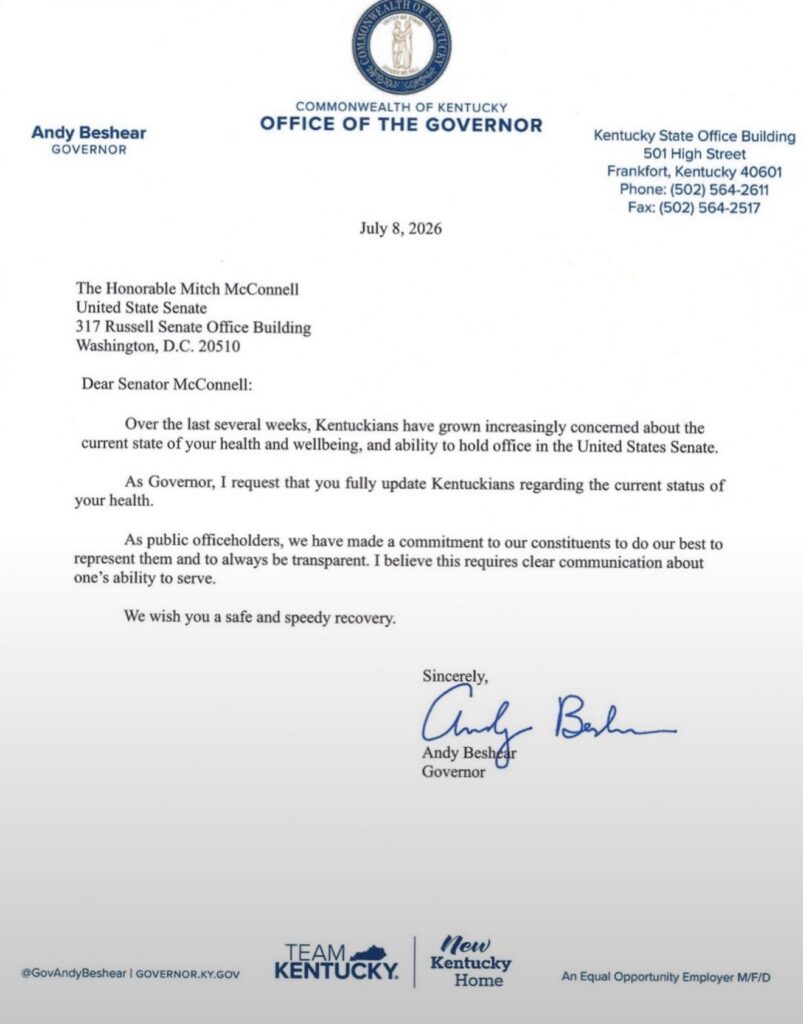
Given this history, critics argue that greater transparency is warranted when an elected official representing millions of constituents remains unable to appear publicly for weeks.
Several Republican leaders, including Senate Majority Leader John Thune and Senator John Barrasso, have stated they have spoken with McConnell by telephone and describe him as alert and recovering. Those accounts remain secondhand, as no direct public appearance or recorded statement from McConnell has been released.
Questions That Continue to Be Asked
The absence of detailed information has fueled numerous public questions, including:
- Is Senator McConnell physically capable of returning to Washington?
- If so, when?
- If not, who is effectively representing Kentucky?
- Should Congress require greater health transparency from elected officials who remain absent for extended periods?
- At what point does prolonged incapacity become a constitutional issue rather than a private medical matter?
These are policy questions rather than established conclusions.
Why Did McConnell Seek Another Senate Term?
Some observers continue to question McConnell’s decision to seek reelection after previous public health episodes.
There is no public evidence establishing why he chose to run again. Possible explanations discussed by political analysts over the years include:
- a belief he remained capable of serving;
- a desire to complete ongoing legislative priorities;
- party strategy;
- personal commitment to public service.
Absent direct statements from McConnell or his family, attributing motives such as a “power trip” or service to special interests would be speculative rather than factual.
Can McConnell Be Forced Out?
Under current law, the answer is generally no.
A United States Senator cannot simply be removed because colleagues believe the senator is medically unfit.
A vacancy generally occurs only if:
- the senator resigns;
- the senator dies while in office;
- the Senate expels the member by a two-thirds vote for misconduct or other extraordinary circumstances.
There is currently no constitutional procedure allowing Congress to declare a senator medically incapacitated and replace that senator against his or her will.
What Happens Next?
The immediate question facing the Senate is not simply Mitch McConnell’s health, but whether he will be able to resume performing the duties of the office to which Kentucky voters elected him.
Under the Constitution, a United States senator cannot be removed solely because colleagues believe the senator is medically incapacitated. Unless Senator McConnell voluntarily resigns, passes away while in office, or is expelled by a two-thirds vote of the Senate—an extraordinary measure historically reserved for serious misconduct rather than health issues—his seat remains occupied.
If McConnell were to resign or his seat otherwise became vacant, Kentucky law would govern the process for filling that vacancy, ultimately leading to a special election. Until that occurs, Republicans must continue operating without one of their members actively participating on the Senate floor.
Practically speaking, McConnell’s prolonged absence reduces the number of Republican senators available to vote on legislation. In a closely divided Senate, even a single missing vote can influence legislative strategy, committee work, amendment negotiations, and the outcome of closely contested bills. If Senator McConnell remains unable to return, Republicans will continue operating with one fewer active vote unless and until he resumes his duties or the seat becomes vacant and is filled under Kentucky law.
That reality could prove especially significant as the Senate considers major legislation, including measures such as the SAVE AMERICA ACT, where supporters are seeking to maximize Republican support. While the precise impact depends on attendance and voting by all senators, an extended absence from a member of the majority conference can complicate efforts to pass closely contested legislation.
More broadly, McConnell’s situation raises larger questions that extend beyond one individual or one political party. Should there be age limits or term limits for members of Congress? Should elected officials be required to undergo regular independent medical evaluations and publicly certify that they remain physically and cognitively capable of performing the duties of the office they hold?
Federal law enforcement officers, including FBI agents, are required to meet medical and physical standards to continue serving. Some argue that elected officials entrusted with making decisions affecting hundreds of millions of Americans should likewise demonstrate on a regular basis that they remain fit to fulfill the responsibilities voters elected them to perform. Others counter that voters—not mandatory health standards—should remain the ultimate judge of a candidate’s fitness for office.
Regardless of where one stands on those policy questions, Senator McConnell’s prolonged absence has reignited a debate that is likely to continue well beyond his own tenure: how should the nation balance an elected official’s right to medical privacy with the public’s right to know whether its representatives are capable of carrying out the duties of the offices they were elected to serve?