BY SAL GRECO
At some point, the question stops being what NYPD Deputy Chief Richie Taylor allegedly did and becomes something much larger:
Why does the system appear incapable of holding him to the same standard applied to other NYPD employees?
This publication has been asking that question for months.
In May, SalGreco.com reported extensively on Taylor’s previous time-and-attendance controversy. That reporting described allegations that Taylor admitted receiving compensation for time he did not legitimately work and that his matter was investigated internally. SalGreco.com further reported, citing sources, that the matter was referred to the Manhattan District Attorney’s Office for potential criminal prosecution but did not result in criminal charges.
Taylor ultimately remained employed.
Now, according to new allegations attributed to sources and publicly raised by attorney Eric Sanders, Taylor may once again be engaging in conduct disturbingly similar to the behavior that previously brought him under investigation.
If those allegations are substantiated, NYPD leadership will face a difficult question:
How many chances does one NYPD executive receive?
The Original Taylor Controversy
Taylor’s history matters because these latest allegations are not appearing in a vacuum.
Following his previous departmental case, Taylor remained a deputy chief rather than being terminated or criminally prosecuted. SalGreco.com previously contrasted that outcome with the treatment of former NYPD Sergeant Rayna Rampaul, who was indicted by the Manhattan District Attorney’s Office over allegations that she fraudulently collected approximately $132,000 in taxpayer-funded salary.
That comparison was never an argument that Rampaul—or anyone else—should escape accountability.
It was the opposite.
If stealing time and taxpayer money warrants termination and prosecution, that standard should apply regardless of the employee’s rank, friendships, political connections, race, religion or position within NYPD headquarters.
Taylor publicly acknowledged official misconduct related to misuse of time, yet he was not criminally charged. That disparity was again highlighted in SalGreco.com’s recent reporting concerning Deputy Chief William Viscardi, which compared Taylor’s outcome with cases involving Rampaul, Thomas Fabrizzi, Matthew Graziano, David Tzall and Brian Adams.
Taylor was given another opportunity.
According to information previously reported and sources familiar with his disciplinary disposition, he surrendered vacation days, was placed on a one-year disciplinary probation and was administratively transferred to the Criminal Justice Bureau, where the assignment was supposed to provide significantly greater supervision and accountability.
Yet the latest allegations suggest that whatever safeguards were supposed to accompany that second chance may deserve immediate scrutiny.
Eric Sanders Raises New Allegations
Attorney Eric Sanders has now publicly raised a new allegation regarding Taylor.
Sanders wrote:
“According to sources, NYPD Deputy Chief Richard Taylor works 4 x 12 tours, retains a department vehicle, and allegedly disappears for hours at a time.”
That is an allegation—not an established finding—and it deserves to be treated as such.
But because of Taylor’s previous disciplinary history, it is an allegation the NYPD cannot responsibly ignore.
Sanders further asked why, if the information is accurate, the conduct has not been reported to the Police Accountability Unit of the Manhattan District Attorney’s Office for independent review.
That question is particularly significant because Taylor has already been through an NYPD time-and-attendance investigation.
If Taylor is actually working the midway shift 4×12 tour, retaining an NYPD vehicle and becoming unaccounted for for significant periods during those tours, investigators should be able to determine the truth relatively easily.
Review his sign-in and sign-out records.
Review vehicle records and GPS information, where available and legally obtainable.
Review building access records.
Review department phones and other authorized records.
Identify where he was supposed to be and determine where he actually was.
Interview his supervisors.
Then follow the evidence.
If Sanders’ information is wrong, clear Taylor publicly.
But if it is right, the previous disciplinary history makes this far more serious than a first-time attendance complaint.
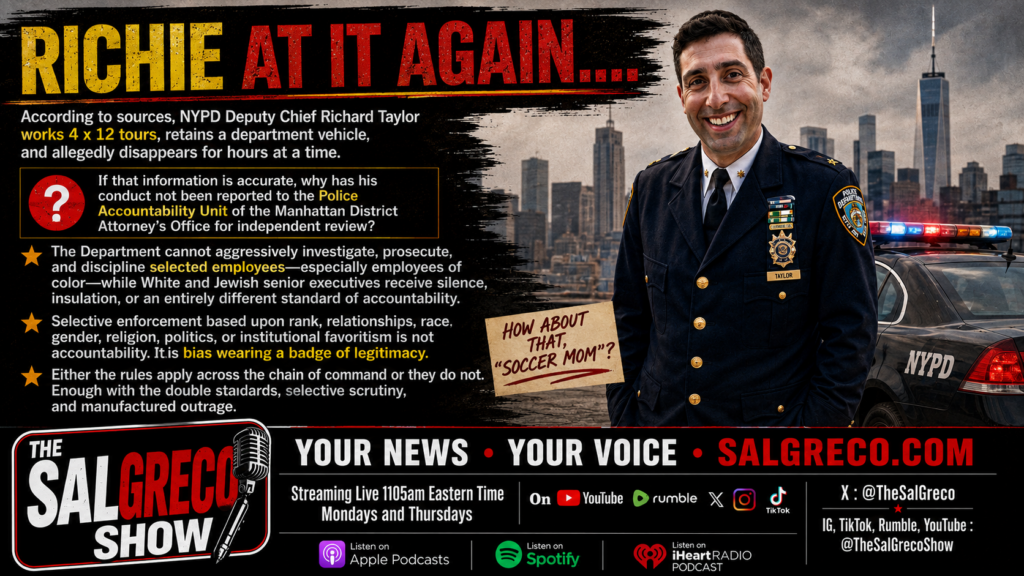
Episode 217: “This Guy Knows How to Disappear”
The issue became a major topic on Episode 217 of The Sal Greco Show, where I discussed Sanders’ post with Herbert Mai and Jack Stern.
The conversation centered on something rank-and-file cops understand instinctively: discipline loses credibility when consequences depend upon who the employee is.
Mai rejected the idea that race, religion or any other protected characteristic should determine accountability. His point was straightforward: judge the behavior.
That is exactly the standard that should apply here.
The discussion then returned to the repeated allegation that Taylor seems to survive controversies that could end another employee’s career.
Herbert Mai put it sarcastically during the show:
“He’s a great magic guy. He knows how to disappear.”
The joke reflected a serious underlying question.
If an executive who has already faced departmental discipline over misuse of time is again allegedly disappearing during scheduled working hours, what exactly did his supposed period of heightened supervision accomplish?
And who was supervising him?
Who approved his schedule?
Who monitors his department vehicle?
Who verifies his tours?
Who is responsible for determining whether Taylor is where department records say he is?
These are not complicated questions.
Compare Taylor With Everyone Else
The Taylor matter becomes more troubling when placed beside other recent NYPD cases.
SalGreco.com has documented allegations involving Matthew Graziano, whose attendance became the subject of an internal controversy before his dispute expanded into litigation alleging whistleblower retaliation and improper handling of confidential psychological information. Those allegations remain contested and unadjudicated.
More recently, SalGreco.com reported allegations involving Deputy Chief William Viscardi. Sources alleged investigators were examining whether Viscardi was frequently unaccounted for during working hours and improperly signed in or out at commands other than his assigned post. SalGreco.com reported that questions were submitted to NYPD DCPI seeking confirmation or denial of several aspects of that investigation.
Then there is Rampaul.
She was prosecuted.
Taylor wasn’t.
That does not by itself establish unlawful selective prosecution. Prosecutors can possess different evidence in different cases, and there may be legitimate reasons for different outcomes.
But government cannot demand public trust while refusing to explain glaringly different results.
If Taylor has now returned to substantially similar conduct after receiving departmental leniency, the justification for continued leniency becomes considerably harder to explain.
And Once Again, the Devorah Halberstam Question
There is another aspect of this story that cannot simply be presented as proven fact—but cannot be ignored as a subject for legitimate investigation either.
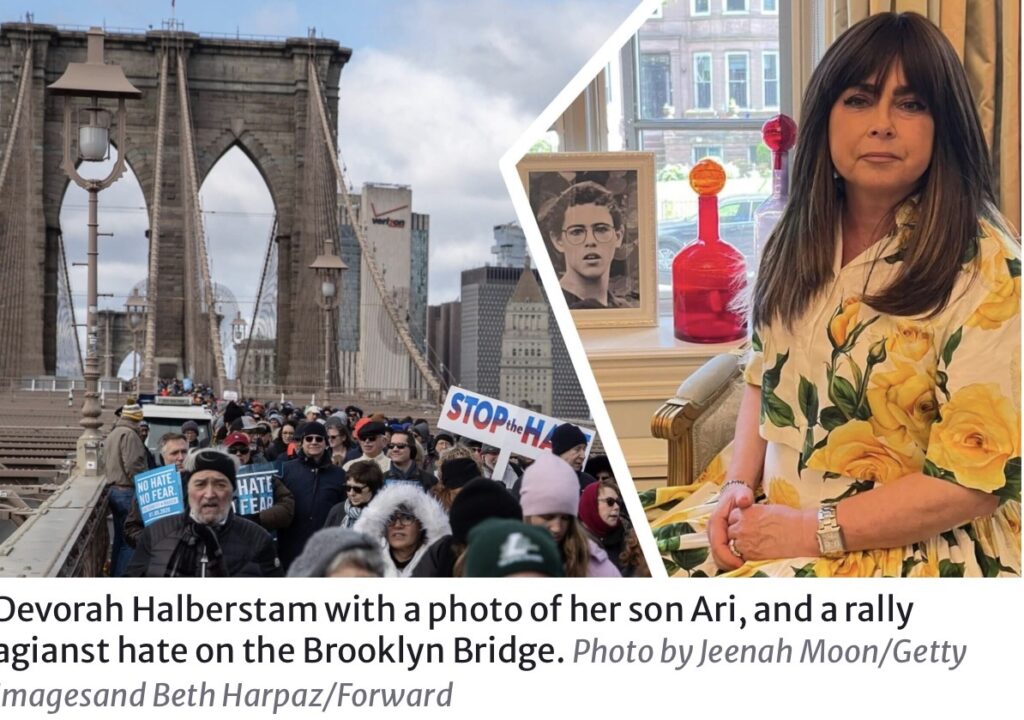
SalGreco.com previously reported allegations from sources that politically connected activist Devorah Halberstam helped advocate for or protect Taylor through her relationships within New York City’s political establishment. Those allegations have not been independently established as fact, and Halberstam should have the opportunity to respond to them.
The timing nevertheless raises additional questions because Halberstam remains extraordinarily active in New York political and public-safety circles.
In May, Mayor Zohran Mamdani visited the Jewish Children’s Museum in Crown Heights with Police Commissioner Jessica Tisch. Reporting described Halberstam, a museum co-founder, personally leading the mayor through a closed-door tour.
That does not establish wrongdoing.
Nor does it prove that Halberstam has intervened in Taylor’s employment matters.
But when sources have already alleged that a politically connected individual advocated for a senior police executive, the public has every right to ask whether that relationship has ever affected—or continues to affect—official decisions.
The Jewish Children’s Museum’s Finances Deserve Transparency, Not Insinuation
There are also legitimate public-record questions concerning the Jewish Children’s Museum, but those questions should be addressed through documents rather than assumptions.
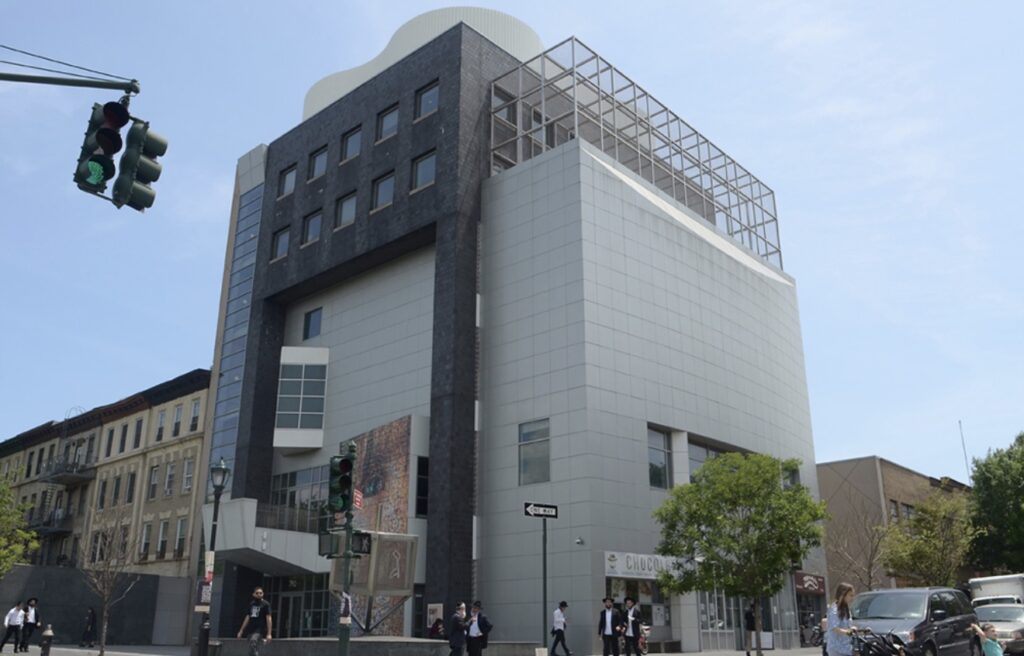
Publicly available nonprofit records identify Halberstam as a compensated employee of the organization. ProPublica’s Nonprofit Explorer, drawing from IRS filings, lists her compensation and shows substantial assets, revenues and expenses reported by the organization. The museum itself identifies Halberstam as its Director of External Affairs.
Compensation by a 501(c)(3) is not evidence of wrongdoing. Neither is operating at a deficit in a particular year, receiving donations, maintaining assets or meeting elected officials.
But tax-exempt organizations receive privileges precisely because their finances and governance carry public-accountability obligations.
Those records can—and should—be examined.
Questions about compensation, related-party transactions, government funding, grants, expenditures and governance should therefore be answered by reviewing the museum’s Form 990 filings and supporting public records, not by assuming criminality where none has been established.
Ari Halberstam’s Murder Should Not Be Politicized
There is also an important distinction that must be made.
The murder of Ari Halberstam was a horrific tragedy.
On August 4, The Forward reported that the Justice Department formally acknowledged that, had the 1994 attack occurred under today’s legal framework, it would be investigated as a federal hate crime and civil-rights violation. The report also noted Devorah Halberstam’s decades-long campaign to have her son’s murder recognized accordingly.
That recognition should stand on its own merits.
But recognition of Ari Halberstam’s murder does not place anyone associated with his legacy beyond scrutiny on unrelated matters.
Both things can be true simultaneously.
A mother can spend decades fighting for recognition of her murdered son’s case, and journalists can still examine the finances of an organization she helps operate or ask questions about her political relationships.
One issue does not answer the other.
Is Halberstam Taylor’s Political “Lead Blocker”?
That brings the story back to Richie Taylor.

Sources previously alleged that Halberstam used her political relationships on Taylor’s behalf. Now Taylor is again facing allegations involving the same general category of conduct that previously placed his career in jeopardy.
Is there a connection?
We do not presently have evidence establishing one.
But it is fair to ask.
Did Halberstam ever communicate with NYPD officials regarding Taylor’s disciplinary case?
Did she communicate with anyone in the Manhattan District Attorney’s Office?
Did she communicate with members of the Adams administration concerning Taylor?
Has she communicated with members of the Mamdani administration or Commissioner Tisch concerning Taylor?
Has Taylor performed official NYPD duties connected to Halberstam or the Jewish Children’s Museum?
And, most importantly, has anyone attempted to influence how these latest allegations are handled?
Those questions can be answered with records.
If the answer is no, the records should help put the allegations to rest.
If the answer is yes, the public deserves to know exactly what occurred.
Jessica Tisch Now Owns the Accountability Question
Whatever occurred before Jessica Tisch became police commissioner, Taylor remains an NYPD executive today.
That makes the latest allegations her responsibility.

If Taylor was previously disciplined for misuse of time, placed on probation, administratively transferred and supposedly subjected to greater supervision, and he is now credibly accused of doing substantially the same thing again, the Department cannot pretend this is an ordinary first allegation.
There should be an independent investigation.
And if the allegations are substantiated, the question should not simply be how many vacation days Taylor loses this time.
The questions should be whether he should remain employed, whether his prior disciplinary disposition was sufficient, whether any taxpayer money was improperly obtained, and whether the evidence warrants referral for criminal review.
The same questions would be asked if his name were Rayna Rampaul.
They would be asked if his name were Thomas Fabrizzi.
They should be asked if his name is Richie Taylor.
One Standard—or No Standard at All
Episode 217 ultimately came back to one principle:
Accountability cannot depend upon who you know.
It cannot depend upon your rank.
It cannot depend upon political relationships.
And it certainly cannot depend upon race, religion or gender.
Taylor is entitled to the same presumption of innocence and fair investigative process as anyone else. The newest allegations against him have not yet been established as fact.
But equal treatment cuts both ways.
A senior executive is not entitled to less scrutiny because he has powerful friends any more than another employee should receive more scrutiny because he lacks them.
If the latest allegations are false, establish that.
If they are true, act on them.
And if someone again tries to prevent that process from occurring, investigate that too.
Because after the previous investigation, the previous discipline, the previous referral allegations and the continuing comparisons with employees who were fired or prosecuted, NYPD leadership can no longer credibly claim it didn’t know there was a problem.
This time, everyone is watching.
The question isn’t merely where Richie Taylor allegedly disappears to.
The question is why accountability seems to disappear with him.