BY SAL GRECO
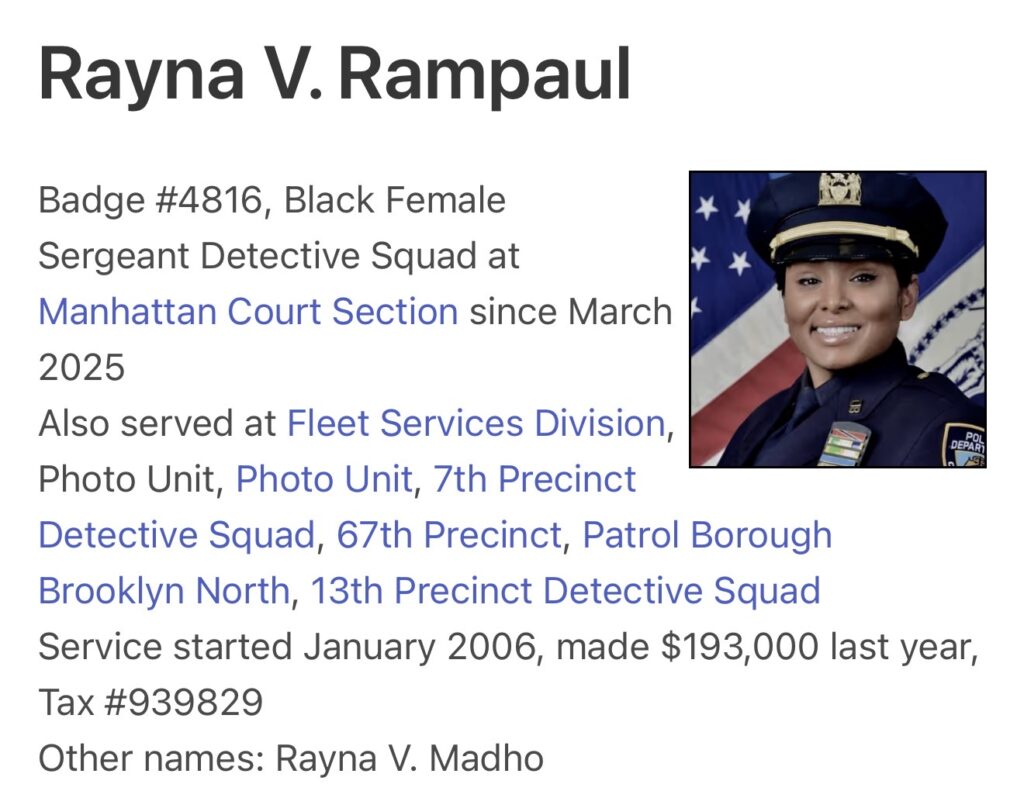
Former NYPD Sergeant Rayna Rampaul has now suffered the full weight of the system.
According to the Manhattan District Attorney’s Office, she was indicted for allegedly stealing approximately $132,000 in taxpayer-funded salary through fraudulent timekeeping. Before that, the NYPD terminated her after she pleaded guilty to departmental charges involving three separate shoplifting incidents at a Target store in Nassau County. Despite a nearly 20-year career, multiple commendations, no prior disciplinary history, and evidence presented regarding family and mental health struggles, she lost her job and now faces criminal prosecution.
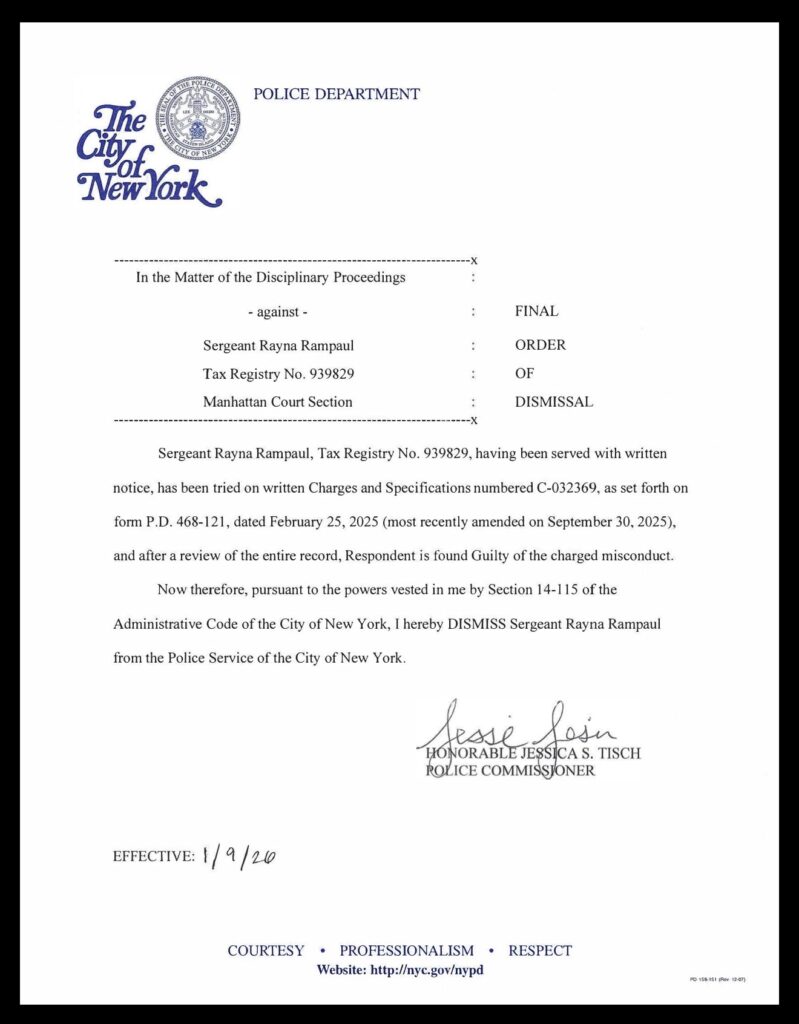
If that’s the standard, then many are asking a simple question:
Why wasn’t Deputy Chief Richie Taylor treated the same way?
Taylor’s case became public after reports and allegations that he admitted to significant misuse of city time. Yet despite an Internal Affairs investigation and widespread scrutiny, Taylor was not terminated, was not criminally charged, and did not face the kind of public prosecution now being brought against Rampaul.
That’s where the controversy begins.
Bragg’s office is sending a message that stealing taxpayer money will be prosecuted. Fair enough.
But if misuse of taxpayer-funded time is criminal when a sergeant is accused of it, why isn’t it criminal when a chief allegedly admits to it?
Was there evidence that justified one prosecution but not the other?
Did someone’s phone call help make the Taylor case disappear, as some have alleged?
Why was one NYPD member publicly prosecuted while another avoided criminal charges altogether?
Those questions remain unanswered.
Nobody is arguing that Rayna Rampaul should be above the law.
The issue is whether the law is being applied equally.
Because when one NYPD supervisor loses her career, pension prospects, reputation, and freedom over allegations involving taxpayer dollars, while another executive allegedly escapes suspension, termination, and prosecution despite admitted misconduct involving city time, the appearance isn’t equal justice.
It’s selective justice.
And until Alvin Bragg explains the difference, critics will continue asking whether New York City operates under one standard for politically connected executives and another for everyone else.