BY SAL GRECO
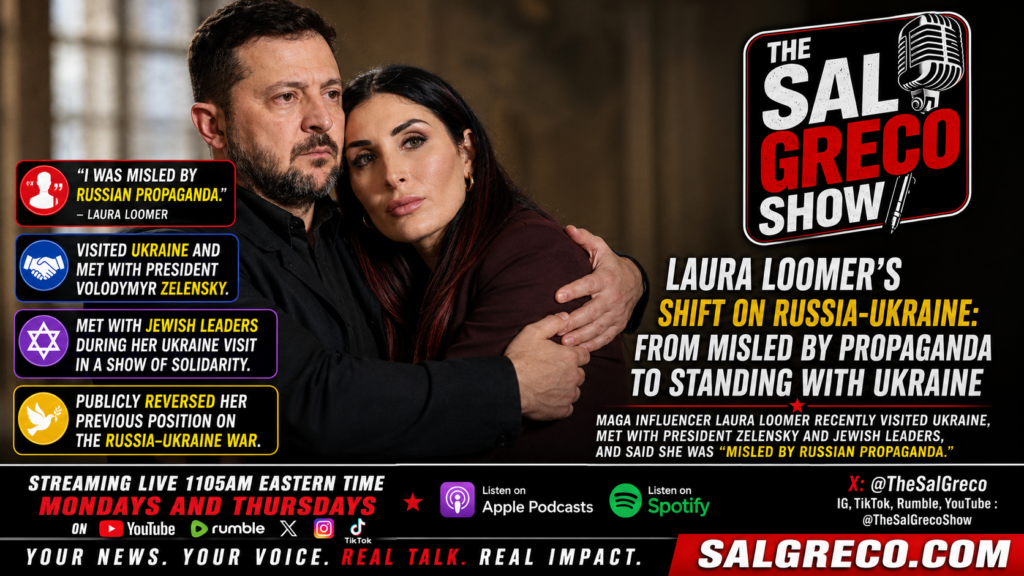
Laura Loomer’s recent trip to Ukraine to interview Ukrainian President Volodymyr Zelenskyy has reignited debate among many of her longtime supporters, particularly within the America First movement. Critics who once viewed Loomer as a fierce opponent of continued U.S. involvement in the Russia-Ukraine war are now questioning whether her latest reporting represents a dramatic shift in messaging.
That debate became the focus of Episode 214 of The Sal Greco Show, where Owen Shroyer joined Sal Greco and Jack Stern to discuss Loomer’s evolution over the years and whether her latest work reflects what they describe as “social engineering.”
The Zelensky Interview
During her interview with President Volodymyr Zelenskyy, Loomer asked questions covering several subjects, including:
- Russian propaganda
- Support for Ukraine
- Jewish history in Crimea
- Continued American backing for Ukraine
- The broader geopolitical conflict
The interview marked one of the most high-profile conservative media interviews Zelensky has granted during the war.
A Stark Contrast to Earlier Positions
Many critics point to Loomer’s previous rhetoric regarding Ukraine.
For years she frequently criticized:
- Continued U.S. funding of Ukraine.
- President Zelensky.
- The foreign policy establishment.
- What she characterized as endless foreign intervention.
Owen Shroyer argued on The Sal Greco Show that the interview represented a significant reversal from those earlier positions, questioning why someone who previously opposed the war now appeared to provide Zelensky with a platform.
Shroyer speculated about possible reasons for the change but acknowledged he did not know the cause, mentioning possibilities including financial incentives as speculation rather than fact.
Owen Shroyer’s Perspective
During Episode 214, Shroyer reflected on Loomer’s early career.
He noted that before becoming a nationally recognized political activist, many media organizations were reluctant to platform her because they viewed her as too controversial. According to Shroyer, Infowars and Alex Jones were among the few outlets consistently willing to feature her work during that period.
Shroyer also acknowledged that Loomer performed notable undercover reporting during the 2015–2016 election cycle but argued that her more recent messaging differs substantially from the positions that originally built her audience.
From Ally to Critic of Alex Jones
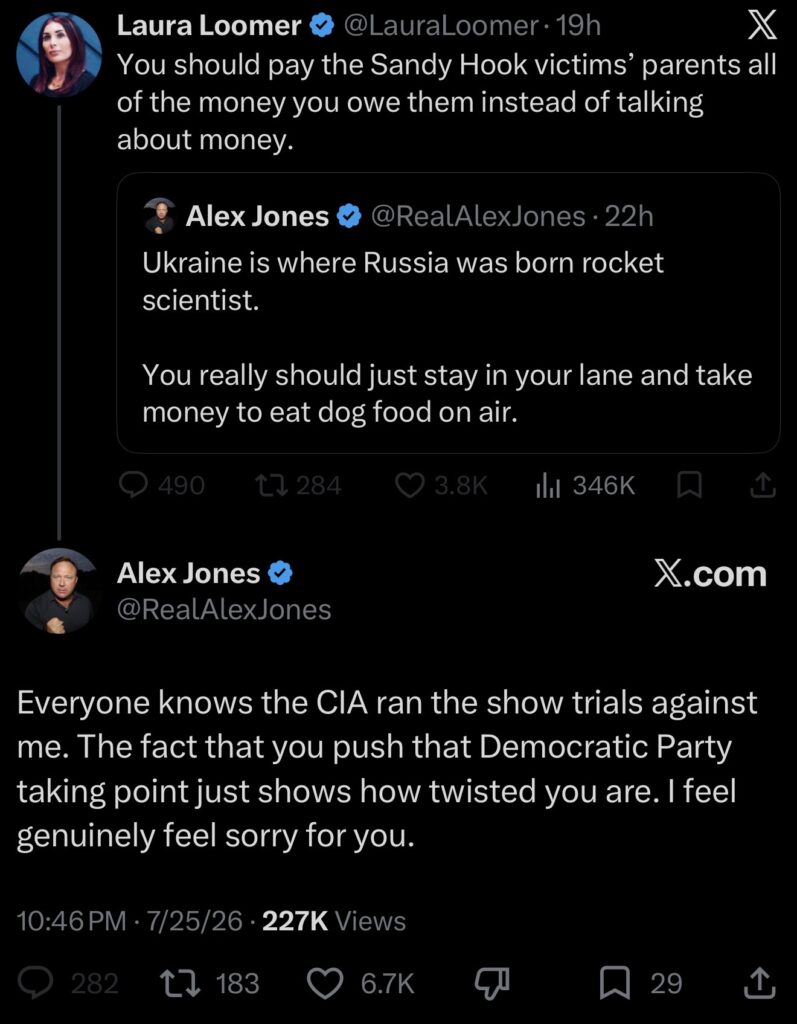
The discussion also touched on Loomer’s increasingly public criticism of Alex Jones.
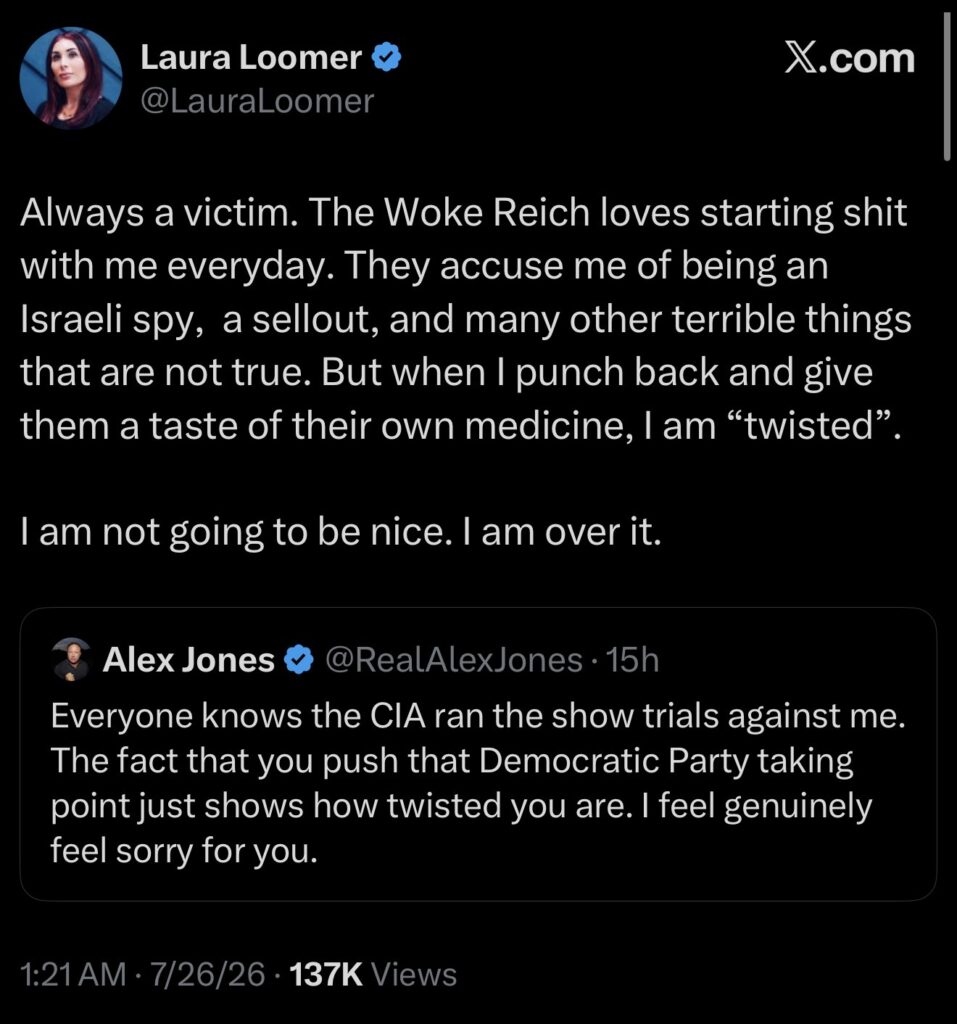
Recent posts exchanged between the two illustrate how their relationship has deteriorated. In the posts shared publicly, Loomer criticized Jones over the Sandy Hook judgments and responded to Jones’ comments regarding Ukraine.
Sal Greco argued that Jones played an important role in helping expand Loomer’s audience during periods when few other major outlets would feature her.
The contrast between those earlier appearances and today’s public disputes became one of the central themes of the discussion.
“Social Engineering”
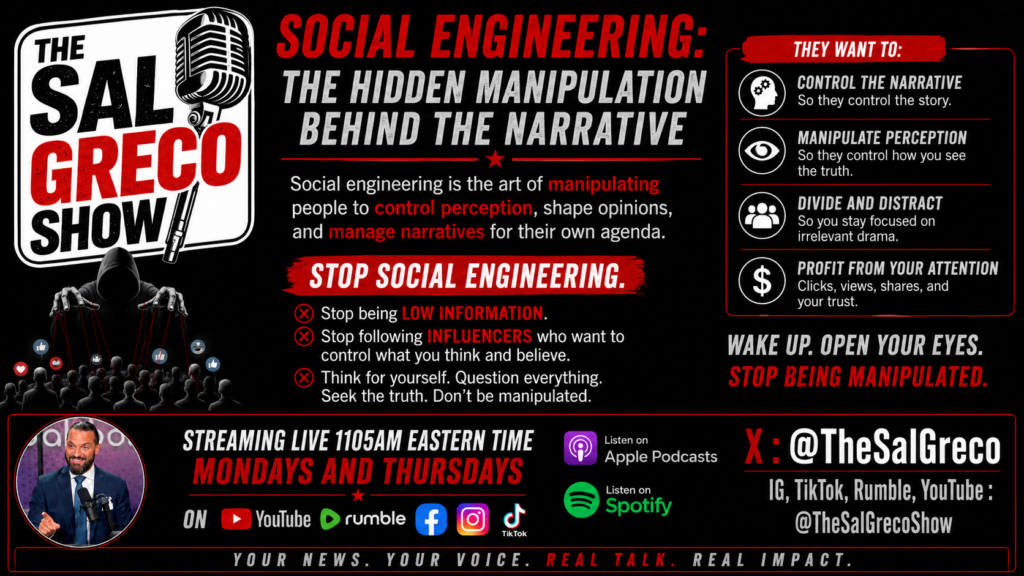
Throughout the interview, Sal Greco repeatedly described what he views as a pattern of “social engineering”—a term he uses to describe influential figures who, in his view, gradually shift public opinion by changing narratives over time.
Shroyer similarly argued that Loomer’s messaging on Ukraine represents what he believes is broader wartime propaganda, while also discussing his own interpretation of narratives surrounding Crimea and Ukraine. Those views were presented as his opinions during the conversation.
A Broader Question
Regardless of where readers stand on the Russia-Ukraine conflict, Loomer’s Ukraine trip has generated debate across conservative media.
Supporters argue she was conducting journalism by interviewing a world leader directly.
Critics argue the interview appears inconsistent with her previous messaging and question whether it reflects a broader change in political strategy.
That contrast—between past positions and present actions—formed the centerpiece of Episode 214 of The Sal Greco Show, where Sal Greco, Jack Stern, and Owen Shroyer examined how political messaging evolves and whether influential personalities can reshape narratives within their own audiences.