
BY SAL GRECO
Introduction
For one unforgettable month during the summer of 2026, the United States became the center of the sporting universe.
From New York City to Los Angeles, Dallas to Miami, and dozens of cities in between, the world’s most popular sport captivated millions of Americans while welcoming supporters from virtually every corner of the globe. Airports overflowed with fans wearing their national colors. Restaurants and bars stayed packed long after midnight. Public transportation systems carried thousands of chanting supporters from stadium to stadium. Entire neighborhoods transformed into international celebrations as countries brought their traditions, songs and cultures to American streets.
The 2026 FIFA World Cup was more than just another sporting event.
It became the largest sporting competition ever held on North American soil.
For years critics questioned whether soccer could ever truly capture America’s attention. Those questions have now largely disappeared. Television ratings reached unprecedented levels, stadiums sold out throughout the tournament, and millions of Americans who had never followed international football suddenly found themselves debating formations, substitutions, officiating decisions and tactical philosophies.
The tournament also demonstrated the staggering financial power of the global game.
The modern soccer economy extends far beyond ninety minutes on the pitch. Television rights, sponsorships, merchandise, hospitality, tourism, transportation, restaurants, hotels and countless small businesses all benefited from hosting the world’s largest sporting event. While economists continue debating the exact financial impact, there is little disagreement that billions of dollars flowed through host communities while America received weeks of worldwide exposure that no advertising campaign could ever purchase.
The United States did not simply host a tournament.
It hosted the world.
America’s Biggest Sporting Stage Since 1994
When the United States hosted the World Cup in 1994, many wondered whether professional soccer would ever gain a permanent foothold in America.
Major League Soccer did not yet exist.
Youth soccer continued growing, but the professional game remained well behind football, baseball, basketball and hockey in national popularity.
Three decades later, the landscape looks dramatically different.
MLS has expanded across North America.
European leagues now receive regular television coverage throughout the United States.
The UEFA Champions League attracts enormous audiences.
The Premier League has become appointment television for millions of American households.
Children who grew up watching Lionel Messi, Cristiano Ronaldo, Kylian Mbappé and countless other international stars now play soccer in record numbers.
The 2026 World Cup represented the culmination of that evolution.
Unlike 1994, this tournament arrived in a country already embracing soccer as one of its major sports.
That difference could be felt everywhere.
Sports talk radio discussed tactical adjustments.
Mainstream news organizations covered group-stage matches on their front pages.
Restaurants opened before sunrise for European kickoffs.
Bars remained packed until well after midnight for South American matches.
Entire communities rallied behind countries representing their heritage while Americans with no previous allegiance simply enjoyed watching elite athletes compete at the highest level.
The atmosphere rivaled anything produced by the Super Bowl, NCAA Final Four or NBA Finals.
For one month, soccer became America’s game.
A Tournament That Benefited Nearly Everyone
The economic impact extended well beyond FIFA itself.
Hotels filled with international visitors.
Airlines added flights.
Restaurants expanded hours.
Taxi drivers, rideshare operators and local businesses experienced enormous increases in customer traffic.
Retail stores sold jerseys representing dozens of nations.
Tourist attractions welcomed visitors who often extended their stays before or after matches.
Entire downtown districts experienced levels of activity normally reserved for national holidays.
Host cities also benefited from worldwide television exposure that showcased American landmarks before billions of viewers throughout the tournament.
Whether it was Times Square in New York, the beaches of Miami, the skylines of Dallas and Los Angeles or the neighborhoods surrounding MetLife Stadium, America received weeks of global attention.
That exposure cannot easily be measured on a balance sheet.
It represents future tourism, future business investment and a reminder that the United States remains capable of organizing sporting events unlike anywhere else in the world.
Not every economic study reaches identical conclusions.
Some economists caution that public expenditures for transportation, policing and security must also be considered when evaluating the overall financial impact. Others argue that major sporting events frequently generate indirect benefits extending years beyond the competition itself through tourism and international recognition.
Both arguments deserve consideration.
But one reality remained obvious throughout the tournament.
The World Cup brought extraordinary energy to every host city.
President Trump’s Historic Appearance
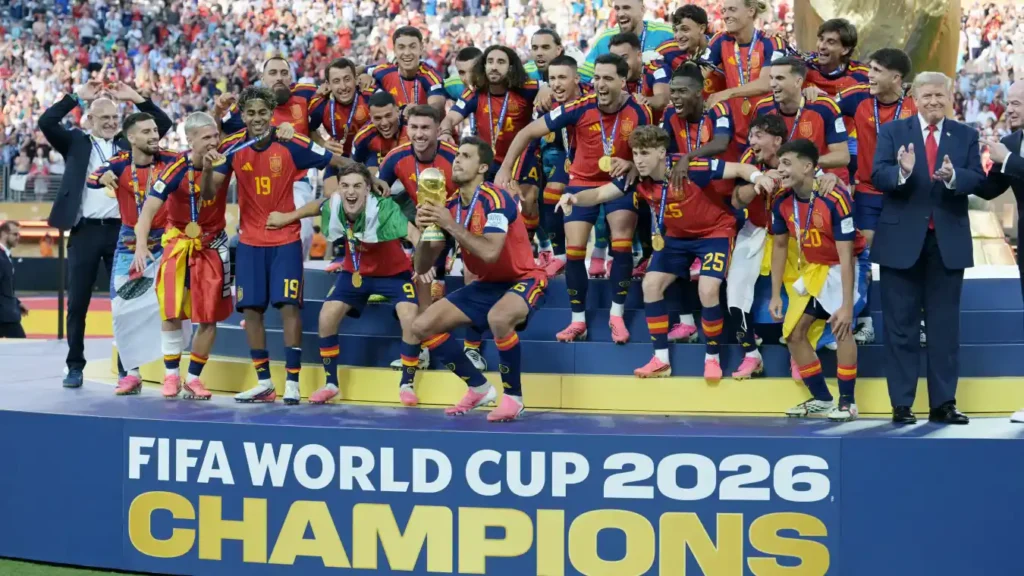
The tournament’s significance became unmistakable when President Donald Trump attended the World Cup Final at MetLife Stadium.
Regardless of political affiliation, the image carried historical importance.
A sitting President of the United States participated in one of the most watched sporting events on Earth while presenting medals alongside FIFA officials after the championship match.
For decades many Americans viewed soccer as primarily an international sport.
That perception has changed dramatically.
The President’s attendance reflected how deeply the World Cup had entered American sporting culture.
Politics remained outside the ninety minutes on the field.
The players decided the championship.
But the symbolism of America’s Commander in Chief attending the world’s biggest sporting event demonstrated just how important soccer has become within the United States.
The Expanded Tournament Changed Everything
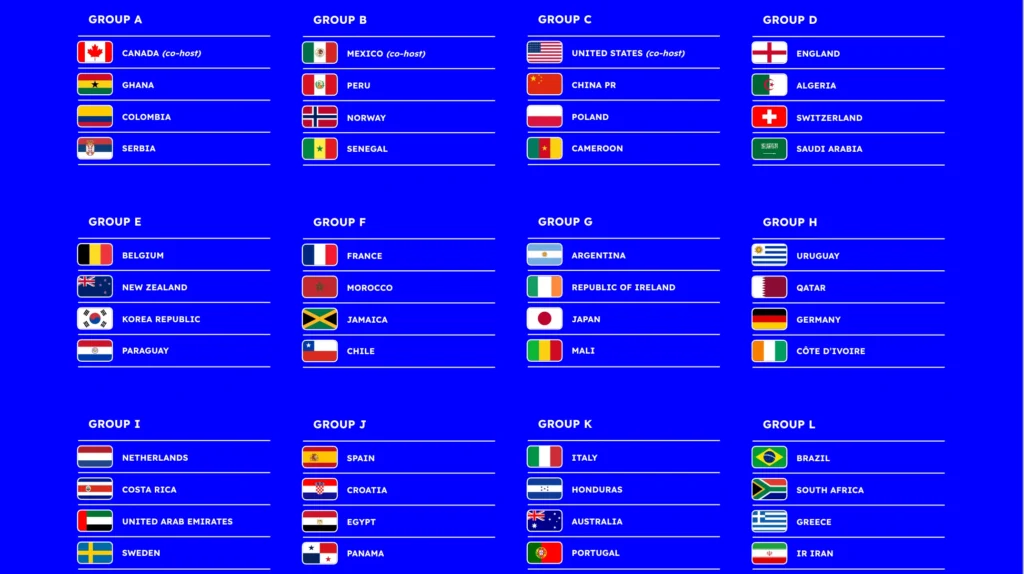
For the first time in history, forty-eight nations qualified for the FIFA World Cup.
The expanded format created opportunities for countries that previously struggled to reach international soccer’s grandest stage.
Traditional powers still advanced.
Emerging programs suddenly found themselves competing before worldwide audiences.
Supporters from countries that had waited generations to experience a World Cup celebrated qualification as though they had already won a championship.
The expanded tournament also produced fascinating tactical diversity.
European possession football.
South American creativity.
African athleticism.
Asian discipline.
CONCACAF resilience.
Every continent contributed unique styles that made each group feel different from the next.
Some matches became tactical chess contests.
Others evolved into wide-open attacking spectacles.
Several underdogs refused to play cautiously against traditional powers, proving that international soccer’s competitive balance continues narrowing.
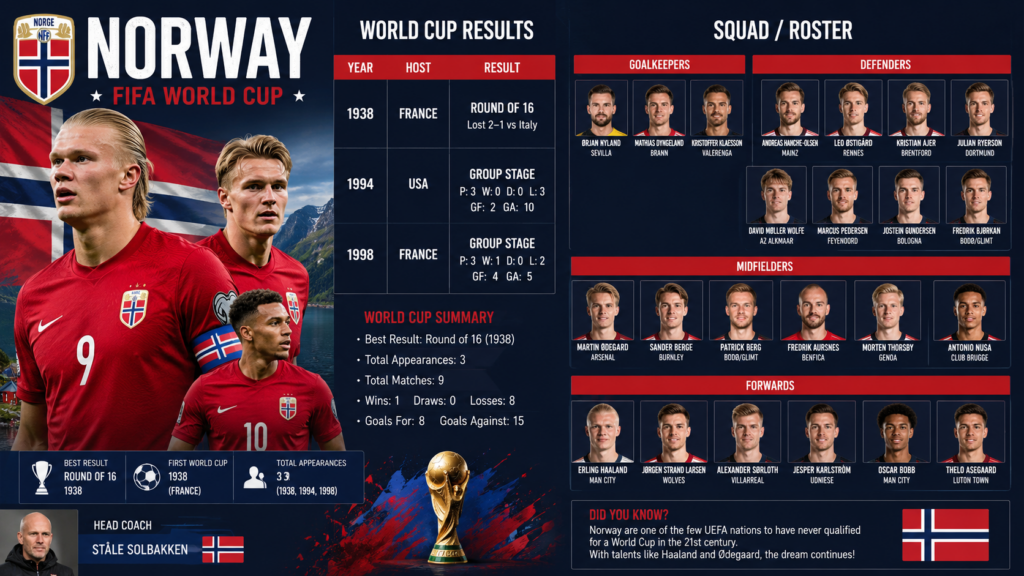
Perhaps no storyline better illustrated that evolution than Norway.
Norway Announces Itself to the Soccer World
Every World Cup produces a nation that captures the imagination of neutral supporters.
In 2026, that country was Norway.
For decades Norway possessed talented individual players but rarely assembled enough quality throughout its roster to compete consistently with the world’s elite. The nation had qualified for World Cups in the past, but it had never been viewed as a legitimate threat to challenge for the championship.
That perception changed dramatically throughout the summer of 2026.
Led by Erling Haaland, Martin Ødegaard and an increasingly confident supporting cast, Norway played fearless football from the opening whistle of the tournament.
Unlike many emerging nations that simply hoped to survive against traditional powers, Norway attacked.
It pressed aggressively.
It defended with organization.
Most importantly, it believed it belonged.
Haaland once again demonstrated why he is considered one of the world’s premier strikers. His combination of size, speed, strength and finishing ability created constant problems for opposing defenses. Every time Norway crossed midfield, defenders were forced to account for his movement, often leaving additional space for teammates to exploit.
Yet Norway was never simply “Haaland’s team.”
Captain Martin Ødegaard controlled the rhythm of matches with intelligence rarely appreciated by casual fans. While Haaland received most of the headlines, Ødegaard dictated possession, distributed the ball with precision and repeatedly placed Norwegian attackers into dangerous positions.
Their chemistry reflected years of playing together for the national team.
The breakthrough moment came against Brazil.
For generations Brazil represented the gold standard of international football. Five World Cup championships, countless legendary players and perhaps the richest soccer tradition in history made every meeting with Brazil feel monumental.
Norway refused to be intimidated.
Instead, it played one of the finest matches in the country’s history, eliminating Brazil and announcing to the soccer world that Norway had arrived.
Although England eventually ended Norway’s remarkable tournament, the nation left North America with something perhaps even more valuable than a semifinal appearance.
It left with respect.
No longer will Norway be viewed as merely a country capable of producing one or two world-class players.
It is now viewed as a legitimate football nation with the infrastructure, coaching and player development necessary to challenge the world’s best for years to come.
For American fans unfamiliar with Norwegian football before this tournament, the introduction could not have been more impressive.
Morocco Proves 2022 Was No Fluke
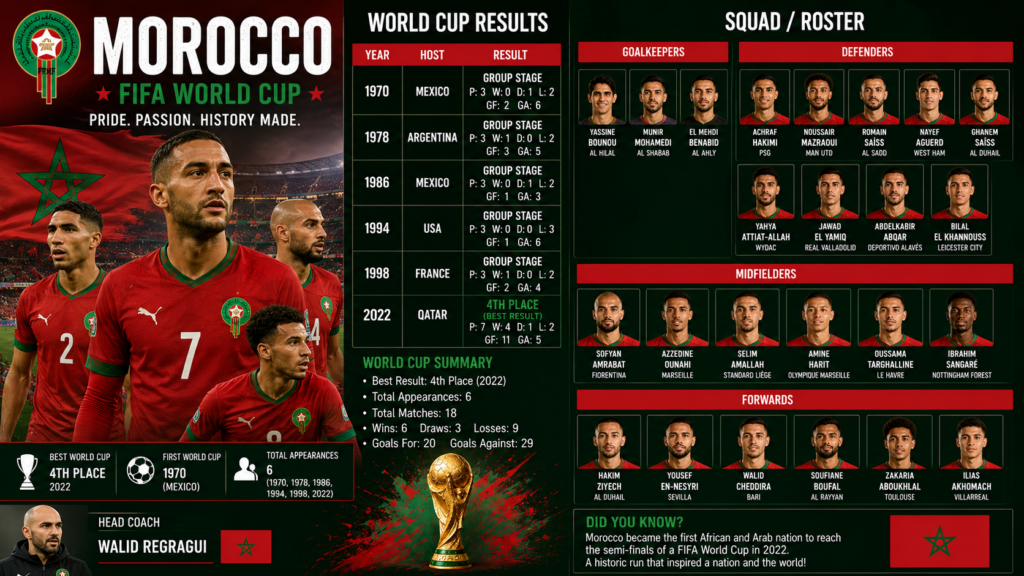
If Norway surprised the soccer world, Morocco confirmed that its remarkable rise had become permanent.
Four years earlier, Morocco shocked international football by reaching the semifinals of the 2022 World Cup, becoming the first African nation ever to accomplish that feat.
Skeptics wondered whether that run represented lightning in a bottle.
The 2026 tournament answered that question emphatically.
Morocco once again demonstrated discipline, organization and technical quality that rivaled many traditional European and South American powers.
Its defensive structure remained among the strongest in the tournament.
Its midfield refused to surrender possession easily.
Its attackers consistently punished opponents who became careless.
Most importantly, Morocco played with confidence rather than surprise.
There is a significant difference.
In 2022, many opponents underestimated Morocco.
By 2026, nobody did.
Yet Morocco continued winning.
That alone speaks volumes about how far the program has progressed.
For African football as a whole, Morocco’s continued success carries enormous significance.
For decades, African nations produced extraordinary athletes and world-class individual players but often struggled to translate that talent into sustained World Cup success.
Morocco is changing that narrative.
Its achievements demonstrate that African nations can compete tactically as well as physically against anyone.
The gap continues shrinking.
That benefits international football.
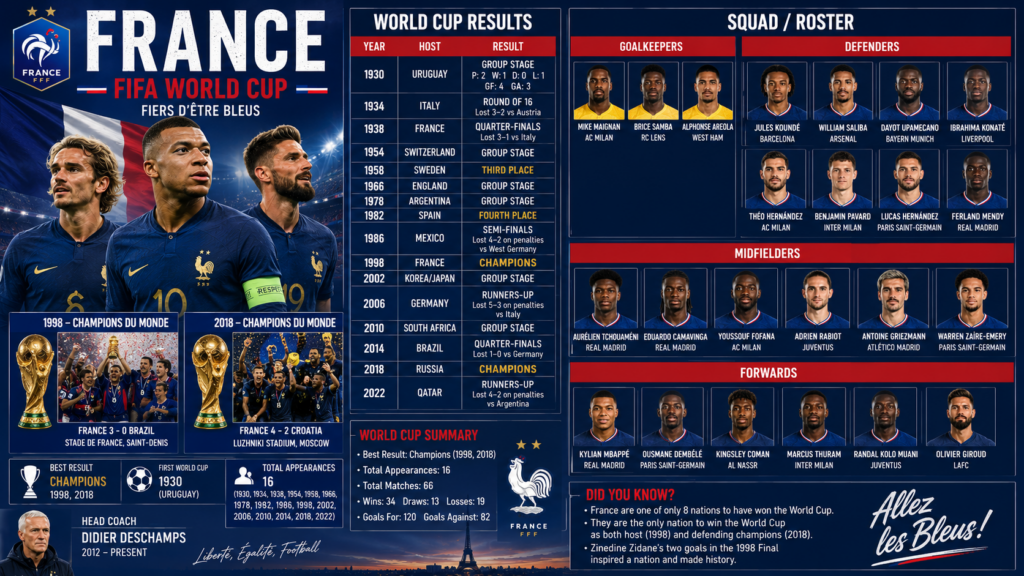
France Remained Among the World’s Elite
No discussion of the 2026 World Cup would be complete without recognizing France.
Even after falling short of another championship, France once again proved why it remains one of international soccer’s premier programs.
Its roster combined experience with extraordinary young talent.
Its depth rivaled any nation in the tournament.
And leading everything stood Kylian Mbappé.
If Lionel Messi represented the legend attempting one final masterpiece, Mbappé represented the future already becoming the present.
His speed remained breathtaking.
His finishing clinical.
His ability to change a match with one run forced opposing defenses to alter their entire tactical approach.
Mbappé ultimately captured the tournament’s Golden Boot after finishing as its leading scorer.
Individual awards, however, only tell part of the story.
Every time France stepped onto the field, opponents knew they faced one of the most dangerous attacking teams in international football.
France possessed the ability to score from open play, set pieces, counterattacks and moments of individual brilliance.
Very few teams could survive ninety minutes without making mistakes against them.
Unfortunately for France, one team could.
Spain.
The semifinal represented one of the tournament’s defining tactical masterpieces.
Rather than attempting to match France’s athleticism, Spain controlled the match through possession.
Rather than allowing Mbappé opportunities to attack open space, Spain denied him meaningful service.
Every passing lane appeared anticipated.
Every counterattack quickly disappeared beneath Spain’s relentless pressure.
The result was not simply a Spanish victory.
It was a coaching clinic.
Luis de la Fuente’s game plan neutralized perhaps the world’s most explosive attack through discipline, positioning and collective commitment.
Spain had announced itself.
The world simply hadn’t realized yet what was coming next.
Cristiano Ronaldo’s Final World Cup
Every generation eventually witnesses the end of an era.
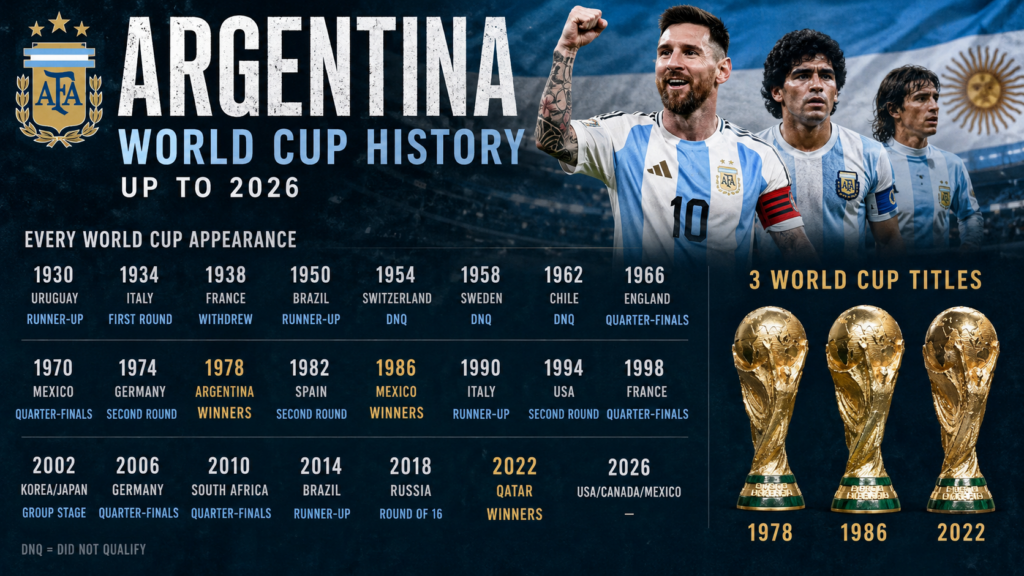
For nearly two decades, international soccer belonged to two names: Cristiano Ronaldo and Lionel Messi.
Their rivalry transcended clubs, countries and even the sport itself. Between them came countless league championships, UEFA Champions League trophies, Ballon d’Or awards, scoring records and unforgettable performances that defined modern football.
By the summer of 2026, both legends had entered the final chapters of their remarkable careers.
For Cristiano Ronaldo, this tournament almost certainly represented his final appearance on soccer’s biggest stage.
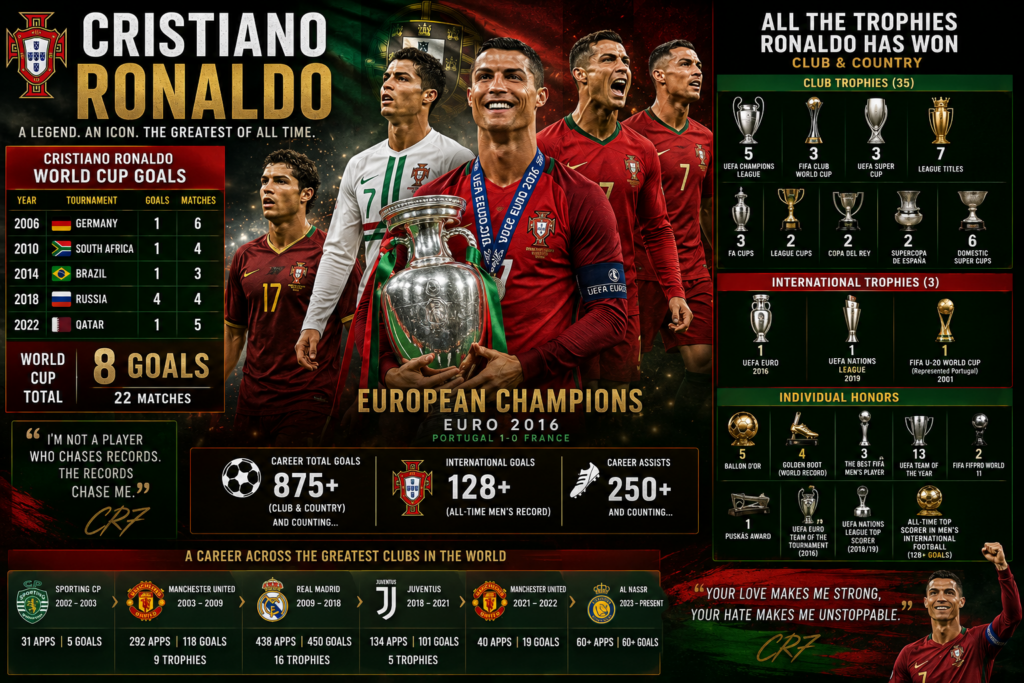
Even at an age when most players have long retired from international competition, Ronaldo remained remarkably fit, fiercely competitive and driven by the same relentless pursuit of excellence that made him one of history’s greatest athletes.
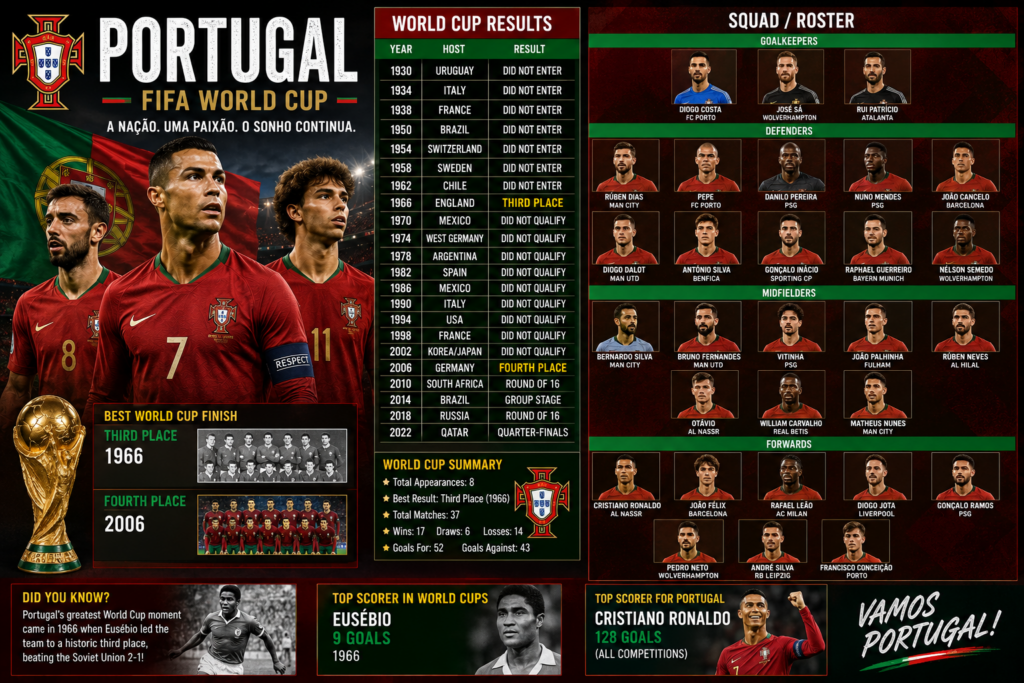
Portugal entered the tournament believing it possessed enough talent to compete for another championship.
Ronaldo was no longer expected to carry the team by himself as he had earlier in his career, but his leadership, experience and unmatched understanding of high-pressure football remained invaluable.
Wherever Portugal played, stadiums filled with supporters hoping to witness one more iconic Ronaldo moment.
Children who had grown up watching him at Manchester United, Real Madrid, Juventus and Al-Nassr finally had an opportunity to see him compete in person.
Opposing fans applauded him.
Even rivals understood they were witnessing history.
Whether Ronaldo lifted another World Cup trophy ultimately mattered less than the appreciation shown throughout the tournament.
Great athletes are often celebrated most after they leave.
Fortunately, soccer fans recognized they were watching one of the greatest players ever to wear boots before his international career came to a close.
His influence on the game cannot be measured solely by goals or championships.
He inspired millions of young athletes across the world to pursue greatness through discipline, preparation and relentless work ethic.
Future generations will debate whether Ronaldo or Messi stands atop soccer history.
What should never be debated is that both permanently transformed the sport.
Lionel Messi’s Final Masterpiece
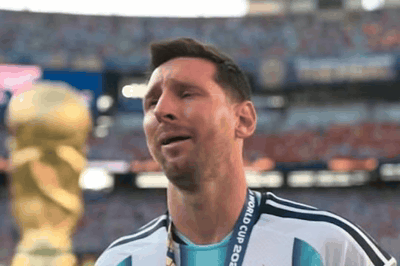
If Ronaldo’s tournament represented a farewell tour, Lionel Messi’s became one final reminder of why so many consider him the greatest footballer ever to play the game.
At 39 years old, Messi should not have been capable of carrying Argentina deep into another World Cup.
History suggested otherwise.
Age eventually defeats everyone.
Speed declines.
Recovery slows.
The smallest injuries linger longer.
Even legends become human.
Yet throughout the tournament, Messi repeatedly ignored those realities.
His vision remained unmatched.
His first touch remained magical.
His ability to create opportunities from seemingly impossible situations continued astonishing teammates and opponents alike.
Every Argentine attack still flowed through him.
Every opposing defense built its game plan around stopping him.
Still, he produced.
Throughout the knockout rounds, Messi repeatedly delivered when Argentina needed him most.
Whether through goals, assists or simply attracting multiple defenders and creating space for teammates, he remained the emotional and tactical heartbeat of the defending world champions.
Watching him play became an appreciation of intelligence more than athleticism.
Messi no longer overwhelmed defenders with acceleration.
Instead, he defeated them through anticipation.
He recognized passing lanes before anyone else.
He slowed matches to his preferred rhythm.
He manipulated defenders with subtle body movements rather than explosive speed.
Young players should study those performances.
They represented a master craftsman adapting his game as physical gifts inevitably declined.
Father Time eventually catches everyone.
But genius finds ways to compete longer than anyone expects.
Messi’s tournament reminded the soccer world that greatness is not always measured by sprint speed or highlight-reel goals.
Sometimes greatness is measured by making the impossible appear ordinary.
The Group Stage Delivers Drama
As expected, the traditional powers largely advanced.
Spain.
France.
Argentina.
England.
Portugal.
Germany.
Several others handled the pressure exactly as champions are expected to.
Yet every World Cup also produces unexpected stories.
Underdogs refused to play cautiously.
Emerging football nations demonstrated remarkable improvement.
Matches once expected to become comfortable victories increasingly turned into tense ninety-minute battles.
That trend should encourage every supporter of international football.
The competitive gap separating the world’s elite from everyone else continues shrinking.
Improved coaching.
Better youth development.
Global scouting.
Access to elite training methods.
Players competing in Europe’s top leagues.
All have fundamentally changed international soccer.
Gone are the days when traditional powers could simply expect victories because of history.
Today every opponent possesses tactical sophistication.
Every nation believes.
Every nation prepares.
That confidence transformed the tournament.
It also created one overwhelming conclusion by the end of the group stage.
Spain looked different.
Not simply better.
Different.
While other contenders occasionally struggled through uneven performances, Spain appeared completely comfortable regardless of opponent.
Its structure never changed.
Its patience never disappeared.
Its confidence never wavered.
Possession was not simply a statistic.
It became a weapon.
Opponents chased shadows for long stretches.
By the time they recovered the ball, they were already exhausted.
Then Spain would win it back almost immediately.
Luis de la Fuente had not merely assembled a talented roster.
He had constructed a machine.
And that machine was only beginning to reveal its full power.
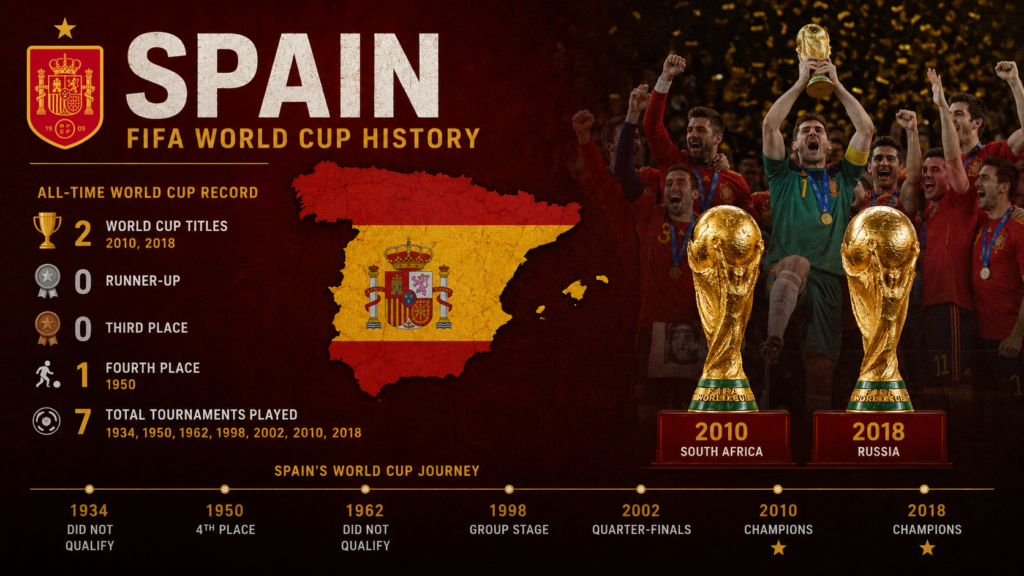
Spain Wasn’t Simply Winning—It Was Solving Soccer
By the time the knockout rounds arrived, one truth had become increasingly obvious.
Spain was not simply the best team remaining in the tournament.
It was operating at an entirely different tactical level than everyone else.
Championship teams often possess extraordinary talent.
Historic teams possess extraordinary discipline.
Spain had both.
From the opening whistle of every match, Luis de la Fuente’s squad dictated exactly how the game would be played. Opponents weren’t simply trying to score goals against Spain—they were trying to survive long enough to create an opportunity.
Few ever did.
The Spanish midfield became the heartbeat of the tournament.
Every attack began with calm decision-making.
Every defensive transition appeared rehearsed.
Every player seemed to know exactly where his teammates would be before receiving the ball.
To the casual fan, Spain appeared patient.
To experienced coaches, Spain appeared devastating.
Its possession wasn’t meaningless passing.
It was controlled suffocation.
Every completed sequence forced opponents to chase.
Every recovery forced defenders to sprint.
Every attack demanded concentration.
By the seventieth minute of most matches, Spain’s opponents looked physically exhausted.
By then, Spain often looked as though kickoff had occurred only moments earlier.
That difference separated champions from everyone else.
Luis de la Fuente Built More Than a Team
Great coaches rarely receive the same recognition as great players.
They should.
The modern game has become extraordinarily sophisticated.
Film study.
Data analysis.
Opponent tendencies.
Training methodology.
Substitution patterns.
Pressing triggers.
Set-piece preparation.
Every tiny advantage matters.
Luis de la Fuente mastered every one of them.
Rather than asking players to rely upon individual brilliance, he constructed a collective identity.
Every player understood his assignment.
Every movement served a purpose.
If one player stepped forward to press, another immediately covered the space left behind.
If possession was lost, Spain reacted instantly rather than retreating.
The objective remained simple.
Recover the ball before the opponent could organize an attack.
It worked repeatedly.
Throughout the tournament Spain rarely appeared vulnerable defensively because opposing teams seldom possessed the ball long enough to become dangerous.
The system itself protected the defense.
That is elite coaching.
Throughout football history, several managers have transformed international soccer through revolutionary tactical approaches.
Rinus Michels.
Vicente del Bosque.
Didier Deschamps.
Luis Aragonés.
Luis de la Fuente now deserves mention among those influential names.
His Spain wasn’t merely talented.
It was organized.
Organization wins championships.
Rodri Became the Tournament’s Most Valuable Player
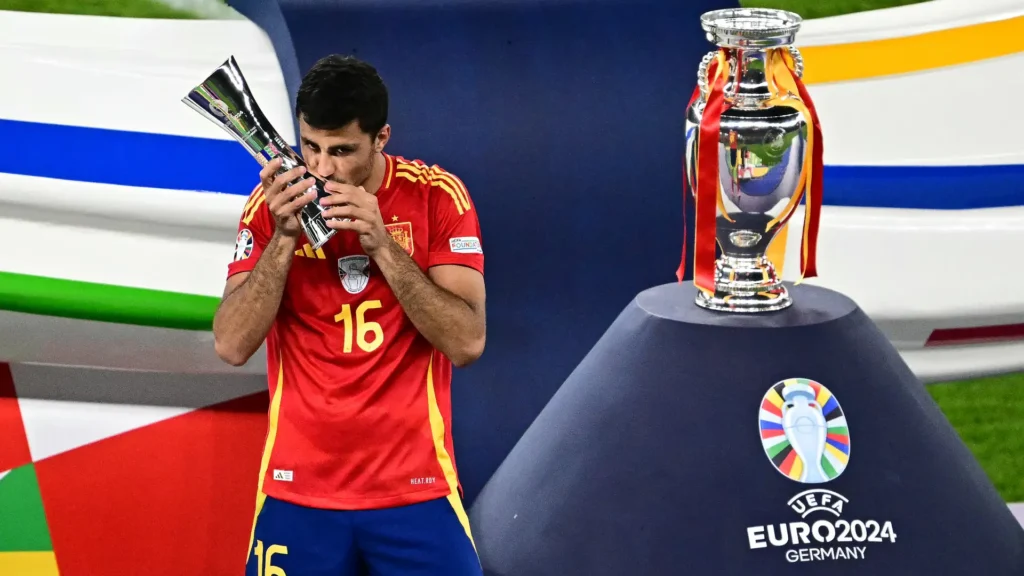
Every championship team eventually produces one player whose importance extends beyond statistics.
For Spain, that player was Rodri.
The Golden Ball recognized him as the tournament’s outstanding player.
Anyone who watched Spain throughout the World Cup understood why.
Rodri rarely produced spectacular bicycle kicks.
He rarely sprinted sixty yards through entire defenses.
Instead, he controlled everything occurring between both penalty areas.
He anticipated danger before anyone else.
He positioned teammates.
He recovered loose balls.
He slowed frantic moments.
He accelerated attacks when opportunities appeared.
His greatest talent wasn’t passing.
It was decision-making.
Every possession seemed to become calmer once Rodri touched the ball.
That quality cannot easily be measured through analytics.
It can only be appreciated by watching ninety minutes unfold.
The world’s greatest midfielders influence matches without demanding attention.
Rodri mastered that art.
Opponents attempted pressing him.
He escaped.
Opponents attempted marking him.
He found space.
Opponents attempted disrupting Spain’s rhythm.
Rodri restored it almost immediately.
Modern football increasingly values athleticism.
Rodri reminded everyone that intelligence remains equally important.
He became Spain’s metronome.
Every championship orchestra needs a conductor.
Rodri filled that role perfectly.
Unai Simón Quietly Dominated the Tournament
While Rodri controlled midfield, goalkeeper Unai Simón quietly produced one of the finest World Cup performances in recent memory.
Great goalkeepers often receive recognition only after making spectacular saves.
The truly elite rarely require spectacular saves because they position themselves correctly before danger develops.
Simón excelled throughout the tournament.
His command of the penalty area gave defenders confidence.
His distribution initiated attacks.
His communication organized Spain’s defensive shape.
Most importantly, he remained calm regardless of pressure.
Pressure spreads quickly throughout football teams.
Goalkeepers either calm teammates or increase anxiety.
Simón consistently chose the first option.
Several clean sheets reflected not merely individual brilliance but complete defensive organization.
Spain defended collectively.
Yet whenever opponents finally broke through, Simón remained ready.
The Golden Glove became richly deserved.
He represented the final piece of Spain’s championship puzzle.
Lamine Yamal Proved the Future Has Already Arrived
Every World Cup introduces future superstars to global audiences.
Spain’s Lamine Yamal no longer belongs in that category.
He already is one.
Watching Yamal throughout the tournament felt remarkably similar to watching teenage Lionel Messi years earlier.
Not because they play identically.
But because defenders consistently appeared unsure how to stop them.
Yamal attacked fearlessly.
He welcomed one-on-one situations.
He possessed the confidence to attempt passes many veterans would never consider.
Most importantly, failure never discouraged him.
Elite attackers forget mistakes immediately.
Yamal displayed that maturity throughout the tournament.
One unsuccessful dribble never prevented the next.
One missed opportunity never changed his confidence.
Spain trusted him despite his youth.
That trust transformed into production.
His movement stretched opposing defenses.
His creativity opened passing lanes.
His willingness to attack defenders forced entire backlines to shift toward him, creating additional space elsewhere.
For years soccer supporters wondered who might eventually replace Messi and Ronaldo as the game’s defining global stars.
The search may already be ending.
Lamine Yamal appears prepared to become one of football’s next iconic figures.
Spain’s Road to the Final Became a Masterclass
Championship teams are often judged by their closest victories rather than their easiest ones.
Spain’s greatest accomplishment throughout the knockout rounds wasn’t simply winning.
It was making extraordinary opponents appear ordinary.
Each successive round brought another respected football nation.
Each successive round produced the same outcome.
Spain controlled possession.
Spain dictated tempo.
Spain frustrated opponents into abandoning their preferred style of play.
That consistency is extraordinarily rare in international football.
Unlike club competitions, national teams spend relatively little time together throughout the year. Coaches often have only days to prepare before major tournaments begin.
Because of that reality, many World Cup champions rely upon moments of individual brilliance rather than complete tactical cohesion.
Spain became the exception.
Every match looked familiar.
Every player understood his role.
Every substitution strengthened rather than disrupted the system.
That continuity reflected preparation, discipline and coaching at the highest level.
France Represented Spain’s Greatest Test
If one nation possessed enough talent to stop Spain before the final, it was France.
On paper, France arguably featured the deepest squad in the tournament.
Its attacking options overwhelmed most defenses.
Its midfield combined athleticism with technical brilliance.
Its defenders had competed for the world’s biggest clubs for years.
And leading the attack stood Kylian Mbappé.
By the time France reached the semifinal, Mbappé had firmly established himself as the tournament’s most dangerous goal scorer.
His pace remained unmatched.
His finishing clinical.
His confidence unmistakable.
Against nearly every opponent, France succeeded by forcing defenders into impossible decisions.
Press Mbappé too aggressively and he sprinted behind the defense.
Give him space and he punished goalkeepers from distance.
Double-team him and teammates found themselves unmarked.
France possessed answers for almost every tactical challenge.
Almost.
Spain presented a problem no previous opponent had solved.
The Semifinal Was Won Before Kickoff
Many supporters remember results.
Coaches remember preparation.
Watching Spain dismantle France revealed something fascinating.
It appeared Luis de la Fuente anticipated almost every adjustment Didier Deschamps might attempt.
Whenever France tried accelerating through midfield, Spain compressed space immediately.
Whenever Mbappé drifted toward the wing, defenders shifted together.
Whenever France attempted pressing higher, Spain calmly played through it.
Nothing looked accidental.
Everything appeared rehearsed.
That level of preparation separates excellent coaches from championship coaches.
France still produced dangerous moments.
Elite players inevitably do.
But those moments became increasingly rare as Spain controlled possession for longer stretches.
The more France chased the ball, the less energy remained available for attacking.
By the second half, fatigue became visible.
Spain remained patient.
France became increasingly desperate.
Eventually, the pressure broke.
Spain advanced.
The scoreboard reflected victory.
The match itself reflected domination.
Argentina Took a Different Path
While Spain reached the final through tactical superiority, Argentina arrived through resilience.
The defending world champions repeatedly found themselves in difficult situations throughout the tournament.
Each time, Lionel Messi found another answer.
At thirty-nine years old, Messi should not have been capable of carrying a national team through another World Cup.
History suggested otherwise.
Age catches everyone.
Yet Messi continued producing moments that reminded the soccer world why many still consider him the greatest player ever.
He no longer overwhelmed defenders through acceleration.
Instead, he defeated them through anticipation.
His passing remained extraordinary.
His vision remained unmatched.
He recognized opportunities seconds before everyone else.
Those qualities repeatedly rescued Argentina.
Several victories demanded enormous emotional and physical effort.
Comebacks.
Late goals.
Moments of brilliance.
Championship teams often require those moments.
The concern becomes how much energy they consume.
By the time Argentina reached the final, one question quietly emerged.
Had the defending champions spent too much simply reaching the last match?
Father Time Finally Arrives
There comes a point in every legendary career when greatness alone can no longer overcome biology.
That reality isn’t criticism.
It’s simply sport.
No athlete escapes Father Time forever.
Messi entered the final having produced another remarkable World Cup.
He remained Argentina’s leader.
Its emotional heartbeat.
Its creative genius.
But asking a thirty-nine-year-old player to rescue another championship against the tournament’s most organized team represented an enormous burden.
Spain understood exactly what Argentina hoped to accomplish.
Everything flowed through Messi.
Therefore, everything began with stopping Messi.
Spain never allowed him sustained freedom.
Midfielders closed passing lanes.
Defenders refused isolation.
Whenever Messi received possession, multiple Spanish players immediately surrounded him.
Rather than allowing Argentina’s captain to dictate rhythm, Spain forced him into increasingly difficult situations.
For perhaps the first time throughout the tournament, Messi looked human.
That wasn’t because he suddenly declined.
It was because Spain refused to permit greatness to flourish.
Great defenses don’t eliminate elite players.
They reduce opportunities.
Spain accomplished exactly that.
The Decision That Will Haunt Lionel Scaloni
Every World Cup eventually produces one managerial decision debated for years afterward.
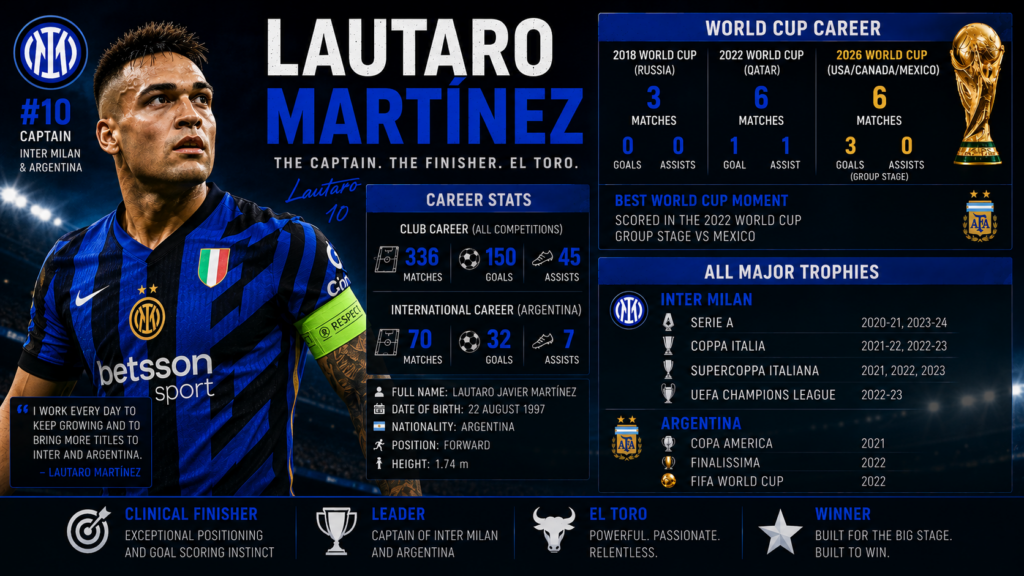
For Argentina, that decision involved Lautaro Martínez.
As the final unfolded, Spain controlled possession.
Argentina struggled creating meaningful attacks.
Messi increasingly found himself isolated.
Opportunities became scarce.
Yet one of Argentina’s most accomplished forwards remained on the bench.
Lautaro Martínez wasn’t an inexperienced substitute.
He wasn’t an unproven prospect.
He was Inter Milan’s captain, one of Europe’s most accomplished strikers and a player fully capable of changing matches.
Throughout the tournament, Lautaro repeatedly demonstrated an ability to stretch defenses through intelligent movement.
His physical presence forced center backs deeper.
His runs created space for teammates.
Most importantly, his willingness to attack defenders could have reduced the enormous defensive attention focused upon Messi.
Instead, he watched.
Minute after minute passed.
Argentina searched desperately for attacking answers.
Still no Lautaro.
As Spain continued controlling the match, confusion spread among supporters and analysts alike.
Why wasn’t Argentina introducing another striker?
Why continue asking Messi to solve increasingly impossible situations without additional support?
Managers inevitably make difficult decisions.
Championship football often requires trusting instinct.
Sometimes instinct proves correct.
Sometimes it becomes unforgettable for the wrong reasons.
Regardless of how history ultimately judges Lionel Scaloni’s remarkable tenure, the decision not to introduce Lautaro Martínez during a World Cup Final will remain one of the tournament’s defining talking points.
Whether it would have changed the result will never be known.
But many will forever wonder.
The Stage Was Finally Set
One side entered the World Cup Final playing perhaps the finest collective football seen in years.
The other arrived led by one of history’s greatest players attempting one final masterpiece.
Spain possessed momentum.
Argentina possessed belief.
MetLife Stadium overflowed with anticipation.
The entire sporting world stopped.
Ninety minutes separated one nation from immortality.
One hundred twenty minutes later, only one question remained.
Had everyone just witnessed the birth of football’s next dynasty?
The Final That Defined an Era
The stage could not have been any bigger.
MetLife Stadium stood at the center of the sporting universe as more than 80,000 spectators packed the stands while billions watched around the globe. The defending world champion, Argentina, sought to become the first nation since Brazil in 1962 to successfully defend a World Cup. Standing in its way was a Spanish side that had steadily evolved into the tournament’s most complete team.
From the opening whistle, Spain imposed its identity.
It pressed relentlessly.
It controlled possession.
It dictated tempo.
Most importantly, it never allowed Argentina to play the style of football that had carried it to another World Cup Final.
Championship matches often become cautious affairs.
This one became something different.
It became a tactical lesson.
Every passing sequence seemed to pull Argentina farther out of position. Every recovery forced the defending champions to chase. Spain moved the ball with confidence, patience and purpose while Argentina increasingly found itself defending deeper and deeper inside its own half.
The scoreboard remained scoreless.
The match itself did not.
Spain was winning every important battle long before it eventually found the decisive goal.
Spain’s Pressure Became Suffocating
Watching the match unfold, one reality became impossible to ignore.
Spain wasn’t simply possessing the ball.
It was exhausting Argentina.
Every unsuccessful press required another sprint.
Every recovery demanded another defensive rotation.
Every clearance merely delayed the next Spanish attack.
By the second half, the physical difference between the two teams became increasingly visible.
Spain still looked energetic.
Argentina increasingly looked fatigued.
That was not accidental.
Luis de la Fuente had built a system designed to force opponents into constant defensive work. The longer matches continued, the greater Spain’s advantage became.
Eventually, the breakthrough arrived.
Ferran Torres delivered the decisive finish in extra time after another sustained period of Spanish pressure.
The goal felt inevitable.
Spain had spent nearly two hours creating opportunities.
Argentina had spent nearly two hours trying to survive.
Championships are rarely decided by one moment.
They are usually decided by the accumulation of hundreds of smaller moments.
Spain won almost all of them.
Argentina Never Found an Answer
The defining statistic of the match was not possession.
It was not completed passes.
It was not corners.
It was not saves.
It was the complete inability of Argentina to generate meaningful attacking football.
For virtually the entire match, Spain denied Argentina opportunities to threaten the goal.
Messi searched for space.
Spain denied it.
Argentina attempted to build attacks.
Spain disrupted them almost immediately.
Midfield passing lanes disappeared.
Counterattacks never developed.
Every Argentine movement seemed anticipated before it happened.
In my view, this represented the greatest defensive performance of the entire tournament.
Spain didn’t merely stop Argentina from scoring.
It prevented Argentina from playing.
That level of organization rarely appears in international football.
A Tactical Failure
Lionel Scaloni deserves enormous respect for what he accomplished with Argentina over the past several years.
He helped restore the nation’s confidence.
He won the 2022 World Cup.
He guided Argentina back to another Final.
Those accomplishments should never be forgotten.
But championship coaches must also answer difficult questions after defeat.
The most obvious remains Lautaro Martínez.
Throughout the match Argentina desperately needed another attacking presence.
Messi became increasingly isolated.
Spain’s defenders comfortably compressed space because they faced little threat elsewhere.
Lautaro Martínez, one of Europe’s most accomplished forwards, never entered.
No manager makes decisions believing they will fail.
Yet some decisions inevitably define careers.
This one will remain part of Lionel Scaloni’s legacy.
Would Lautaro have changed the result?
No one can answer with certainty.
Would his movement have created more space for Messi?
Would another physical striker have forced Spain’s defenders into different decisions?
Those questions will continue being debated for years.
Respect in Victory… Respect in Defeat
One of the greatest traditions in sport occurs after championships conclude.
The winner celebrates.
The loser accepts defeat with dignity.
That tradition exists because every athlete eventually experiences both sides.
According to widely reported accounts following the final, emotions boiled over after the match. Reports described confrontations involving players and coaching staff, additional disciplinary issues and criticism surrounding Argentina’s conduct during Spain’s championship celebration.
Those reported incidents became an unfortunate ending to what had otherwise been an extraordinary tournament.
Defeat hurts.
It should.
Players dedicate their lives to reaching a World Cup Final.
Watching another nation lift the trophy is devastating.
But history often remembers how champions lose almost as much as how they win.
Spain celebrated.
Spain earned that right.
Nothing that occurred after the match should diminish what Spain accomplished over the previous month.
Messi’s Legacy Remains Untouched
No single defeat changes Lionel Messi’s place in football history.
Whether someone believes he is the greatest player ever or merely among the greatest, his accomplishments speak for themselves.
World Cup champion.
Multiple Ballon d’Or awards.
Club legend.
International icon.
At thirty-nine years old, he still carried Argentina farther than most believed possible.
Eventually, however, every legendary career reaches its final chapter.
That reality should not be viewed with sadness.
It should be viewed with appreciation.
Generations of supporters had the opportunity to witness Lionel Messi perform at the highest level for nearly two decades.
Very few athletes leave behind such a legacy.
Spain Begins a New Era
If the tournament represented the closing chapter for one generation, it simultaneously announced the arrival of another.
Spain possesses youth.
Depth.
Leadership.
A clearly defined identity.
Rodri established himself as the world’s premier midfielder.
Unai Simón anchored the defense.
Lamine Yamal demonstrated that he may become one of football’s defining stars over the next decade.
Luis de la Fuente proved himself among the sport’s elite managers.
Most importantly, Spain won as a team.
Modern football often celebrates individual brilliance.
Spain reminded the world that collective excellence still wins championships.
America’s Soccer Future
Perhaps the greatest winner of the 2026 FIFA World Cup was not Spain.
It was soccer itself.
Millions of American children watched international football unlike anything previously experienced in this country.
Youth participation will likely continue growing.
Professional clubs will benefit.
Major League Soccer will gain additional attention.
Future international tournaments held in North America will begin from an even stronger foundation.
The World Cup demonstrated that soccer no longer occupies a niche corner of the American sports landscape.
It has become part of the mainstream conversation.
That alone represents one of the tournament’s most important legacies.
Final Thoughts
Every World Cup leaves behind unforgettable memories.
Historic goals.
Heartbreaking defeats.
Unexpected heroes.
Future legends.
President Trump booed stepping onto the pitch and then inadvertently photobombing Spain’s trophy lifting celebrations in a moment echoing former President Joe Biden, someone he repeatedly criticizes to this day.
The 2026 tournament delivered all of them.
It also delivered clarity.
Spain entered as one of the favorites.
It left as the undisputed champion.
Its tactical discipline, relentless pressing, collective commitment and unwavering confidence separated it from every other nation.
Argentina deserves credit for reaching another Final.
Lionel Messi deserves admiration for another extraordinary tournament at an age when most players have long retired from international football.
But championships are earned over seven matches—not one reputation.
When the final whistle sounded, the better team had won.
Not because of luck.
Not because of officiating.
Not because of circumstance.
Because over the course of the tournament, Spain consistently played the best football in the world.
History will remember many moments from the summer of 2026.
It will remember America’s successful hosting of the world’s greatest sporting event.
It will remember a generation of legendary players taking perhaps their final bows.
It will remember new stars announcing themselves to the world.
Most of all, it will remember the image of Spain lifting the FIFA World Cup above its heads, proving beyond doubt that the world’s best team stood alone.
Spain didn’t simply win the 2026 FIFA World Cup.
Spain conquered it.