
BY SAL GRECO
When Police Commissioner Jessica Tisch inherited the NYPD, she promised accountability, transparency, and a department that would restore public trust.
Instead, months after one of the biggest scandals in modern NYPD history erupted, the public still has more questions than answers.
The recently released Paul Saraceno Internal Affairs tapes, unveiled by The Sal Greco Show in an eight-part series, do not paint the picture of an agency aggressively searching for the truth. They paint the picture of an agency seemingly determined to reinforce a narrative that had already been decided.
From the beginning, the public was told that the overtime scandal centered around former Lieutenant Quathisha Epps and then-Chief of Department Jeffrey Maddrey. Newspaper headlines focused almost exclusively on those names. Television coverage focused on those names. Public outrage focused on those names.
But after listening to the Saraceno tapes, a different question emerges:
Was Internal Affairs conducting a broad corruption investigation—or simply trying to build a case that fit a story already written?
Throughout the interviews, investigators repeatedly return to Epps. Again and again, Deputy Chief Paul Saraceno explains that Epps reported directly to then-Chief of Department Jeffrey Maddrey. Again and again, he states that authorization for her work came from Maddrey. Again and again, he explains that he was not directing her daily activities and was not involved in authorizing her overtime.
Yet investigators continue circling back to the same subject.
The transcripts show Saraceno repeatedly explaining that Epps served as both the Personnel Lieutenant and Integrity Control Officer, reporting directly to Maddrey. They also show him explaining that he signed a large batch of overtime slips after being directed that overtime slips needed to be signed and after being told Internal Affairs was looking for those documents.
What investigators did not appear nearly as interested in was the larger system.
Saraceno describes a separate overtime-processing structure involving a designated timekeeper operating out of the 45th Precinct who handled overtime for Maddrey, Epps, Kaz Daughtry and the Chief’s advanced teams. He explains that those personnel were processed separately from others in the office.
If the objective was discovering how overtime entered the system, why wasn’t the spotlight placed on every person involved in the chain?
Who entered the overtime?
Who processed it?
Who approved it?
Who maintained the records?
Who supervised the process?
The transcripts reveal those questions were never pursued with the same intensity as questions surrounding Epps.
That alone should concern anyone interested in accountability.
Even more troubling is Saraceno’s repeated description of a culture where questioning authority allegedly carries consequences. During the interrogation, his attorney describes a belief among executives that challenging powerful figures can lead to transfers, investigations, drug testing, psychological referrals, and career destruction. Whether one agrees with that characterization or not, it is remarkable that a Deputy Chief felt compelled to place such concerns on the record during an Internal Affairs interview.
The Sal Greco Show’s investigation has also uncovered information from sources that raises additional questions.
According to sources familiar with the matter, the original overtime slips related to the overtime in question were allegedly submitted through the normal process and were maintained with the designated timekeeper at the 45th Precinct. Sources further allege those original documents later wound up on Jeffrey Maddrey’s desk and were never seen again.
If that information is accurate, it would mean the overtime slips Internal Affairs repeatedly questioned Saraceno about were not the original submissions but supplemental documents created after the originals allegedly disappeared.
Those allegations remain unproven and require independent verification.
However, they raise an obvious question:
Why was Internal Affairs so focused on signatures placed on supplemental paperwork while apparently showing little interest in determining what happened to the original documents?
The public deserves an answer.
The public also deserves answers about the broader overtime scandal itself.
Why did federal investigators reportedly execute search warrants involving senior NYPD executives?
Why has there been so little public disclosure regarding the status of those investigations?
Why does the public still know so little about the full scope of the overtime system?
Why were so many other names seemingly absent from public discussion?
Those questions remain unanswered.
All of this occurred under the leadership of Police Commissioner Jessica Tisch.
Commissioner Tisch publicly promised accountability and pledged to get to the bottom of scandals impacting the department. Yet critics argue that the NYPD continues to face a steady stream of controversies without meaningful public resolution.
Questions have been raised publicly regarding allegations involving senior executives, disciplinary decisions, officer misconduct cases, morale within the department, and the handling of multiple internal investigations. At the same time, critics point to recurring concerns about crime reporting practices and the promotion of executives who have faced scrutiny over departmental performance.
Meanwhile, New York City experienced significant public disorder during the Knicks’ championship run, with reports of assaults, vandalism, attacks on police officers, property destruction, and hundreds of arrests and summonses. Critics argue these incidents further damaged public confidence in city leadership and policing strategy.
The larger political question now belongs to Mayor Zohran Mamdani.
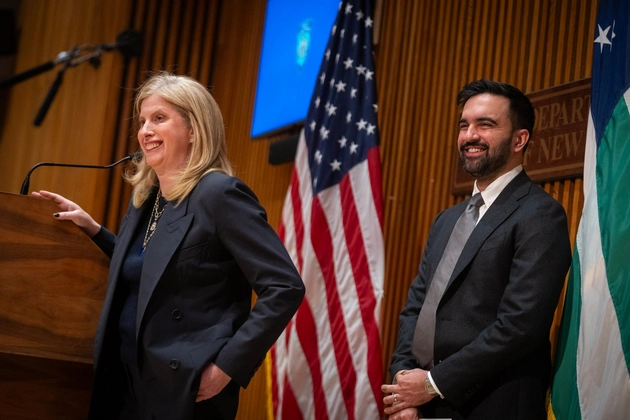
Unlike his predecessor, Mamdani inherited an NYPD already engulfed in controversy. The question facing City Hall is straightforward:
If accountability was the promise, where are the answers?
If transparency was the goal, why are so many questions still unresolved?
And if the overtime scandal was truly about rooting out corruption, why do the Saraceno tapes leave the impression that investigators were far more interested in Quathisha Epps than in uncovering every person and every mechanism that made the system function?
The Saraceno tapes do not close the book on the NYPD overtime scandal.
They reopen it.
And until the unanswered questions surrounding the missing overtime records, the timekeeping process, the role of senior leadership, and the broader overtime system are fully addressed, many New Yorkers will continue to wonder whether the investigation was about finding the truth—or controlling the narrative.