
BY SAL GRECO
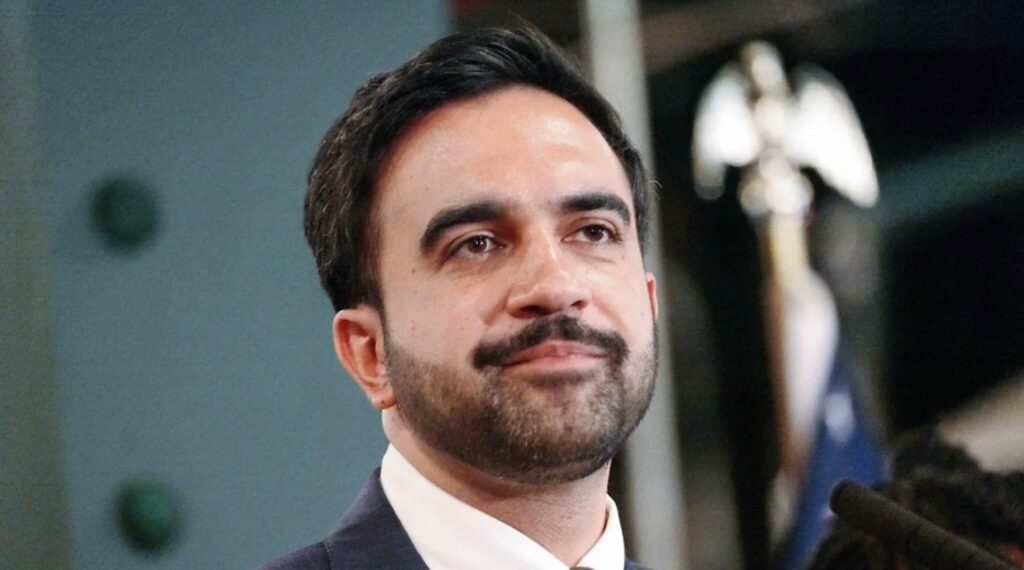
Mayor Zohran Mamdani entered office promising ambitious reforms designed to reduce the cost of living for New Yorkers. Two of the most talked-about proposals are the new pied-à-terre property tax and a plan to establish city-owned grocery stores.
Both ideas have generated significant public debate—not only over whether they are good policy, but whether they can be implemented effectively.
During Episode 216 of The Sal Greco Show, Sal Greco and Jack Stern examined both proposals, discussing what has unfolded since the rollout and whether the City adequately planned for either initiative.
The Pied-à-Terre Tax: A Rocky Rollout
The original political pitch was relatively straightforward.
Mayor Mamdani campaigned on increasing taxes on expensive second homes owned by wealthy individuals, arguing that luxury residences sitting vacant should contribute more toward city services.
However, implementation proved considerably more complicated.
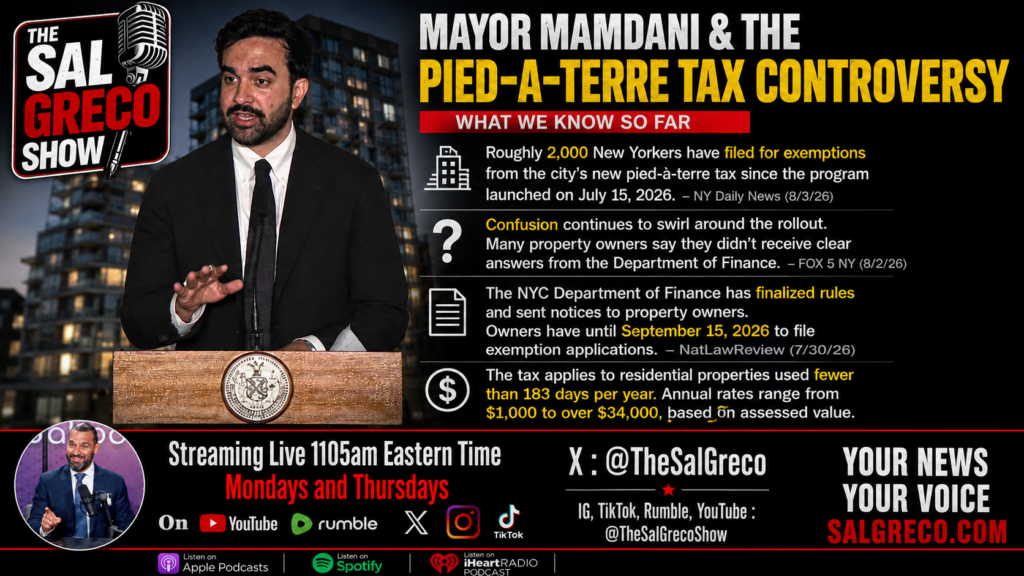
According to reporting by the New York Daily News, approximately 2,000 property owners have already filed exemption applications after receiving notices related to the new tax, illustrating how many homeowners believe they may have been improperly swept into the program.
During Episode 216, Jack Stern argued that many homeowners who were never intended to be the primary targets received notices before the City had sufficient information regarding:
- Whether the property was actually a primary residence;
- Household income;
- Whether the owner qualified for an exemption; and
- Other individual circumstances affecting eligibility.
Mayor Mamdani responded publicly by stating that there has been both “willful and unintentional conflation” between the annual property tax roll and the letters that were mailed, noting that approximately 900,000 properties appear on the City’s tax roll while only about 17,000 letters were sent.
Frank Morano’s Criticism
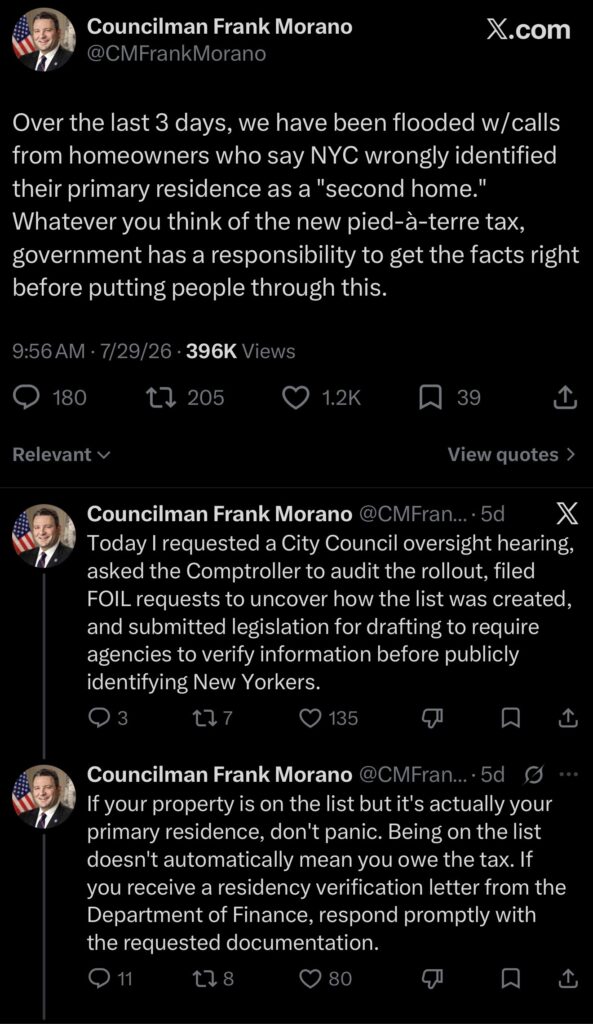
NYC Councilmen Frank Morano also criticized the rollout.
As discussed during Episode 216, Morano argued that the City effectively reversed the proper process.
Instead of first determining:
- whether a property qualified,
- whether it was a primary residence,
- and whether an exemption applied,
the City first mailed tax notices and then asked homeowners to appeal afterward.
Jack Stern summarized Morano’s position:
Government should ask questions first and make determinations afterward—not make determinations first and then ask questions.
That criticism focuses less on the concept of the tax itself and more on administrative execution.
Is the Concept Bad?
Interestingly, the discussion on The Sal Greco Show drew a distinction between the policy concept and its implementation.
Sal Greco noted that the underlying idea could make sense in theory, but questioned whether government possesses the administrative precision necessary to execute it fairly.
Jack Stern similarly argued that transparency appeared lacking and warned that homeowners unfamiliar with the process—including many whose first language is not English—could face significant hurdles navigating exemptions and appeals.
Practical Questions Still Facing the City
Several practical questions remain:
- How will the City accurately determine a property’s primary residence?
- How quickly can exemption applications be processed?
- Will appeals be resolved before penalties accumulate?
- Can the Department of Finance manage what may become thousands of individual reviews?
- How much administrative cost will enforcement require?
Those questions may ultimately determine whether the tax functions as intended.
The City-Owned Grocery Store Proposal
Mayor Mamdani’s second major affordability proposal involves publicly supported city-owned grocery stores designed to lower food costs.
The idea has generated support from those who believe additional competition could reduce grocery prices.
At the same time, critics question how such stores would actually operate.
The ID Controversy
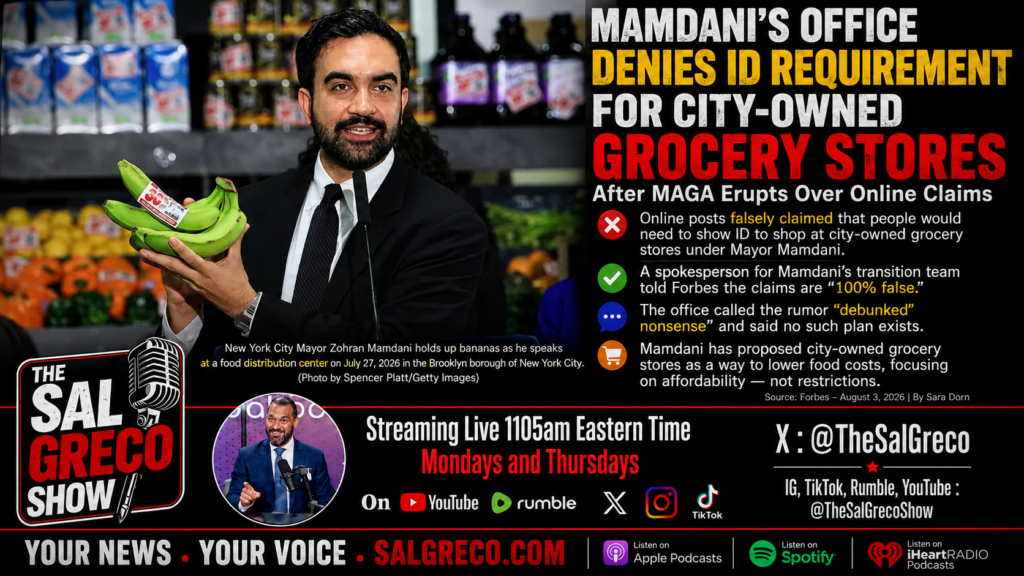
Recent online claims suggested shoppers would be required to show identification before purchasing groceries.
According to Forbes, Mayor Mamdani’s office denied those claims, stating there is no plan requiring identification simply to shop and describing the viral allegations as false.
However, questions remain regarding how the City intends to prevent abuse of subsidized pricing.
During remarks discussed on Episode 216, Mayor Mamdani stated the program is intended to help New Yorkers put food on the table—not create opportunities for resale—and referred questions regarding implementation to officials from the New York City Economic Development Corporation.
What Did Mamdani Actually Say?
City officials indicated they are considering methods to ensure the program primarily benefits New Yorkers, including the possibility of systems similar to library cards or other methods for managing purchases.
That statement immediately generated further questions.
How would eligibility be verified?
Would purchases be limited?
Would there be household spending caps?
Would shoppers need registration?
Those specifics have yet to be fully explained publicly.
Questions Raised on The Sal Greco Show
Sal Greco and Jack Stern discussed several unresolved issues:
Supply and Demand
Jack Stern argued that lowering prices at city-owned stores could place competitive pressure on private grocery chains such as Trader Joe’s, Whole Foods, and neighborhood supermarkets.
Whether that results in lower prices across the market or creates unintended economic consequences remains an open policy question.
Security
Another issue discussed was retail theft.
If city-owned grocery stores sell discounted food, critics ask:
- Will stores require additional security?
- How will theft be prevented?
- Will merchandise intended for affordable groceries instead be resold elsewhere?
Jack Stern noted existing concerns involving retail theft affecting pharmacies and other retailers, asking whether similar challenges could arise for city-operated grocery stores.
These are policy questions rather than conclusions, but they are likely to become part of the broader debate if the proposal advances.
Feasible—or Too Many Unknowns?
Both proposals share one common characteristic.
The broad concepts are relatively easy to explain.
The implementation details are considerably more difficult.
The pied-à-terre tax requires accurate property classification, efficient appeals, and transparent administration.
City-owned grocery stores require answers regarding:
- eligibility,
- procurement,
- pricing,
- inventory,
- fraud prevention,
- security,
- funding,
- competition with private businesses,
- and long-term operating costs.
Without clear operational details, observers from across the political spectrum are likely to continue asking questions.
Conclusion
Mayor Mamdani’s administration has argued these initiatives are intended to reduce the cost of living and improve affordability for New Yorkers.
Supporters view them as bold attempts to address longstanding economic challenges.
Critics—including points raised during Episode 216 of The Sal Greco Show—have focused less on the goals themselves than on whether the City has adequately planned the mechanics needed to carry them out.
As the City continues implementing both policies, the central questions may no longer be whether the ideas sound appealing in principle—but whether they can be administered fairly, transparently, and efficiently for the millions of New Yorkers who could be affected.