
BY SAL GRECO
On June 15, former NYPD recruit Slims Florentino appeared on The Sal Greco Show alongside attorney Eric Sanders to discuss a lawsuit that may become one of the most controversial legal challenges facing the NYPD Police Academy in recent memory.
The allegations are explosive.
According to the lawsuit filed in Bronx Supreme Court, Florentino alleges she successfully completed the academic, firearms, and physical requirements expected of an NYPD recruit, only to find herself subjected to a hostile environment that included harassment, retaliation, intimidation, discrimination, property damage, evidence destruction concerns, and a planned locker-room assault by fellow recruits. The complaint further alleges that after reporting misconduct, she became the target rather than the protected complainant.
What makes this case different is that Florentino publicly discussed many of these allegations herself during her appearance on The Sal Greco Show.
Florentino described entering the Academy as a 31-year-old college graduate who previously worked for Delta Air Lines and had traveled the world. She explained that becoming a police officer was a lifelong dream motivated in part by her father, an FDNY 9/11 responder suffering from health issues related to his service.
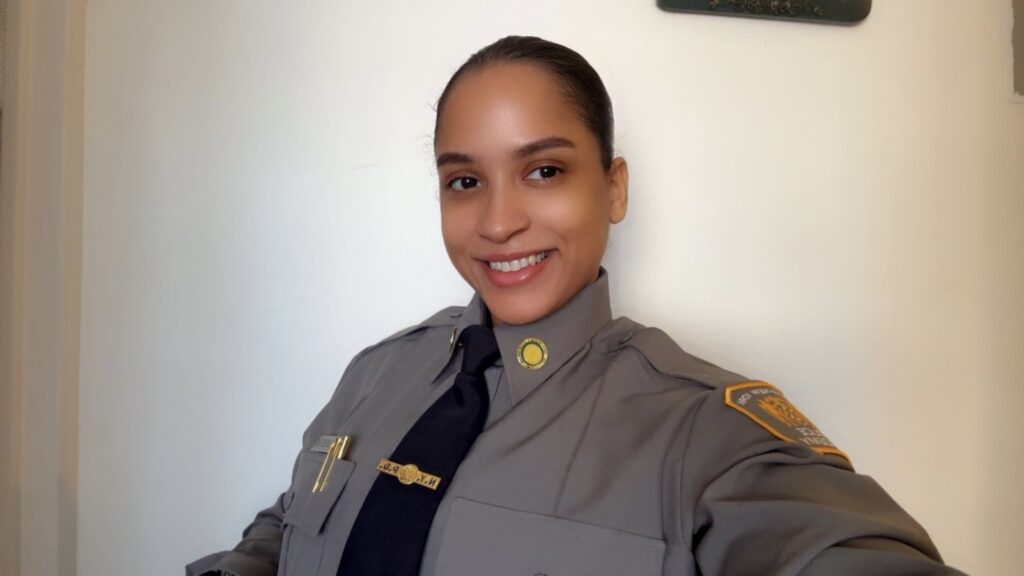
But according to Florentino, what she encountered inside the Police Academy was not the professional law enforcement environment she expected.
“It felt like high school,” she told viewers.
She described an atmosphere of cliques, favoritism, and what she characterized as immature behavior among recruits. According to Florentino, some recruits appeared more interested in social drama than preparing for a career in law enforcement.
The most serious allegations involve what Florentino claims was a planned locker-room assault by fellow recruits.
During the interview, she alleged that several recruits coordinated an attack against her and discussed it within a group chat. She further claimed that evidence connected to the group chat was later deleted after Academy personnel became aware she had reported the matter to supervisors. Those allegations mirror claims contained in the lawsuit, which alleges failures to preserve evidence and protect a recruit who reported misconduct.
Perhaps the allegation that has generated the most attention is the one involving a recruit who allegedly struck Florentino with a duffle bag.
The lawsuit alleges that after she reported being injured, Academy supervisors suggested the incident may have been a “bad method of flirting” and allegedly attempted to characterize the matter as a domestic-related incident despite no qualifying relationship existing between the parties.
During the interview, Florentino repeated that allegation and specifically claimed that supervisors suggested she may have rejected a lunch invitation, causing the recruit to react. She also questioned how the matter could have been treated as a domestic incident when, according to her account, there was no romantic or intimate relationship involved.
Those allegations form the basis of an article previously published by attorney Eric Sanders discussing what he described as the improper sexualization of a workplace injury complaint.
The lawsuit does not stop there.
Florentino alleges that recruits openly discussed prior arrests, fights, and disciplinary histories while Academy leadership lowered standards in pursuit of increasing hiring numbers. She argued during the interview that some recruits displayed what she described as a “perp mentality” rather than the mindset expected of future police officers.
She further stated that some recruits who allegedly targeted her are on track to graduate and eventually respond to 911 calls throughout New York City.
That claim should concern every New Yorker.
The Police Academy exists for one purpose: training qualified, ethical, and professional police officers. If allegations of retaliation, intimidation, clique politics, evidence deletion, and planned assaults are occurring inside the Academy itself, then City Hall and NYPD leadership should be demanding answers immediately.
The lawsuit specifically names Police Commissioner Jessica Tisch, Chief of Training Martine Materasso, and Academy executive Chris Morello among others. The complaint alleges that leadership either created, tolerated, ratified, or failed to correct an environment where discrimination, retaliation, hostile treatment, training exclusion, and evidence issues allegedly occurred.
That raises another question.
Why is Chris Morello still running the Police Academy?
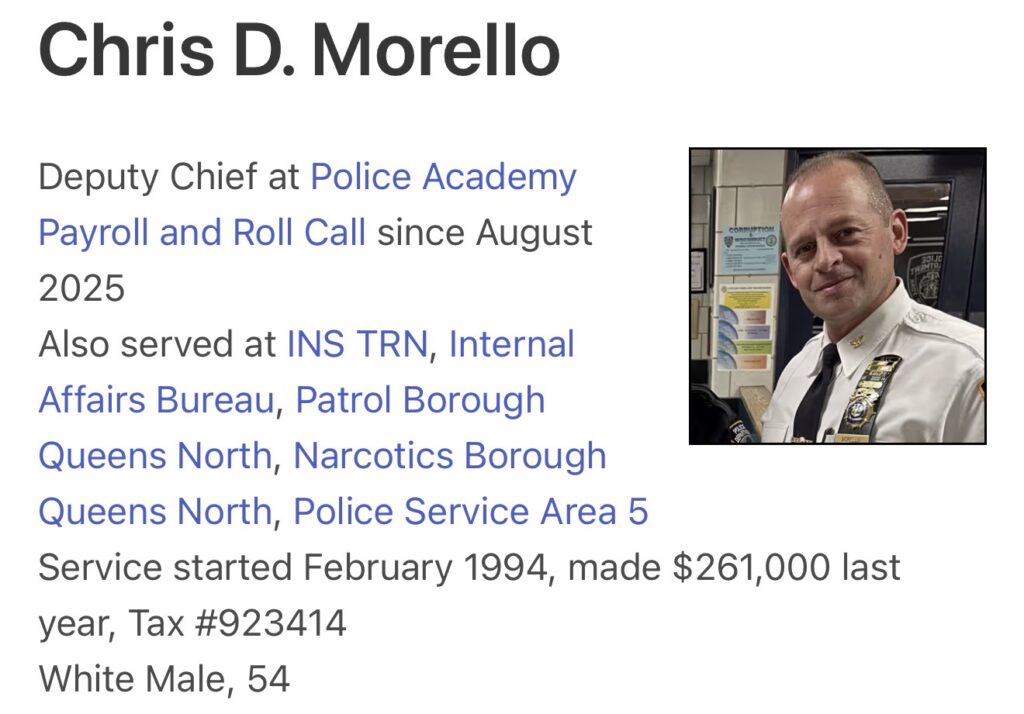
Morello’s name has surfaced in multiple controversies over the years, including litigation referenced within the Florentino complaint itself. Whether those allegations ultimately prove true is for the courts to determine. But from a leadership perspective, one has to ask why an Academy already facing recruiting challenges, morale issues, and public scrutiny continues to find itself connected to controversy after controversy.
And where is Jessica Tisch?
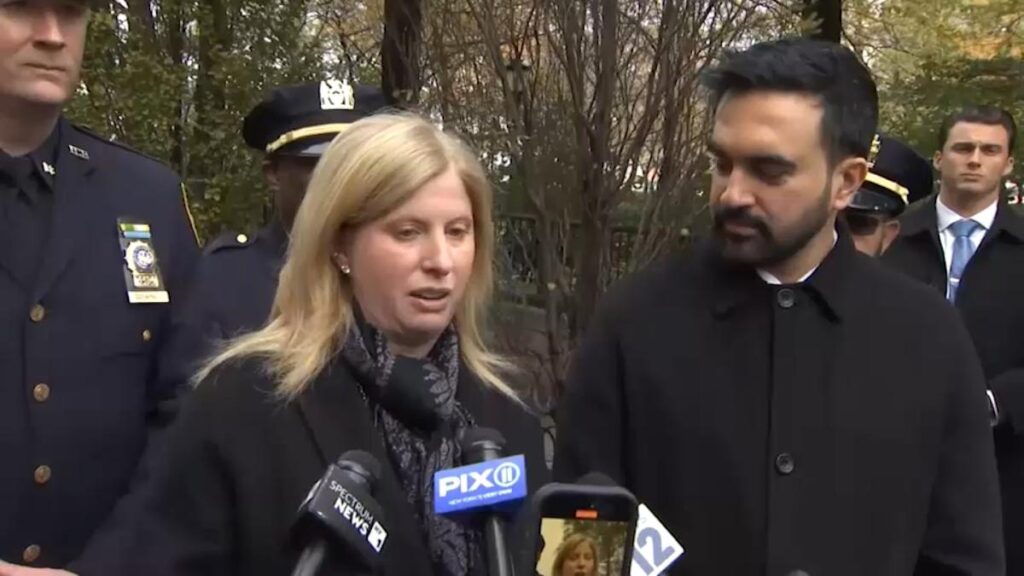
Commissioners often speak about accountability, transparency, and restoring public trust. Yet critics of the Department increasingly argue that scandal after scandal continues to emerge under her watch. From executive-level controversies to disciplinary questions to allegations arising from inside the Police Academy itself, many New Yorkers are beginning to ask whether NYPD leadership is reacting to problems or actually solving them.
To be clear, the allegations in the Florentino lawsuit remain allegations. The City of New York and every defendant named in the complaint are entitled to their day in court and have not yet had the opportunity to fully respond.
But lawsuits like this do not emerge from nowhere.
When a recruit publicly states that she entered the Academy hoping to honor her family, serve her city, and become a police officer, only to leave claiming she was targeted after reporting misconduct, people are going to pay attention.
The courts will decide whether Slims Florentino can prove her allegations.
The public, however, is entitled to ask a different question:
If the people responsible for training the next generation of NYPD officers cannot maintain confidence in the integrity of the training process itself, what does that say about the future of the Department?
That question is not going away anytime soon.