BY SAL GRECO
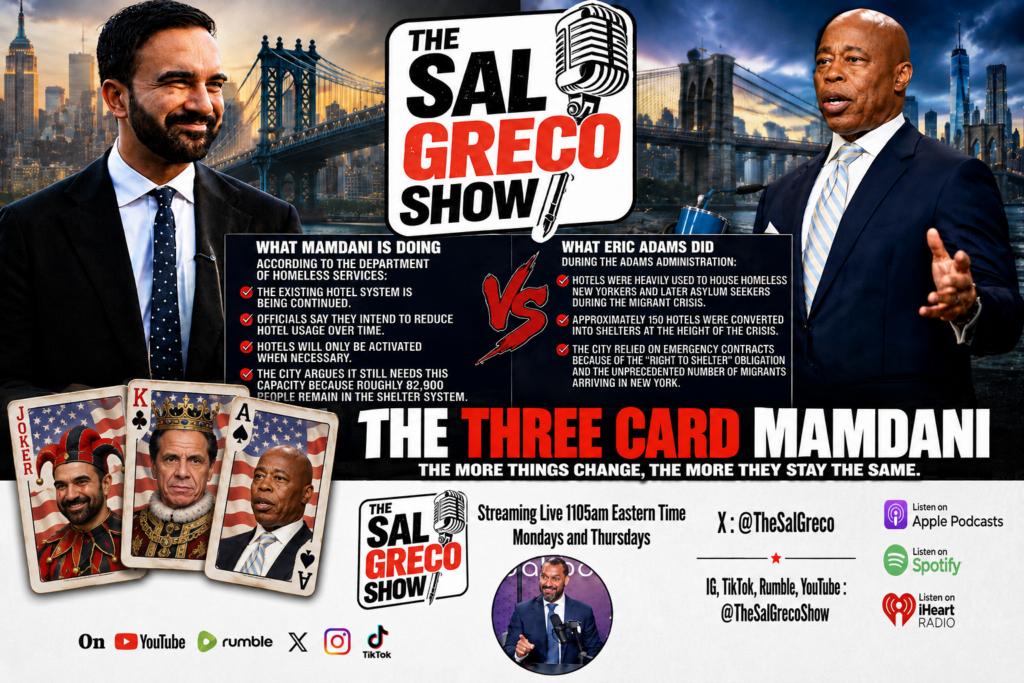
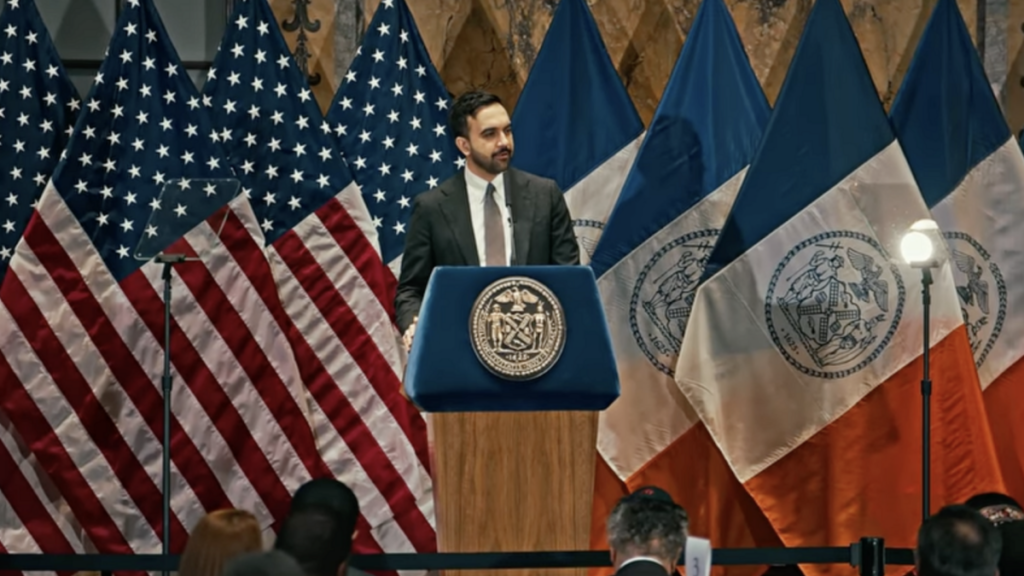
Politics often resembles a game of perception. Sometimes the cards are shuffled just enough to convince the audience that something entirely new is happening when, in reality, the outcome remains largely unchanged. That is the impression many New Yorkers may take away from Mayor Zohran Mamdani’s decision to authorize a new emergency contract worth up to $1.86 billion to continue using hotels as homeless shelters.
Call it “The Three Card Mamdani.”
The latest agreement extends the city’s ability to use hotels as emergency shelters through June 30, 2029. City Hall argues the contract merely preserves emergency capacity while officials work toward expanding traditional shelter space and reducing reliance on hotels over time. The administration has also emphasized that the $1.86 billion figure represents the maximum authorized amount and not necessarily what will ultimately be spent.
The messaging, however, sounds far different than the practical reality.
Under former Mayor Eric Adams, New York City relied extensively on hotels to house homeless individuals and, later, tens of thousands of migrants arriving during the border crisis. The Adams administration defended the practice as necessary to comply with New York City’s Right to Shelter mandate while confronting an unprecedented humanitarian challenge.
Now, under Mayor Mamdani, hotels remain part of the city’s shelter strategy. The justification has changed, but the policy itself has not fundamentally disappeared.
The city continues utilizing hotels.
The city continues relying on emergency contracting authority.
The city continues citing insufficient shelter capacity.
The city continues spending substantial taxpayer resources to house individuals in commercial hotels.
The card may have changed.
The game appears remarkably familiar.
That naturally raises several policy questions deserving public discussion:
- If hotel shelters were criticized under one administration, why are they acceptable under another?
- Why does New York City still require emergency procurement authority years after the practice became commonplace?
- How much of the authorized funding is actually expected to be spent?
- What measurable benchmarks will determine when hotels are no longer needed?
- How many hotels remain in the system compared to the peak of the migrant crisis?
These are legitimate oversight questions regardless of who occupies City Hall.
Supporters of Mayor Mamdani will argue that his administration intends to transition away from hotels over time through expanded shelter capacity and affordable housing initiatives. Critics will counter that intentions are different from results and that taxpayers are ultimately seeing a continuation of the same policy with different political branding.
The old saying comes to mind:
The more things change, the more they stay the same.
For viewers of The Sal Greco Show, this broader political dynamic has been discussed for well over a year.
The show questioned what it viewed as shifting political narratives after the U.S. Department of Justice ended its federal criminal prosecution of then-Mayor Eric Adams. The program argued that Adams subsequently appeared to receive favorable political treatment before attention shifted elsewhere in New York City’s mayoral race.
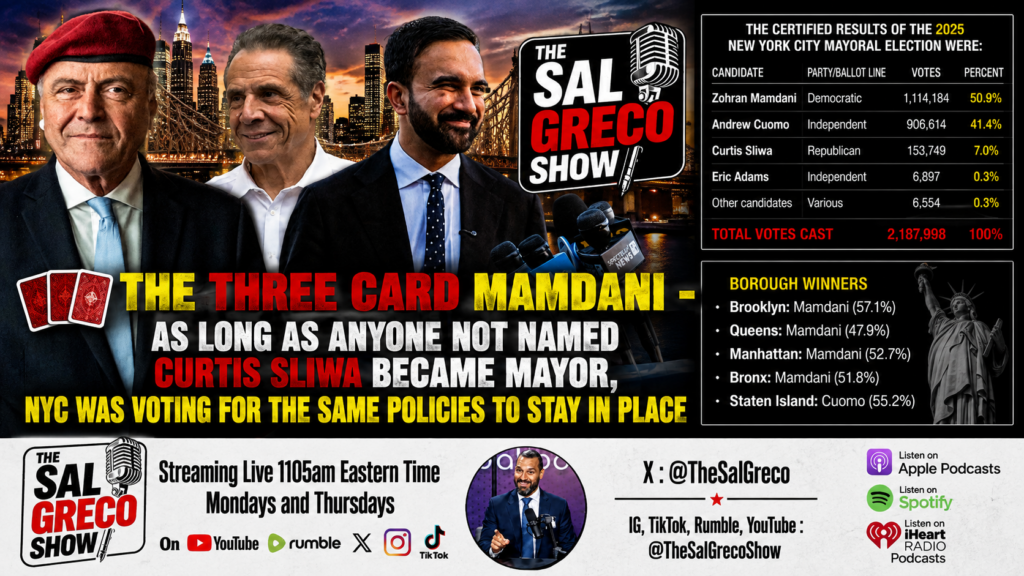
Ultimately, Andrew Cuomo entered the race, Republican Curtis Sliwa remained the Republican nominee, and Zohran Mamdani won the general election outright with approximately 51 percent of the vote, eliminating the need for any runoff or additional electoral process.
Regardless of one’s political perspective, the election produced a clear winner.
Yet many of the policy debates that dominated the Adams administration—including public spending, homelessness, emergency contracting, and the use of hotels as shelters—continue today.
Following his victory, Mayor Mamdani traveled to Washington, D.C., where he met publicly with President Donald Trump. The two men—who had previously exchanged sharp political rhetoric, including President Trump referring to Mamdani as a communist—appeared together before cameras in a noticeably lighter moment that generated widespread media attention.
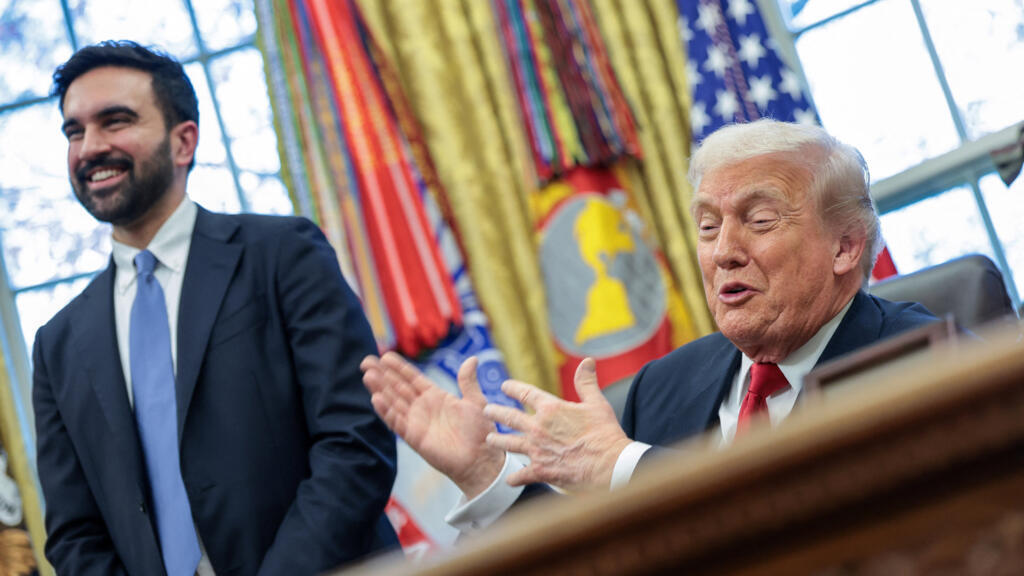
For critics of modern politics, moments like these reinforce a familiar perception: yesterday’s fierce campaign opponents can become today’s cordial political counterparts once the cameras begin rolling. Whether one agrees with that interpretation is ultimately a matter of opinion, but to many observers it raises questions about how much of modern politics is genuine disagreement and how much is political performance.
Perhaps that is simply the reality of American politics in the twenty-first century. Or perhaps, as some would argue, politics has increasingly become theater—a stage where public rivalries, endorsements, and alliances shift with remarkable speed. For some, it is government at work. For others, it resembles the greatest show on earth for those who couldn’t physically make it into the WWE.