After The Sal Greco Show previously reported allegations involving City Council Speaker Julie Menin’s security detail, new claims concerning Mayor Zohran Mamdani’s protective detail raise questions about NYPD supervision, disciplinary accountability and whether City Hall knows what is allegedly happening.
BY SAL GRECO | SALGRECO.COM
FRIDAY, NOVEMBER 20, 2026 — NEW YORK CITY
Another week, another controversy involving the New York City Police Department.
And once again, serious allegations raise questions about accountability under NYPD Police Commissioner Jessica Tisch—this time involving the personnel reportedly entrusted with protecting New York City Mayor Zohran Mamdani.
Information obtained by SalGreco.com alleges internal disciplinary disputes, possible on-duty intoxication, an Internal Affairs investigation and potentially preferential treatment within the mayor’s security detail.
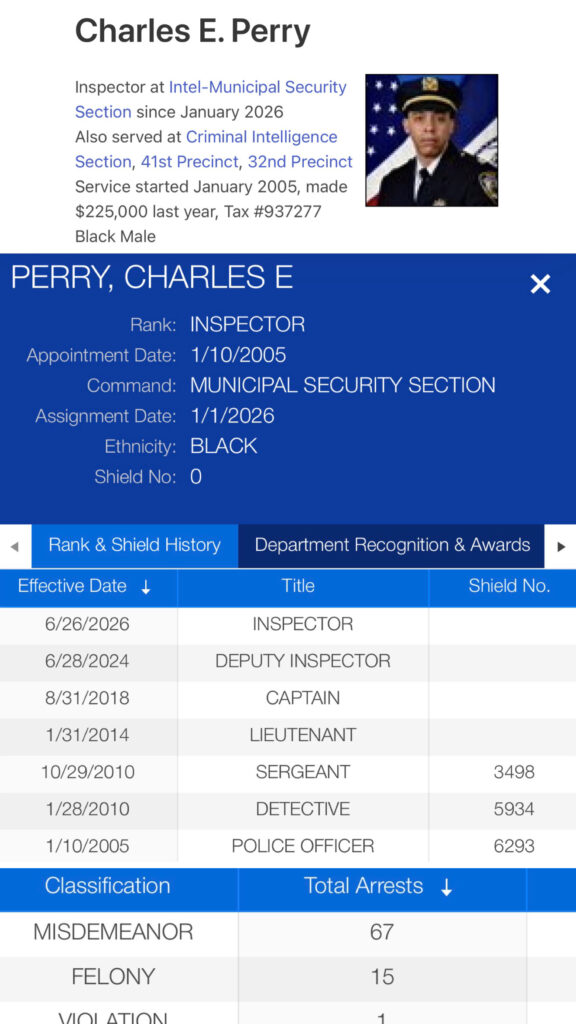
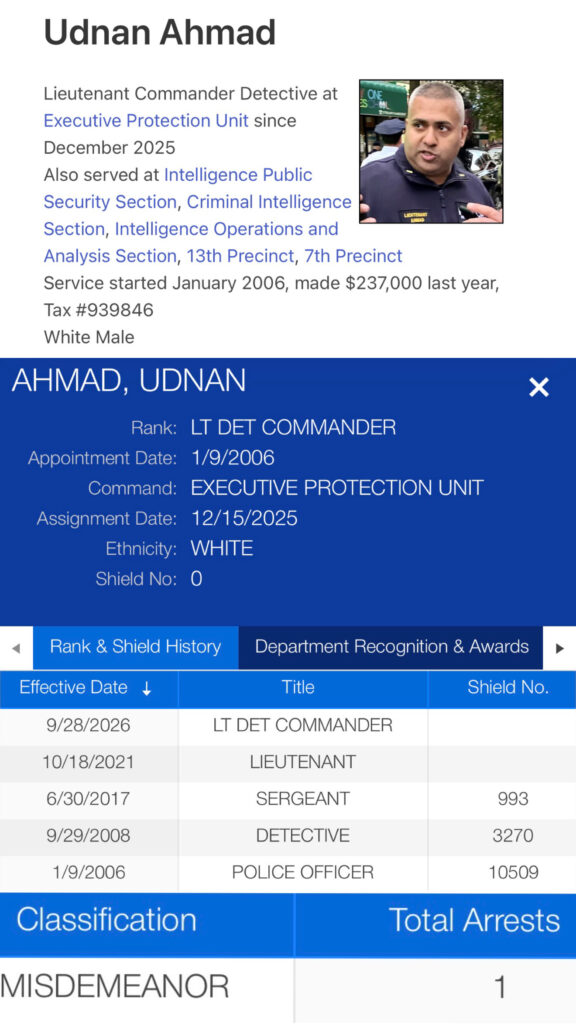
At the center of these allegations are NYPD Inspector Charles Perry and a lieutenant identified by sources as Udnan Ahmad.
The latest claims raise significant questions about the NYPD’s supervisory structure, integrity and disciplinary practices.
Is corruption and favoritism continuing to find its way into specialized NYPD assignments under Tisch’s leadership? And does Mayor Mamdani himself know about the allegations circulating concerning his own protection detail?
The allegations deserve examination, not dismissal—and certainly not assumptions of guilt before the facts are established.
INSPECTOR PERRY: DID ENFORCING DISCIPLINE COST HIM HIS POSITION?
According to information provided to SalGreco.com, Inspector Charles Perry, who reportedly supervised Mayor Mamdani’s security detail, recently encountered internal resistance involving a disciplinary matter.
The source alleges that Perry attempted to initiate command discipline against a detective, but Lieutenant Udnan Ahmad refused to follow his directive.
Ahmad allegedly brought the disagreement to Mayor Mamdani’s attention. Perry was subsequently reportedly informed that his services were no longer required and submitted his retirement papers.
Neither Perry’s reported retirement nor the alleged circumstances surrounding his departure have been independently confirmed.
However, if the account is accurate, the implications are troubling.
Was a commanding officer effectively undermined for attempting to enforce department rules? Who made the decision concerning Perry’s assignment? And was Mayor Mamdani involved in any capacity?
A police command cannot function properly if supervisors are unable to enforce legitimate departmental procedures without interference.
If an inspector was pushed aside for attempting to maintain discipline, the NYPD owes its members—and the public—an explanation.
ALLEGED DRINKING INCIDENT IN QUEENS AND INTERNAL AFFAIRS INVESTIGATION
The allegations do not end with Inspector Perry.
Approximately two to three weeks ago, Lieutenant Ahmad and a sergeant assigned to the mayor’s security detail allegedly became involved in an incident in Queens.
According to sources, both supervisors had been consuming alcohol during duty hours when Ahmad allegedly became involved in a verbal confrontation with a civilian.
The source further alleges that Ahmad activated the emergency lights on a department vehicle, prompting a 911 complaint concerning someone reportedly impersonating a police officer.
Responding patrol officers allegedly handled the encounter without significant enforcement action.
Sources claim that the NYPD Internal Affairs Bureau subsequently investigated the incident and obtained video evidence purportedly documenting the encounter.
But here is where the allegations become particularly concerning.
According to the account, the sergeant involved was subsequently transferred to the 60th Precinct Detective Squad, while Ahmad reportedly remained assigned to the mayor’s detail.
SalGreco.com has not independently verified the alleged incident, the existence or findings of an Internal Affairs investigation, or the circumstances of the reported transfer.
Nevertheless, several questions demand answers.
Was an Internal Affairs investigation conducted? Did investigators recover body-worn camera footage, surveillance recordings or 911 communications? Were the officers on duty when the alleged encounter occurred?
Was the sergeant’s reported transfer disciplinary or administrative? And was any disciplinary action taken against Ahmad?
If the allegations were substantiated, why would one supervisor reportedly be transferred while another retained the assignment?
Alternatively, if the allegations were unfounded, why has no clarification been provided to this publication?
Accountability should not depend on someone’s rank, assignment or relationship with influential figures.
JESSICA TISCH’S NYPD: HOW MANY MORE ALLEGATIONS BEFORE THE PUBLIC GETS ANSWERS?
Under Police Commissioner Jessica Tisch, the NYPD has continued to confront allegations involving misconduct, retaliation, favoritism and questionable supervisory practices.
SalGreco.com has repeatedly reported on lawsuits and allegations involving NYPD personnel, including controversies within the Transit Bureau and Police Cadet Corps.
Those cases involve claims that remain subject to legal proceedings or further scrutiny. They should not be mistaken for established findings of wrongdoing.
Still, the recurring nature of such allegations creates a legitimate question about whether NYPD leadership is consistently enforcing professional standards.
Tisch cannot personally oversee every officer, but she is ultimately responsible for the department’s current disciplinary structure and the leadership entrusted to implement it.
Is accountability being applied consistently, or are certain specialized assignments allegedly operating under a different set of rules?
The department has a responsibility to investigate credible allegations while protecting the due-process rights of accused employees.
Yet an accountability system that is perceived as selective risks losing the confidence of both police officers and the public.
And the allegations now involving the mayor’s detail bring that concern directly to City Hall.
THE SAL GRECO SHOW PREVIOUSLY REPORTED THE JULIE MENIN SECURITY DETAIL CONTROVERSY BEFORE THE NEW YORK POST
This is not the first time The Sal Greco Show has brought attention to serious allegations involving NYPD personnel assigned to protect a prominent New York City official.
On March 3, 2026, The Sal Greco Show published information on X concerning alleged misconduct involving personnel associated with New York City Council Speaker Julie Menin’s security detail.
The reporting preceded the New York Post’s March 5, 2026, article examining the controversy.
The Sal Greco Show also published a subsequent X post on March 5.
The New York Post subsequently published additional reporting identifying NYPD officers Dionis Bravo and Candice Guerra, who had been assigned to the security detail associated with the City Council speaker.
According to that report, Bravo was allegedly intoxicated while on duty, while Guerra allegedly attempted to conceal his condition.
The Post further reported allegations that an office at 250 Broadway had been improperly used for after-hours socializing.
According to sources cited in the report, Speaker Menin learned of the situation and personally contacted Commissioner Tisch.
The NYPD confirmed that Bravo had been suspended and Guerra placed on modified duty. The broader allegations remained subject to investigation.
That incident raised concerns about supervision and professional conduct in a sensitive security assignment.
Now, months later, SalGreco.com is examining a separate set of allegations involving personnel reportedly assigned to protect the mayor himself.
Are these isolated incidents, or is there a wider issue involving the culture, supervision and accountability of specialized NYPD security details?
The two incidents do not, by themselves, establish misconduct across the entire NYPD Public Security Section. Nor has a direct connection between the personnel involved been demonstrated.
However, they justify closer examination of how personnel are selected for these assignments, how their conduct is supervised and whether disciplinary standards are consistently enforced.
An assignment involving the protection of an elected official should require exceptional professionalism and integrity—not simply the right relationships or access to influential individuals.
There is also a broader institutional concern. A January 2025 report from New York City’s Department of Investigation identified continuing gaps in NYPD policies, training and recordkeeping concerning security details for elected officials.
Those documented findings provide an additional reason to examine whether the department has adequately strengthened its protective operations.
MAYOR MAMDANI: DO YOU KNOW WHAT IS ALLEGEDLY HAPPENING INSIDE YOUR SECURITY DETAIL?
Perhaps the most important unanswered question involves Mayor Zohran Mamdani himself.
Does the mayor have any knowledge of the allegations concerning Inspector Perry’s reported departure?
Was he personally contacted about the alleged disciplinary disagreement involving Lieutenant Ahmad?
Has anyone briefed him about the reported Queens incident or the alleged Internal Affairs investigation?
And has the mayor’s administration reviewed whether personnel assigned to his protection are being appropriately supervised?
If a mayor is unaware of serious, credible concerns involving the officers responsible for protecting him, that raises a question about oversight and communication.
If he is aware, the public deserves to know whether appropriate steps were taken.
There is currently no independently verified evidence that Mamdani improperly intervened in disciplinary decisions, knowingly protected anyone accused of misconduct or compromised his own security.
But the allegations warrant clarification.
The personal protection of New York City’s mayor is far too important for any uncertainty concerning supervision, professionalism or accountability to be ignored.
Political connections should never override the standards required for executive protection.
NYPD AND CITY HALL CONTACTED FOR COMMENT
Prior to publication, SalGreco.com submitted detailed inquiries to the NYPD Deputy Commissioner of Public Information and Mayor Mamdani’s press office.
The NYPD was asked about Inspector Perry’s reported departure, the alleged Queens incident, any Internal Affairs investigation, personnel transfers and the availability of relevant video or departmental records.
The Mayor’s Office was separately asked whether Mamdani or members of his administration had knowledge of the allegations or participated in any personnel decisions.
A response was requested from City Hall by 10 p.m. Thursday, November 19, 2026.
At the time this article was prepared, neither office had provided a response.
The absence of a response does not establish the accuracy of the allegations. However, the allegations involve matters of public concern for which official clarification has been requested.
SalGreco.com will consider and publish relevant responses or corrections received after this article is prepared.
THE BOTTOM LINE: IS INTEGRITY BECOMING OPTIONAL IN SPECIALIZED NYPD ASSIGNMENTS?
From the previously reported controversy involving Julie Menin’s security detail to the new allegations concerning Mayor Mamdani’s protective detail, questions about professional standards and accountability continue to emerge.
The latest allegations have not been substantiated. Whether they reveal misconduct, misunderstandings or inaccurate information remains to be determined.
But that does not diminish the responsibility of NYPD leadership to establish the facts.
Police Commissioner Jessica Tisch must ensure that integrity is not merely a talking point, but an enforceable standard throughout the NYPD—including its most politically sensitive assignments.
And Mayor Mamdani should want clear answers about allegations involving the people reportedly entrusted with his protection.
The public deserves to know whether the department’s disciplinary system treats everyone equally, regardless of rank, assignment or personal relationships.
No one should be presumed guilty based on an anonymous allegation. Likewise, legitimate complaints should not be disregarded because an officer holds a prestigious position.
If misconduct is substantiated, accountability must follow. If allegations are false, the record should be corrected.
How much longer will questions about favoritism, alleged corruption and questionable command decisions continue to follow the NYPD under Jessica Tisch’s watch?
The department’s response to credible allegations—not the allegations alone—will ultimately help answer that question.
One thing should never be negotiable: Integrity must remain a fundamental requirement for anyone wearing an NYPD shield, especially those responsible for protecting New York City’s elected officials.
SalGreco.com and The Sal Greco Show will continue investigating these allegations and seeking official documentation, video evidence and responses from the individuals involved.
© 2026 SalGreco.com | The Sal Greco Show — Independent Journalism. Your News. Your Voice.