
BY SAL GRECO
President Donald Trump delivered a rare prime-time address to the nation Thursday night centered on election security, alleging that newly declassified intelligence shows China stole voter registration data from approximately 220 million Americans and sought to interfere in the 2020 election. During the speech, Trump called for renewed election integrity measures and said additional documents would be released to the public.
If proven through criminal investigations and admissible evidence, the allegations would represent one of the most significant national security breaches in American election history.
But as the speech concluded, one question overshadowed all the others:
What happens now?
Networks Refuse to Carry the President’s Speech
Another major story of the evening wasn’t only what President Trump said—it was who chose not to broadcast it.
ABC, NBC and CNN declined to carry the President’s address live on their primary television platforms, although some streamed it online or provided coverage afterward. Fox News carried the speech live, while CBS aired part of the address before breaking away for analysis and fact-checking.
That decision immediately drew criticism from many Trump supporters who argued that regardless of politics, a sitting President addressing the nation on alleged foreign election interference was inherently newsworthy.
Trump Supporters React
Several prominent Trump supporters quickly took to social media following the speech.
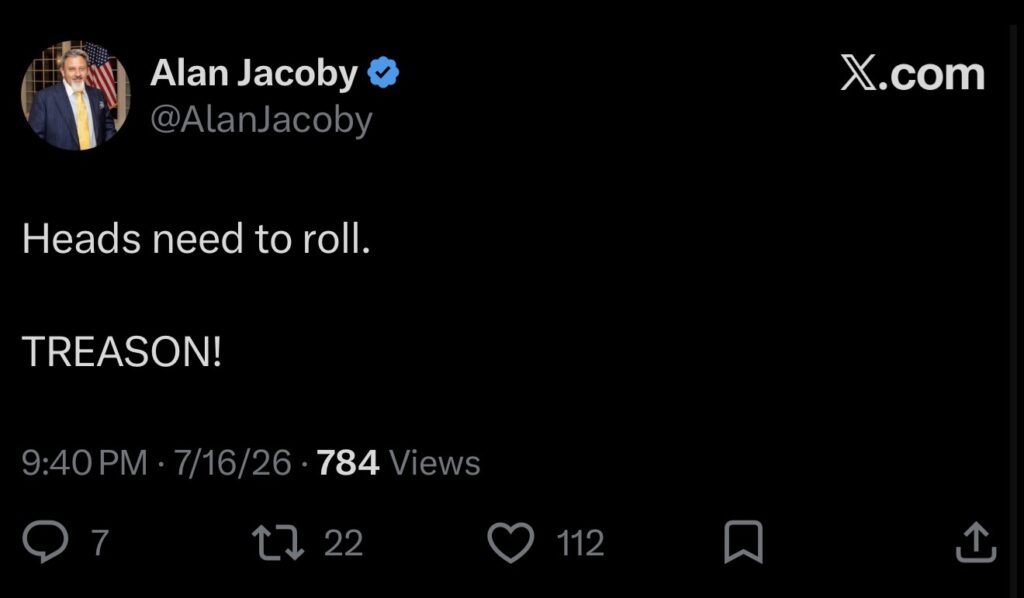
Alan Jacoby posted:
“Heads need to roll. TREASON!”
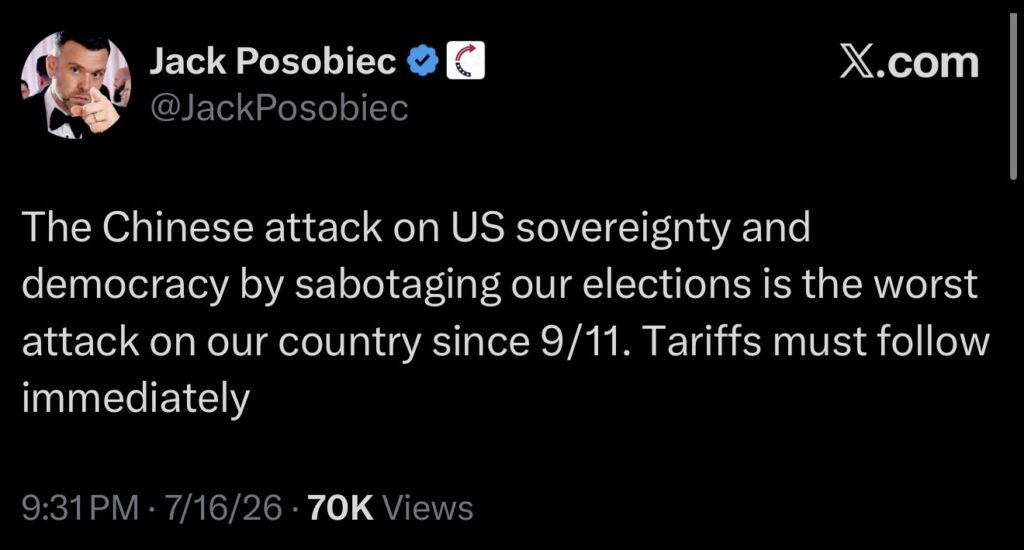
Jack Posobiec wrote:
“The Chinese attack on US sovereignty and democracy by sabotaging our elections is the worst attack on our country since 9/11. Tariffs must follow immediately.”
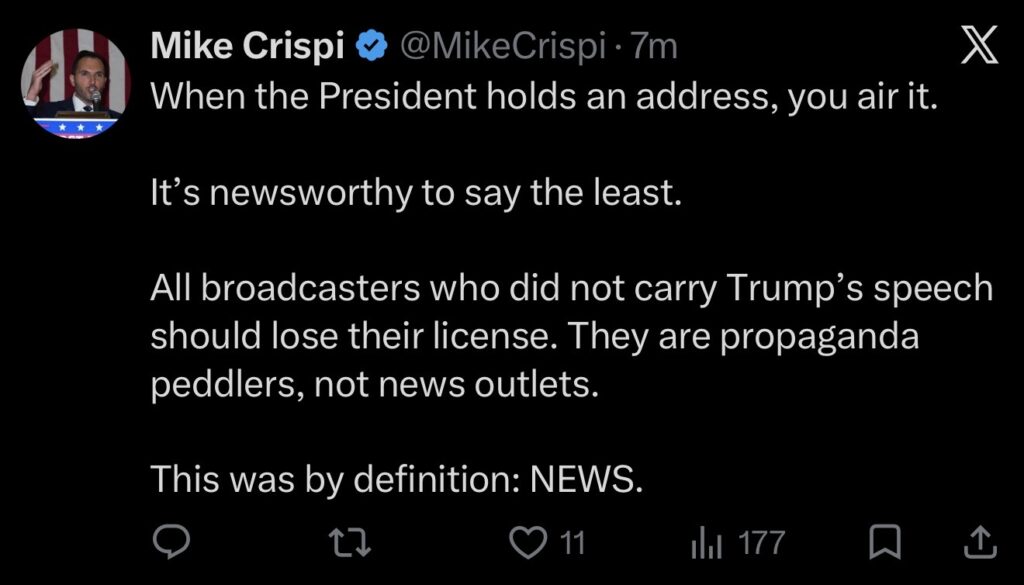
Italian American Civil Rights League President Mike Crispi criticized broadcasters that declined to air the address, arguing:
“When the President holds an address, you air it… All broadcasters who did not carry Trump’s speech should lose their license. They are propaganda peddlers, not news outlets.”
For many supporters, the speech represented far more than another political address. They viewed it as a declaration that foreign actors attacked the United States and believed accountability should follow.
Owen Shroyer Raises a Different Question
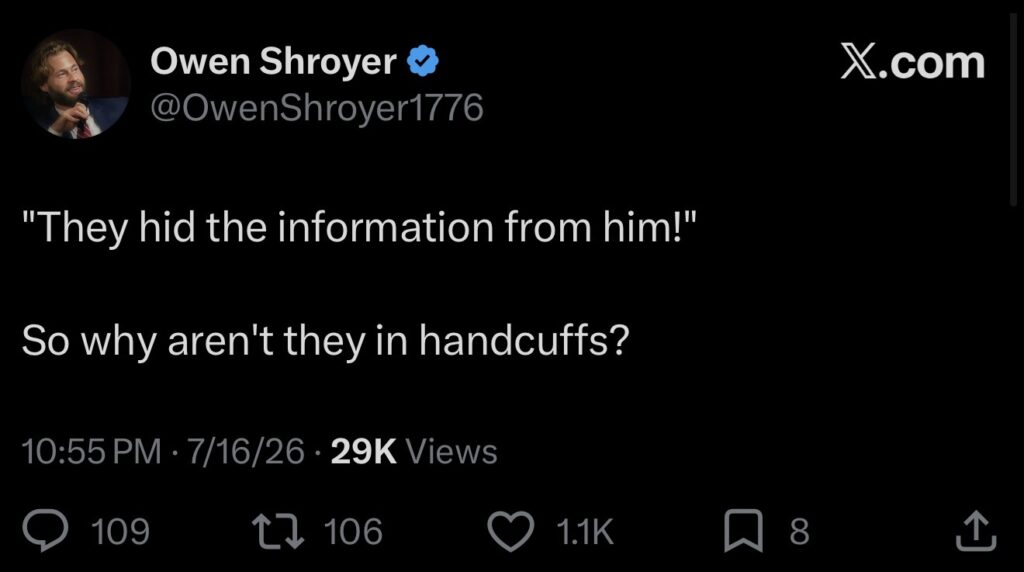
Political commentator and host of “ The Owen Report “ Owen Shroyer focused less on the allegations themselves and more on the government’s response—both past and present. Rather than simply accepting or rejecting the speech, he questioned why no one has been held accountable if the allegations are accurate.
Among the questions he posed:
- If the 2020 election was stolen, why wasn’t anyone arrested while Trump was still President?
- If officials hid intelligence from Trump, who are those officials?
- Why have there been no prosecutions?
- Why were people who protested in Washington after the 2020 election prosecuted while, in his view, those allegedly responsible for election interference have not faced charges?
Shroyer also criticized Republicans, media figures, and commentators who dismissed Trump’s election claims in 2020 but are now discussing the newly released information. He argued that if the administration truly possesses evidence of election interference, the public should expect investigations, arrests, or indictments—not merely another speech.
The Political Timing
The speech also arrives during a difficult political period for the White House.
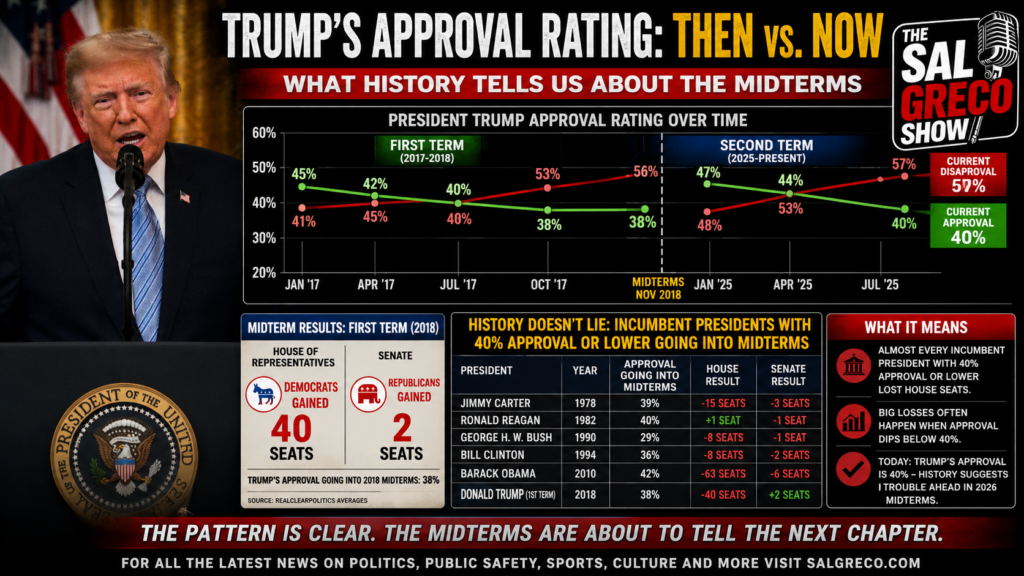
Recent national polling has shown Trump’s approval rating declining from the upper-40% range early in his second term to roughly 39–40% approval, with disapproval around 57%, according to recent polling averages. A Washington Post–Ipsos survey released this week similarly found Trump facing broadly negative public ratings on several major issues and weakening support among independent voters.
Those numbers matter because Republicans face highly competitive midterm elections only months away.
Historically, presidents with approval ratings below 45% often see their party lose congressional seats during midterm elections, although each election has its own political dynamics.
Because of that backdrop, observers across the political spectrum are likely to debate whether Thursday night’s address was primarily:
- a genuine national security warning,
- an attempt to push election reform,
- an effort to energize Trump’s political base before November,
- or some combination of all three.
Will This Change U.S.-China Relations?
If the administration’s allegations are supported by evidence and lead to official findings, the speech could further strain already tense relations between Washington and Beijing.
Potential consequences could include:
- additional tariffs,
- expanded sanctions,
- tougher restrictions on Chinese technology,
- increased cybersecurity measures,
- and greater diplomatic pressure.
China has consistently denied interfering in U.S. elections.
The Question That Still Remains
Thursday night’s address may ultimately be remembered less for what President Trump alleged than for what follows.
If federal investigators produce evidence that leads to criminal prosecutions or formal findings, the speech could become a pivotal moment in American political history.
If no prosecutions, indictments, or major investigative actions follow, many Americans—including supporters who welcomed the speech—are likely to continue asking the same questions raised Thursday night:
If the government now says it has evidence of serious foreign election interference, who will be held accountable?
And if no one is ultimately charged, what lasting impact will the speech have beyond further deepening an already polarized political debate?
The answers to those questions may shape not only the remainder of Trump’s presidency, but also the political environment heading into the 2026 midterm elections.